

Incorporating a Public Company Limited by Guarantee (CLG) is the most common route for non-profits, charities and foundations in Singapore. A CLG has no share capital and its members guarantee a nominal sum only if the company is wound up – making it ideal for organisations that must protect donors’ trust, preserve an asset lock and operate with formal corporate governance.
Below, we explore the setup steps with ACRA, the costs involved, and critical post-incorporation requirements. Let’s begin by defining what a Company Limited by Guarantee actually is.
What is a Public Company Limited by Guarantee (CLG) in Singapore?
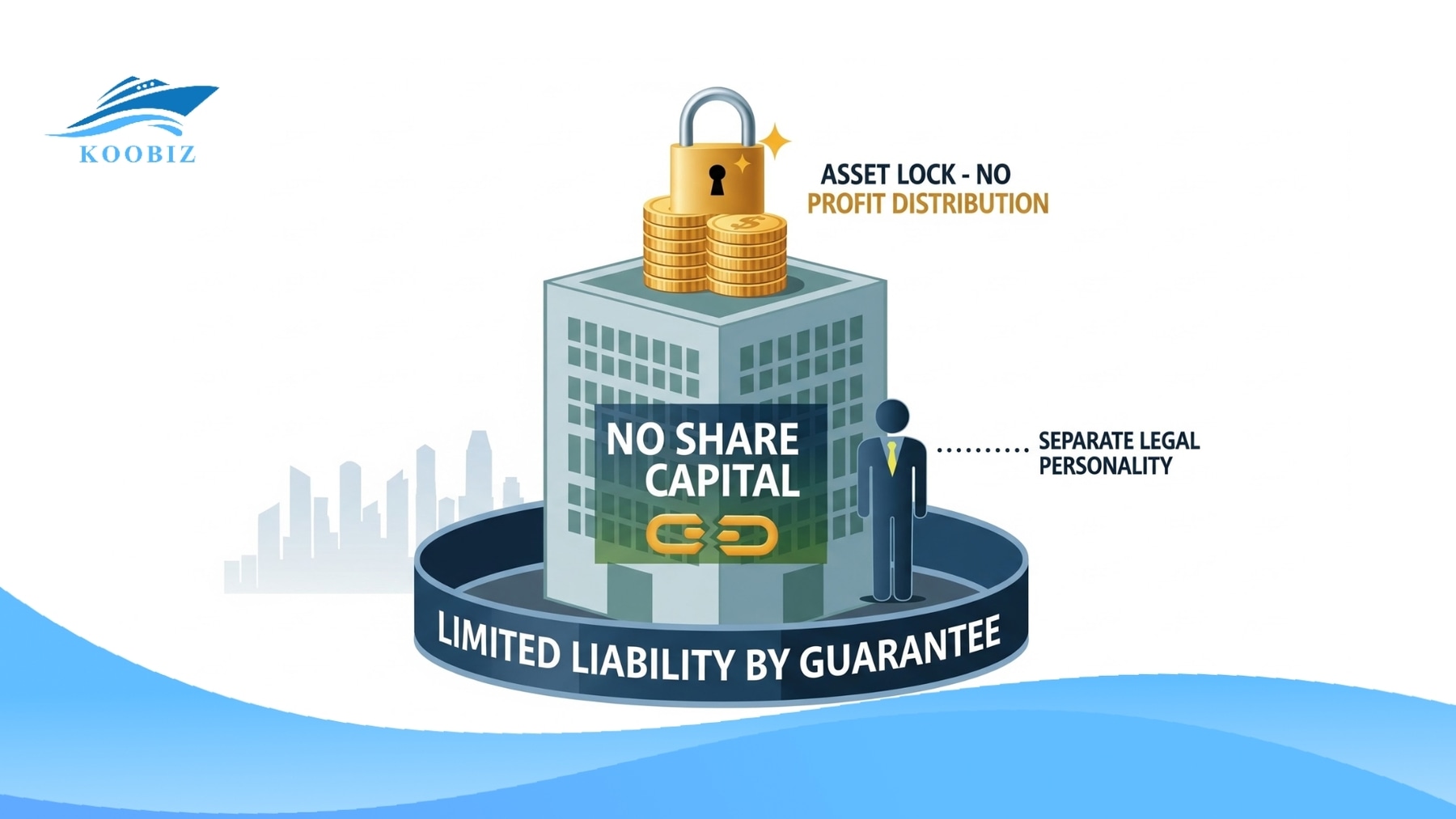
A CLG is a corporate entity for non-profit purposes. It has no share capital; instead it has members who undertake a nominal guarantee payable only if the company is wound up. The company is a separate legal person – it can own property, enter contracts, and sue or be sued independently of its members. The constitution typically includes an asset lock that prohibits distribution of profits, ensuring all surplus supports the organisation’s objectives.
Is a CLG the right structure for your non-profit organization?
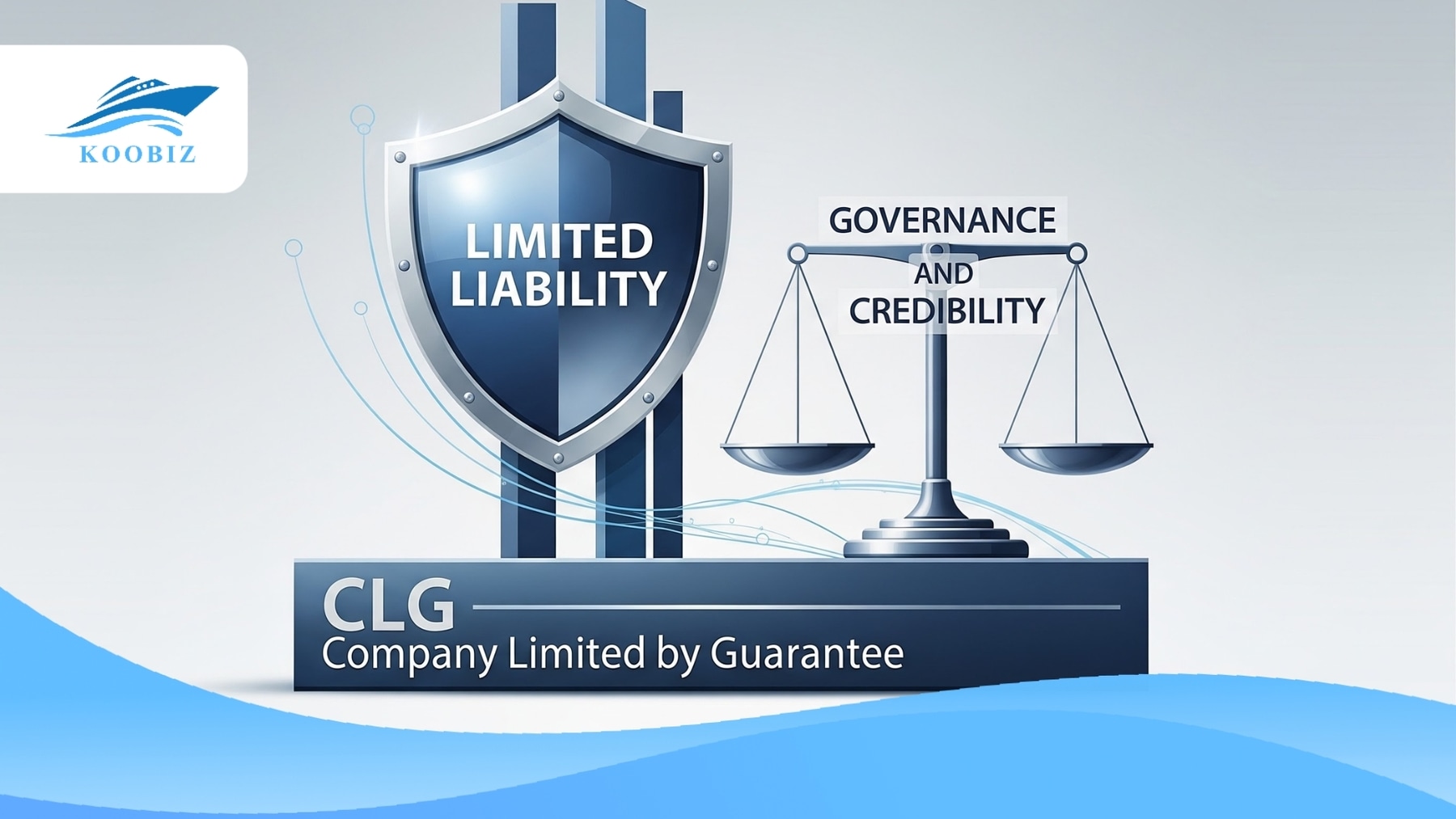
Yes, a CLG is the right structure if you need a separate legal identity, limited liability for members, and plan to conduct significant financial transactions or hire staff.
To decide, evaluate three factors: liability, administration, and credibility.
First, liability protection in a CLG is superior to a Society. In a Society, office bearers can be personally liable for debts. In a CLG, liability is capped at the guarantee amount (usually SGD 1.00), protecting personal assets. This is vital if you intend to sign leases or contracts.
Second, consider the administrative commitment. A CLG is subject to the Companies Act, requiring Annual General Meetings (AGMs) and Annual Returns. If your group is small and informal, a Society might be easier. However, for longevity and professional governance, the CLG is necessary.
Finally, for credibility and funding, a CLG is often required for Charity and IPC status. Corporate sponsors prefer giving to CLGs because the structure ensures higher transparency and accountability.
Real-World Examples of CLGs in Singapore
To help you visualize this structure, here are well-known Singaporean organizations operating as CLGs:
- The National Kidney Foundation (NKF): A major charity providing dialysis services.
- The Esplanade Co Ltd: Operates the performing arts centre as a non-profit arts company.
- National University of Singapore (NUS): Corporatized as a CLG to manage education with autonomy.
- Temasek Foundation: A philanthropic organization delivering community programmes.
Koobiz Advice: Unsure which structure suits your mission? Koobiz can assess your goals and help you compare a CLG against a Society to ensure you start on the right legal footing.
What are the Key Features of a Company Limited by Guarantee?
Four distinct features define a Company Limited by Guarantee: a separate legal personality, the guarantee mechanism, the non-profit mandate, and the naming convention.
- Separate Legal Entity: The CLG has an identity distinct from its members. It can own land and incur debts in its own name, ensuring the organization survives changes in leadership.
- Limited Liability by Guarantee: Members do not buy shares. They sign a declaration undertaking to contribute a nominal sum (e.g., SGD 1.00) only if the company is wound up.
- Non-Profit Mandate: The Constitution must prohibit paying dividends or returning capital to members. All surplus funds must be retained for the organization’s objectives.
- Naming Convention: The name must end with “Limited” or “Ltd”. However, CLGs formed for charitable purposes can apply to omit “Limited” to avoid a commercial appearance (e.g., “The XYZ Foundation”).
What are the Statutory Requirements to Register a CLG?
You must meet standard company requirements under the Companies Act, including:
- Directors: At least one director ordinarily resident in Singapore (Citizen, PR, or EP holder). Directors have a fiduciary duty to act in the non-profit’s best interest.
- Members: At least one member (individual or corporate). The director and member can be the same person. For charities, a board of at least three independent members is recommended for governance.
- Company Secretary: You must appoint a qualified Company Secretary within six months. Given the compliance complexity, many non-profits outsource this to professional providers like Koobiz to ensure regulatory compliance without hiring full-time staff.
- Constitution: This document sets out the company’s objectives (e.g., poverty relief) and governance rules. For Charity status, specific clauses regarding non-conflict of interest and dissolution are required.
- Registered Address: A local Singapore address (P.O. Box is not accepted).
What is the “Guarantee” in a Public Company Limited by Guarantee?
The guarantee is a contingent liability: a contractual promise in the constitution that a member will contribute a nominal sum (e.g., S$1) if the company is wound up with insufficient assets. Members are not required to pay during normal operations.
What is the Process to Incorporate a CLG with ACRA?
Incorporating a CLG involves three primary steps via ACRA’s BizFile+ portal: Name Reservation, Constitution Preparation, and Filing.
Step 1: Name Reservation
Propose a name to ACRA. It must not be identical to an existing entity. Names containing sensitive words like “Foundation” or “Charity” may be routed for referral authority approval, which can take up to 14 days.
Step 2: Preparation of Documents
Prepare the Constitution (formerly Memorandum and Articles of Association). This is critical. You cannot use a standard model if you intend to apply for Charity Status; specific “objectives” and “asset lock” clauses are mandatory. Members and directors must also sign “Consent to Act” forms.
Step 3: Official Filing via BizFile+
File the incorporation using SingPass with details of directors, members, and the address. Upon payment, ACRA issues an electronic Notice of Incorporation.
Koobiz service note: Koobiz can prepare the constitution, handle name reservation and submit the BizFile+ application for you, minimizing back-and-forth with ACRA.
Setup Fees and Timeline
The setup involves two statutory fees payable to ACRA: SGD 15 for the Name Application and SGD 300 for Incorporation.
You should also budget for professional fees if engaging a corporate service provider (CSP) for drafting and secretarial duties. Koobiz provides transparent packages including government fees and first-year secretarial services.
Timeline:
- Name Approval: Minutes (or up to 2 months if referral is needed).
- Incorporation: 15 to 30 minutes once documents are signed and the name is approved.
Post-incorporation compliance
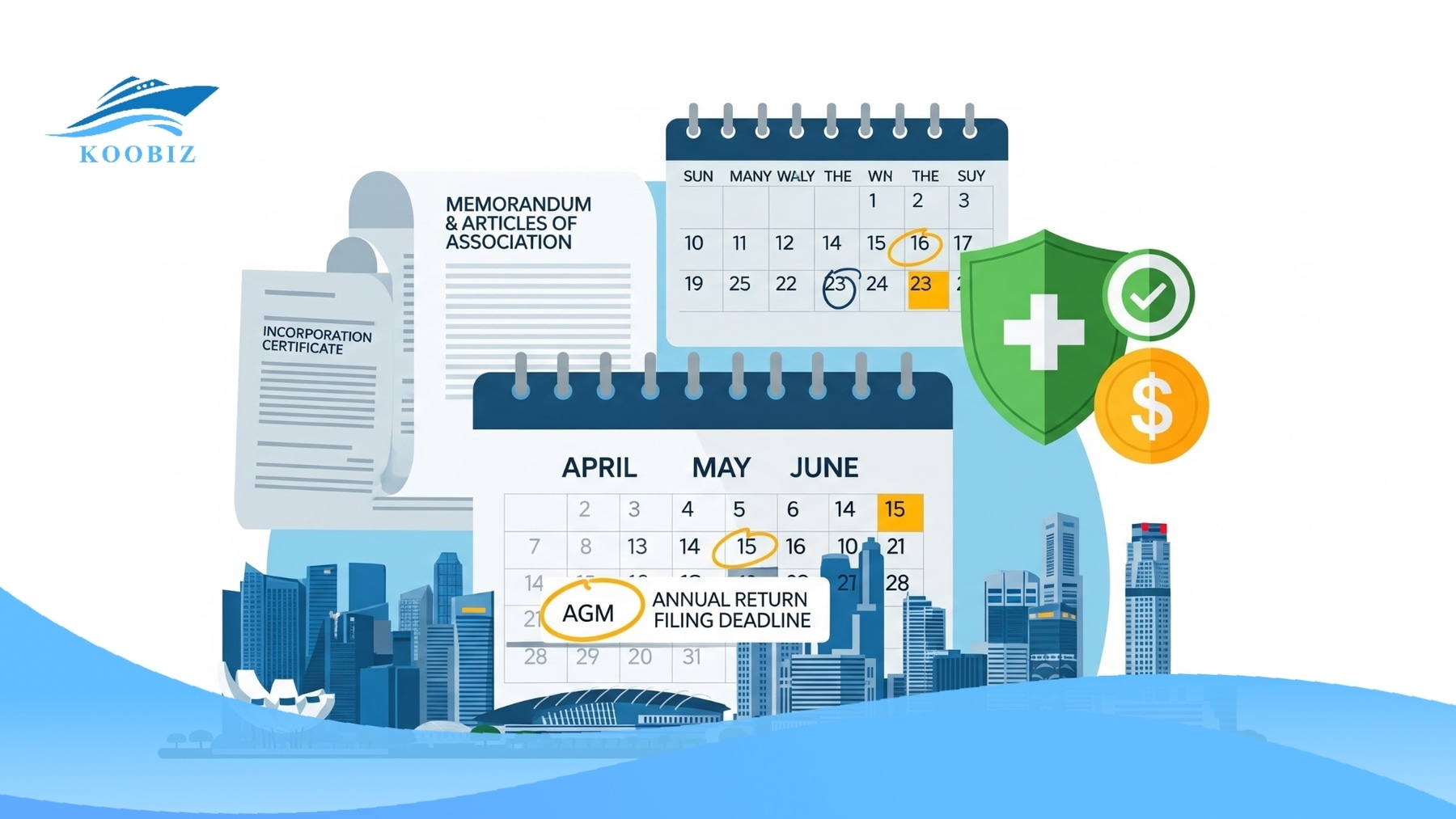
After incorporation, a CLG must maintain strict compliance regarding taxes, annual filings, and potential charity registration.
A CLG usually becomes active immediately. Directors must ensure proper accounting records are kept. The first Annual General Meeting (AGM) must be held within 18 months of incorporation, with subsequent AGMs every calendar year. Annual Returns must be filed with ACRA within one month of the AGM.
Beyond compliance, the most significant step is often pursuing special tax statuses.
Charity & IPC status (tax & fundraising implications)
Charity and IPC (Institution of a Public Character) status are managed by the Commissioner of Charities (COC) and are essential for issuing tax-deductible receipts.
Incorporation does not automatically grant charity status. You must apply via the Charity Portal, proving your objectives are exclusively charitable (e.g., relief of poverty, advancement of education).
IPC Status is a higher tier allowing donors to claim a 250% tax deduction. To qualify, the CLG must serve the Singapore community as a whole, not just members, and meet stringent governance checks, including having independent board members.
What is the Difference Between a CLG and a Private Limited Company?
The key difference is ownership and motive: a Private Limited Company serves shareholders for profit, while a CLG serves a cause without profit distribution.
| Feature | Private Limited Company (Pte Ltd) | Company Limited by Guarantee (CLG) |
|---|---|---|
| Primary Purpose | Profit generation for shareholders | Non-profit / Charitable objectives |
| Ownership | Owned by Shareholders (Equity) | No Owners; uses Members (Guarantors) |
| Share Capital | Yes (e.g., SGD 1.00 minimum) | No Share Capital |
| Profit Distribution | Dividends allowed | Strictly Prohibited (Asset Lock) |
| Liability | Limited to unpaid share capital | Limited to guarantee amount (e.g., SGD 1.00) |
| Tax Status | Corporate Tax (Start-up exemptions apply) | Taxable unless Charity Status obtained |
Can a Company Limited by Guarantee Distribute Profits to Members?
No, a Company Limited by Guarantee is strictly prohibited from distributing profits, dividends, or capital to members.
This prohibition is entrenched in the Constitution. Violating it breaches the Companies Act. Even if the CLG makes a surplus from selling services, that money must stay within the company to fund future activities.
What Happens to Assets Upon Winding Up a CLG?
If a CLG is wound up, remaining assets cannot be distributed to members. They must be transferred to another organization with similar objectives or a registered charity.
This is the “Asset Lock.” The Constitution must include a dissolution clause ensuring that funds accumulated for a public cause are not privatized by members upon the company’s closure.
Ready to Establish Your Non-Profit?
Navigating the legalities of a Public Company Limited by Guarantee requires precision. Koobiz specializes in helping non-profits set up compliant structures in Singapore. From drafting the constitution to ACRA submissions, we ensure your foundation is built on solid ground.
Visit Koobiz.com to schedule a consultation with our incorporation specialists