

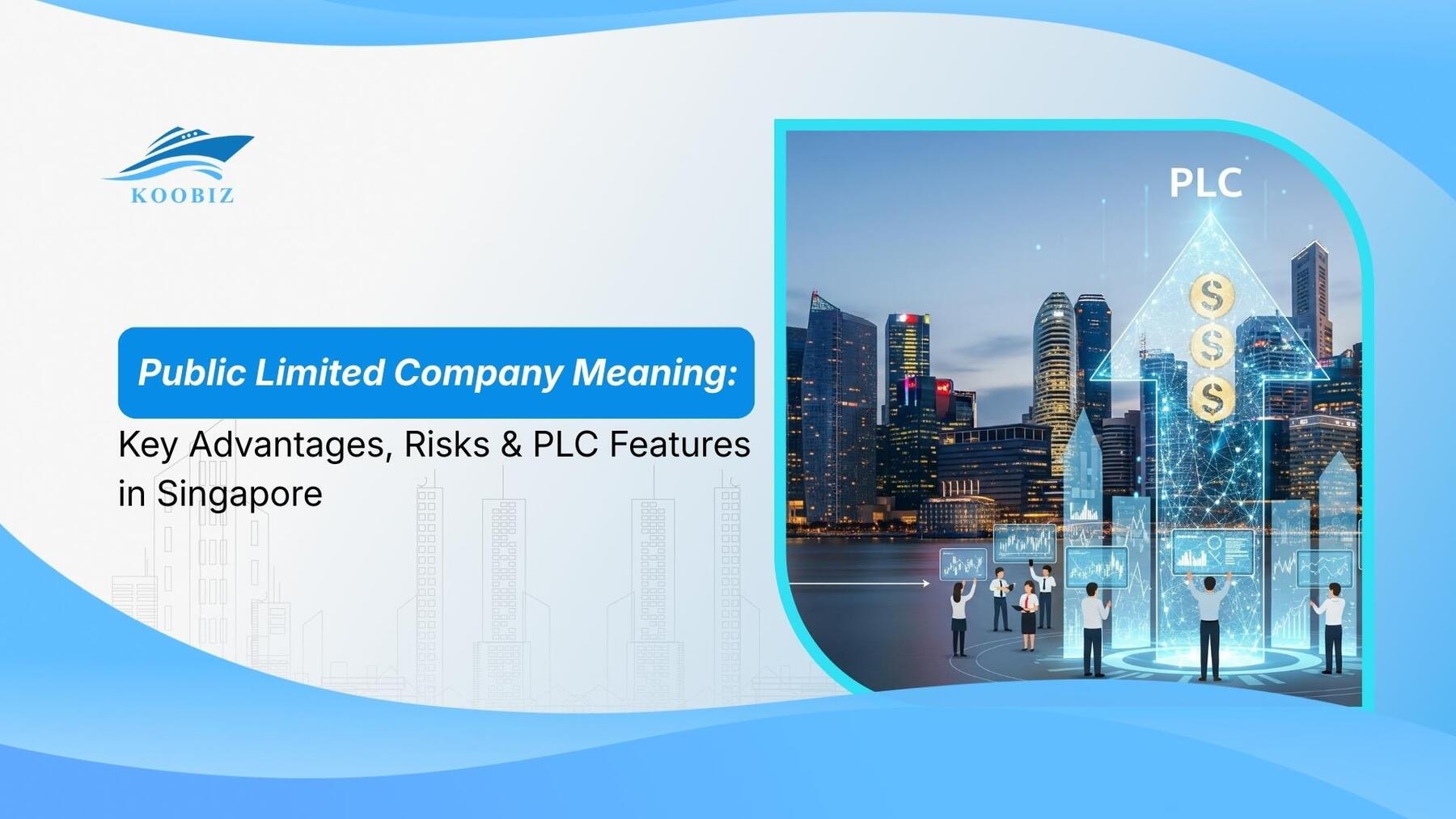
A Public Limited Company (PLC) in Singapore is a distinct legal entity authorized by the Singapore Companies Act to offer its shares to the general public, typically featuring more than 50 shareholders and stricter regulatory oversight. A Public Limited Company (PLC) in Singapore is a legal entity that allows a business to raise capital from the public by offering shares. Governed by the Singapore Companies Act, a PLC must comply with stricter regulations compared to private entities and can help separate your business’s legal identity from your own. Understanding the public limited company meaning is the first step for large enterprises aiming to scale.
Beyond the basic definition, the meaning of a public limited company is intrinsically linked to its unique structural features, such as the mandatory registration of a prospectus before public offers. This framework ensures transparency and makes it distinct from a Private Limited Company (Pte Ltd).
Deciding to form or convert to a PLC involves balancing clear advantages—like enhanced liquidity and credibility—with considerations of risk such as higher compliance and public accountability. It’s both a legal step and a strategic move that shapes your company’s future.
At Koobiz, we guide you through this journey with expert incorporation support, making the transition to a PLC smooth and informed. Let’s explore the structure, benefits, and key considerations together to see if a PLC fits your vision.
What is a Public Limited Company (PLC) in Singapore?
A Public Limited Company (PLC) in Singapore is a distinct legal entity, separate from its shareholders, with the ability to raise capital by offering shares and debentures to the public. Unlike a Private Limited Company, a PLC can have more than 50 shareholders and must use “Limited” or “Ltd.” in its name. This structure highlights its commitment to greater transparency and regulatory oversight by the Accounting and Corporate Regulatory Authority (ACRA).
What are the Major Advantages of a Public Limited Company?
The major advantages of a Public Limited Company are primarily defined by its capacity for growth and market presence. These benefits make the PLC structure the gold standard for businesses aiming for rapid expansion and market dominance.

1. Substantial Ability to Raise Capital
Capital raising in a PLC is the process of generating funds by selling shares to the general public through an Initial Public Offering (IPO) or rights issues. This mechanism allows companies to tap into a virtually unlimited pool of capital from retail and institutional investors. Unlike relying on bank loans or a small circle of private investors, a PLC can raise millions of dollars to fund acquisitions, research, or international expansion. At Koobiz, we often highlight that this powerful access to capital markets is the key reason successful private companies choose to go public.
2. High Liquidity of Shares
Listed PLC shares are traded on stock exchanges, allowing investors to enter and exit positions rapidly. This high liquidity encourages investment, as shareholders are not “locked in” indefinitely, unlike in private companies where selling shares can be a restricted, months-long legal process.
3. Enhanced Corporate Image and Credibility
“Public” status enhances corporate image by signaling stability, rigorous regulatory compliance, and transparency. Banks, suppliers, and customers often view PLCs as more credible than private entities because their financial statements are publicly available and audited. This prestige can lead to better credit terms, easier access to loans, and increased customer trust.
What are the Risks and Disadvantages of a Public Limited Company?
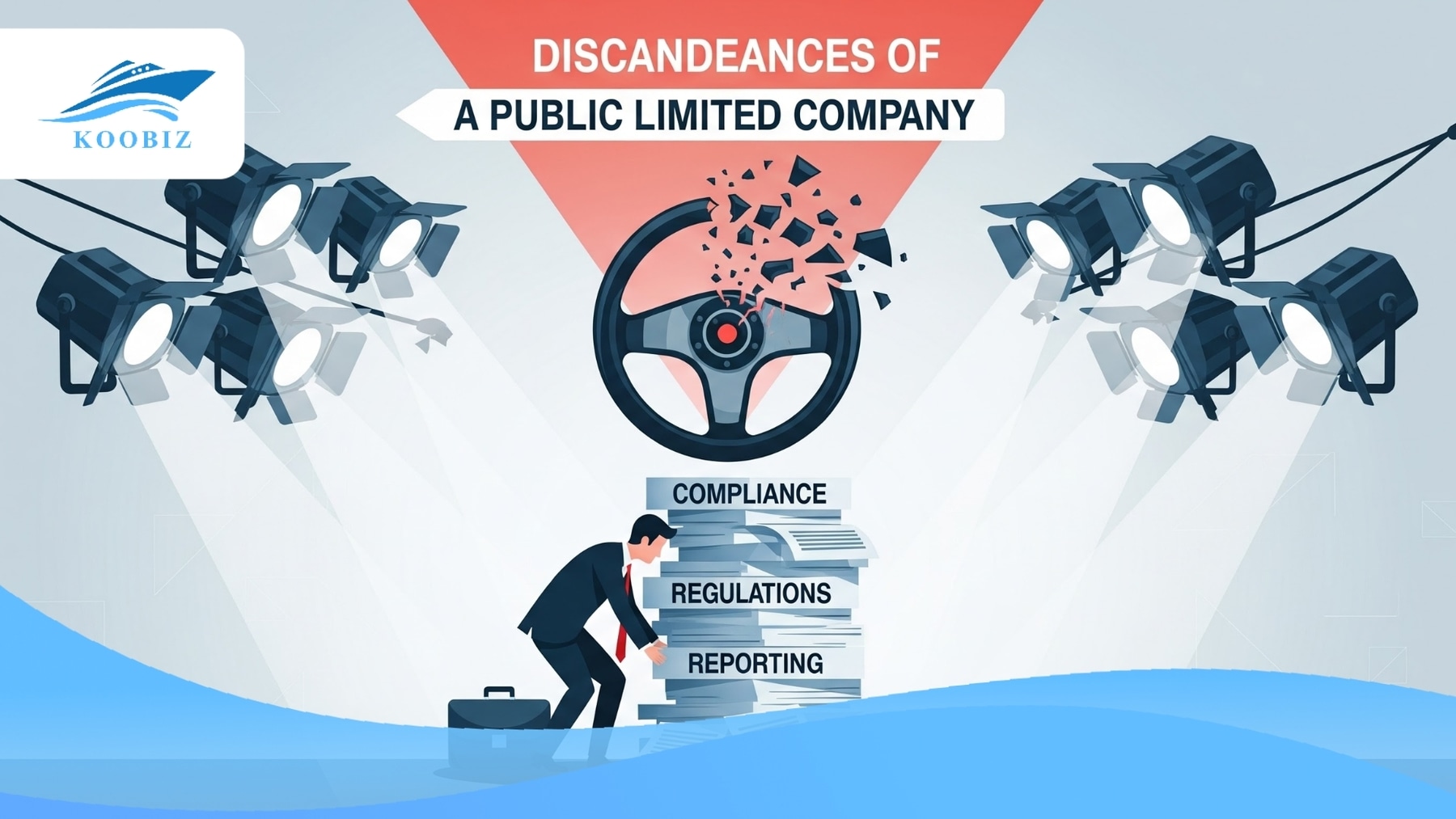
Becoming a Public Limited Company comes with three primary challenges: the high costs of regulatory compliance, potential dilution of your strategic control, and the pressure of operating under public and investor scrutiny. While the benefits are substantial, it’s essential to be prepared to navigate these demands effectively.
1. High Regulatory Compliance Costs
PLCs face higher expenses due to adherence to ACRA’s strict reporting standards and the Singapore Financial Reporting Standards (SFRS). A PLC cannot avail itself of audit exemptions available to small private companies; it must conduct mandatory annual statutory audits, hold Annual General Meetings (AGMs), and maintain detailed registers. These activities require professional company secretaries, auditors, and legal advisors, substantially increasing overhead.
2. Risk of Loss of Strategic Control
As ownership becomes diluted among a vast number of shareholders, original founders may find their voting power reduced. This makes it difficult to push through decisions unilaterally. In extreme cases, if a substantial percentage of shares is publicly traded, the company becomes vulnerable to hostile takeovers, where outside entities purchase enough stock to replace the management team against their will.
3. Intense Public Scrutiny
Public Limited Companies are required to disclose their financial performance regularly, which makes their operational health, leadership compensation, and major decisions subject to public and investor review. This transparency means that if a company’s performance falls short, its share price can react immediately based on market sentiment. This often creates pressure on leadership to focus on near-term results, which can sometimes conflict with longer-term strategic goals.
What are the Key Features of a Singapore Public Limited Company?

A Public Limited Company (PLC) in Singapore is defined by three key operational pillars that enable it to raise public capital: the free transfer of shares, specific director requirements, and a registered prospectus.
Unrestricted Share Transferability
Unlike private companies, shares in a PLC can be freely bought and sold by the public, providing essential liquidity for investors.
Director Requirements
Under Section 145 of the Companies Act, every company in Singapore—whether public or private—must appoint at least one director who is ordinarily resident in Singapore. While the statutory minimum is one, PLCs often appoint additional independent directors to meet higher governance standards and effectively manage public funds.
Prospectus Registration
Crucially, before offering shares to the public, a PLC must file a detailed prospectus with the Monetary Authority of Singapore (MAS). This document ensures transparency by providing investors with comprehensive information on the company’s financials and risks.
How does a Public Limited Company Compare to a Private Limited Company?
A Public Limited Company excels in capital accessibility and liquidity, whereas a Private Limited Company (Pte Ltd) offers superior control and privacy for owners. Comparing these two structures reveals that the choice largely depends on the scale of operations and the desire for public investment.
| Feature | Private Limited Company (Pte Ltd) | Public Limited Company (PLC) |
|---|---|---|
| Number of Shareholders | Maximum 50 | More than 50 (Unlimited) |
| Share Transferability | Restricted (Board approval usually needed) | Freely transferable (High Liquidity) |
| Capital Raising | Private placement only | Offer shares to public (IPO/Debentures) |
| Audit Requirements | Exemptions available for small entities | Mandatory Annual Statutory Audit |
| Minimum Directors | 1 Resident Director | 1 Resident Director* |
| Name Suffix | “Private Limited” or “Pte Ltd” | “Limited” or “Ltd” |
| Public Scrutiny | Low (Financials remain private) | High (Financials are public record) |
*Note: While the statutory minimum is 1, listed PLCs typically require a larger board for governance.
For many of Koobiz‘s clients, starting as a Private Limited Company and converting to a Public one later is the optimal growth path.
Is Every Public Limited Company Listed on the SGX?
No, not every Public Limited Company is listed on the Singapore Exchange (SGX). It is a common misconception that “Public” equals “Listed,” but a company can be an unlisted public company.
Unlisted public companies still comply with the Companies Act for PLCs but do not have their shares traded daily on the open market.
What are the Audit Requirements for a Singapore PLC?
Singapore PLCs face stringent audit requirements: they must appoint an auditor within three months of incorporation and conduct an annual statutory audit regardless of revenue.
How Can a Private Company Convert to a Public Limited Company?
The conversion process involves a special resolution to alter the company’s constitution, increasing the share capital, and lodging the Notice of Conversion with ACRA.
To execute this, the company must change its name to remove the word “Private,” adopt a new constitution suited for a public entity, and file the necessary changes via the BizFile+ portal. This is a complex legal procedure often undertaken when a company prepares for an IPO. If you are considering this strategic leap, Koobiz offers specialized corporate secretarial services to manage the conversion compliance accurately and efficiently.
Ready to Scale Your Business?
Navigating the stringent requirements of a Public Limited Company requires precision, legal expertise, and deep knowledge of ACRA regulations. Whether you are looking to incorporate a new entity, convert your existing Private Limited Company, or ensure full statutory compliance, Koobiz is your trusted partner in Singapore.
We simplify the complex process of incorporation and corporate governance, allowing you to focus on what matters most—growing your business.
Contact Koobiz today to schedule a consultation and lay the foundation for your company’s public success.