

The Singapore Company Constitution is the supreme legal document that governs the internal management, rights, and obligations of a company and its members under the Companies Act 1967. For business owners, understanding this document is the foundation of corporate governance. Previously known as the Memorandum and Articles of Association (M&AA), the modern Constitution consolidates these regulations into a single, cohesive framework essential for every locally incorporated entity.
Koobiz specializes in helping businesses navigate these requirements seamlessly during incorporation. Whether you choose the standard model or a bespoke document, getting this right from the start is critical.
To comprehend the evolution of this document, one must look at the legislative changes introduced by the Companies (Amendment) Act 2014, effective from January 3, 2016. Before this, companies maintained two separate documents (Memorandum and Articles). Today, this distinction is abolished for new companies, streamlining the process. Older companies can continue using their existing M&AA, which is now legally “deemed” to be their constitution, though updating it to align with modern provisions is highly recommended.
The most pressing decision for new entrepreneurs is choosing between the standard “Model Constitution” provided by ACRA and a “Customized Constitution.” This choice dictates the flexibility of your company regarding share transfers and decision-making.
What is a Singapore Company Constitution?
A Singapore Company Constitution acts as a binding contract between the company and its members. Deriving its authority from Section 22 of the Companies Act 1967, it serves as the ultimate rulebook for internal administration.
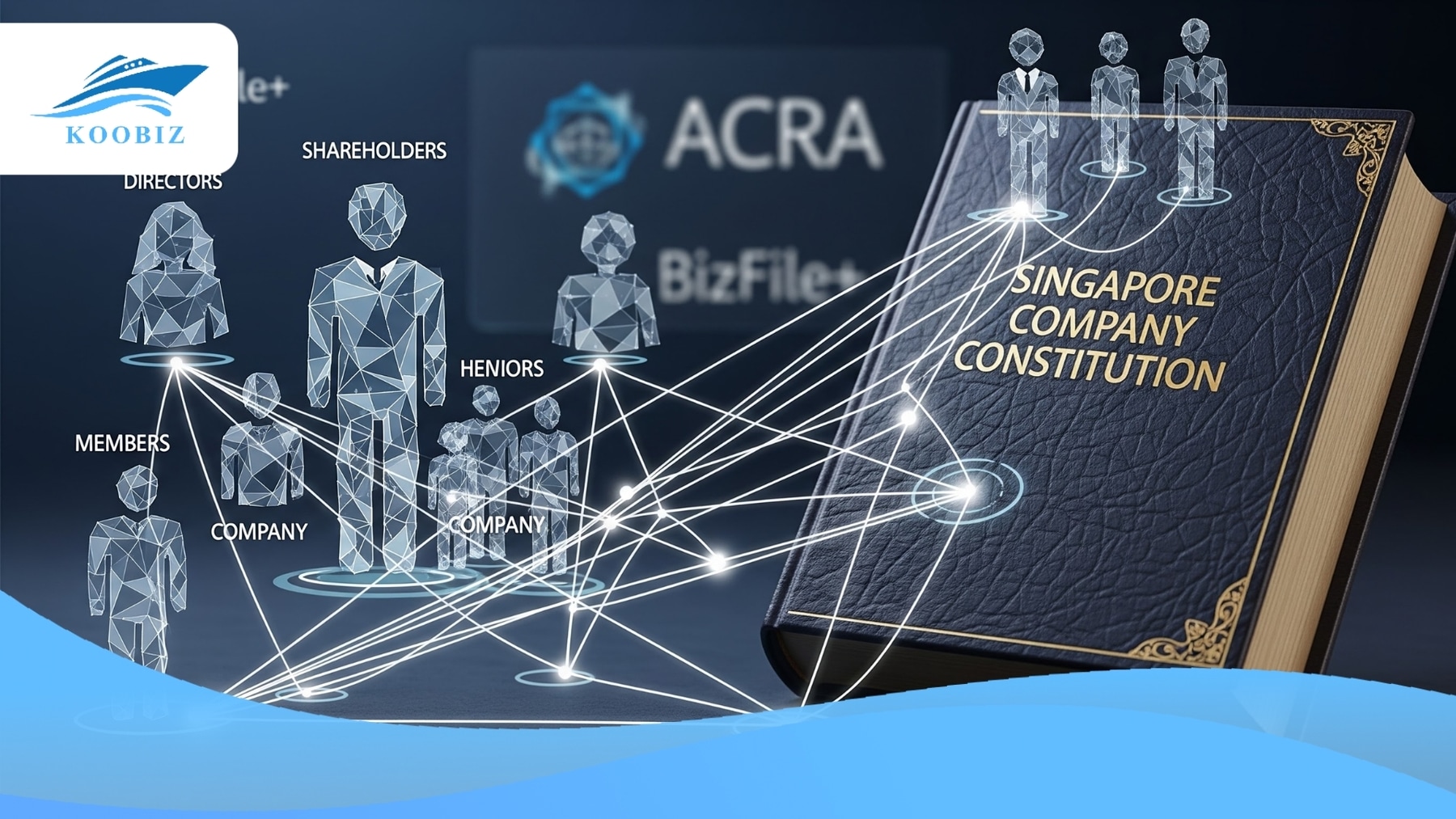
Unlike commercial contracts, the Constitution governs the relationship between directors and shareholders including decision-making processes, power distribution, and member rights. If no specific constitution is filed during incorporation, the Model Constitution applies by default.
Furthermore, the Constitution is a public document available for purchase via ACRA’s BizFile+ portal, allowing creditors and investors to review key rules regarding borrowing limits and share-transfer restrictions before entering into businesses.
What are the Mandatory Sections Required by Law?
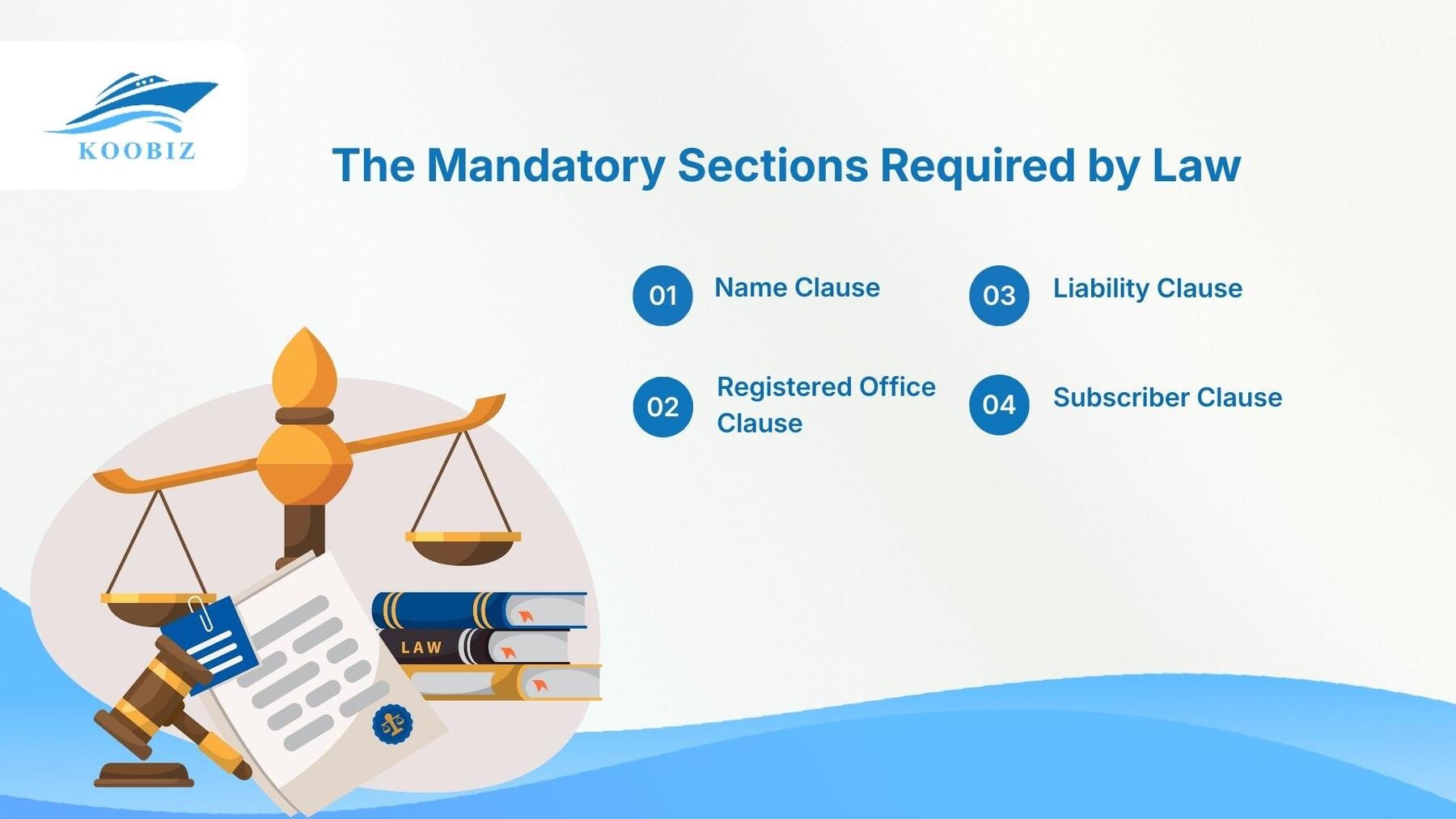
While modern constitutions are flexible, Section 22 of the Companies Act mandates certain clauses to establish the entity’s identity and scope. The following four sections are standard and essential:
- Name Clause: The full, approved name of the company, matching exactly with the name reserved with ACRA. Private limited companies must include “Private Limited” or “Pte. Ltd.” as part of the name.
- Registered Office Clause: The constitution must declare that the registered office is situated in the Republic of Singapore. This establishes jurisdiction and the address for official legal notices.
- Liability Clause: For a company limited by shares, it must explicitly state that “the liability of the members is limited.” with a view to protecting shareholders from personal liability for company debts.
- Subscriber Clause: The document must state each initial subscriber’s full name, addresses and occupations along with a declaration that they desire to form the company and agree to take up the number of shares specified.
Note: The Capital Clause (specifying authorized capital) is no longer mandatory following the abolition of authorized share capital and par value. Share capital is now declared directly via share allotment filings on BizFile+.
5 Critical Considerations When Drafting Your Constitution
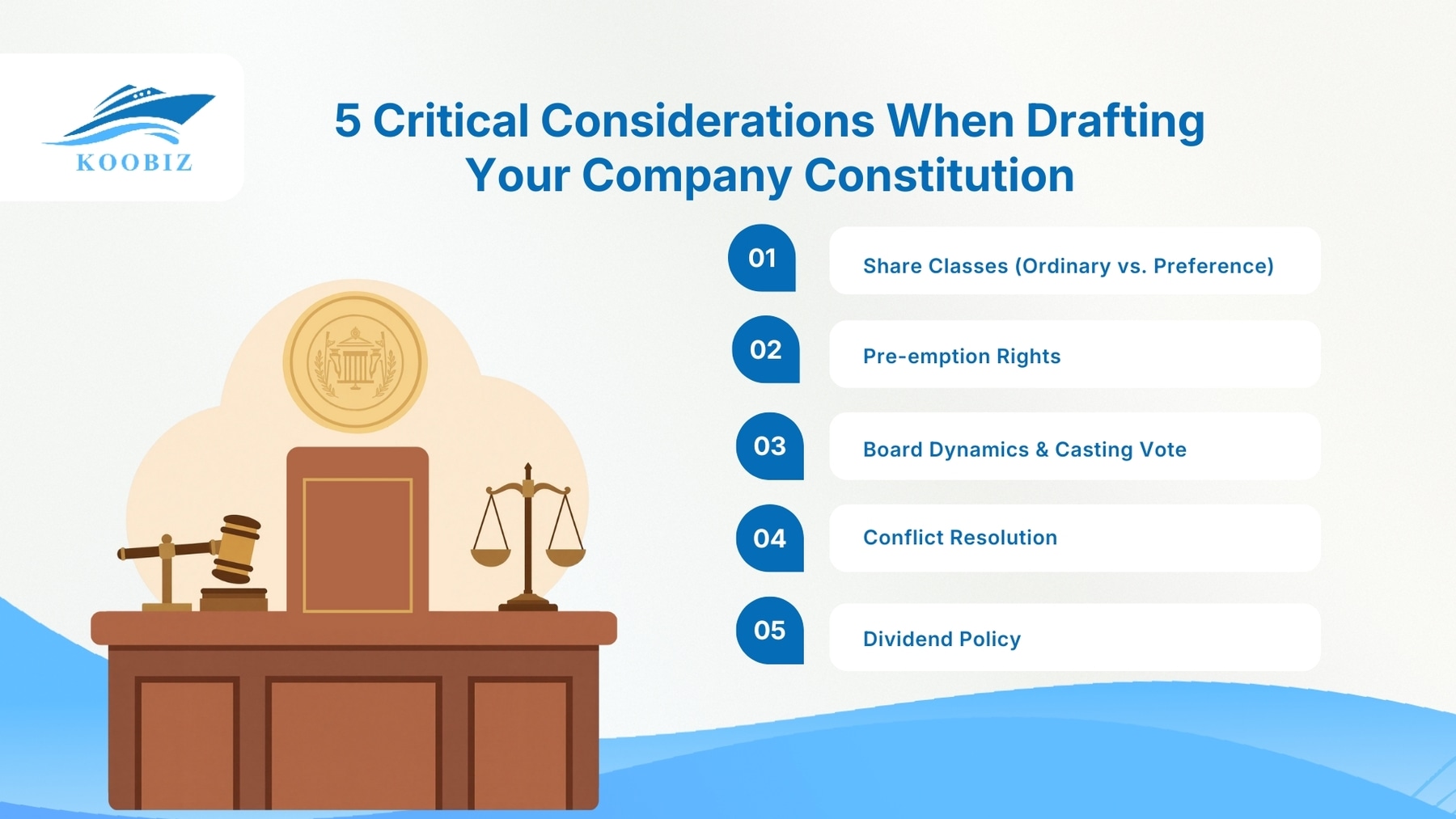
Before adopting a standard template, evaluate these five strategic factors that determine power balance and financial fluidity:
- Share Classes (Ordinary vs. Preference): Startups seeking investment often need “Preference Shares” (priority on dividends, no voting rights). The standard Model Constitution usually accounts only for ordinary shares.
- Pre-emption Rights: This protects existing shareholders from dilution by requiring any selling shareholders to offer their shares to current members before external parties This is vital for maintaining control in private companies.
- Board Dynamics & Casting Vote: A clause giving the Chairman a “casting vote” to prevent deadlock in case of a tie vote
- Conflict Resolution: Your constitution can outline mediation or arbitration mechanisms to resolve disputes without resorting to winding up the company.
- Dividend Policy: our constitution sets specific rules on how and when these are declared, offering transparency to investors.
Model Constitution vs. Customized Constitution: Which is Right for You?
The Model Constitution offers cost-efficiency while a Customized Constitution offers flexibility.
The Model Constitution: A statutory template provided in the Companies (Model Constitutions) Regulations 2015.
- Pros: Free, legally robust, and automatically compliant. Ideal for single-shareholder companies.
- Cons: Rigid. Lacking specific protections like “tag-along” or “drag-along” rights crucial for VC-backed startups in a standard scenario.
The Customized Constitution: A bespoke document drafted by professionals.
- Pros: Tailored to specific needs. Allows for dual-class share structures and entrenched provisions.
- Cons: Incurs legal drafting fees and requires more preparation time.
How to Register and Submit Your Constitution to ACRA
Submission is a mandatory step in the incorporation workflow via the BizFile+ portal.
Log in to BizFile+: Use your SingPass to access ACRA’s filing system. Navigate to “Start a New Local Company”.
Select Constitution Type:
- If adopting the Model Constitution, simply check the box for “Constitution of a Private Company Limited by Shares”.
- If using a Custom Constitution, upload the full PDF document containing the mandatory clauses.
Digital Endorsement: ACRA sends an email notification to all appointed directors and shareholders. They must log in to BizFile+ and digitally endorse the application to confirm their agreement.
Koobiz can handle this entire submission process for you, ensuring your Constitution is correctly formatted and lodged so you can focus on your business.
How to “Buy” or Retrieve a Company Constitution?
You can retrieve a constitution in two ways:
- Adoption (Free): New business owners can download or select the Model Constitution for free during incorporation.
- Due Diligence (Purchase): To view another company’s constitution (e.g., a competitor or partner), you can purchase “Extracts” from the ACRA iShop. As a public record, any member of the public can buy a copy (typically SGD 11 to SGD 26) to verify governance rules.
Can You Amend the Constitution After Incorporation?
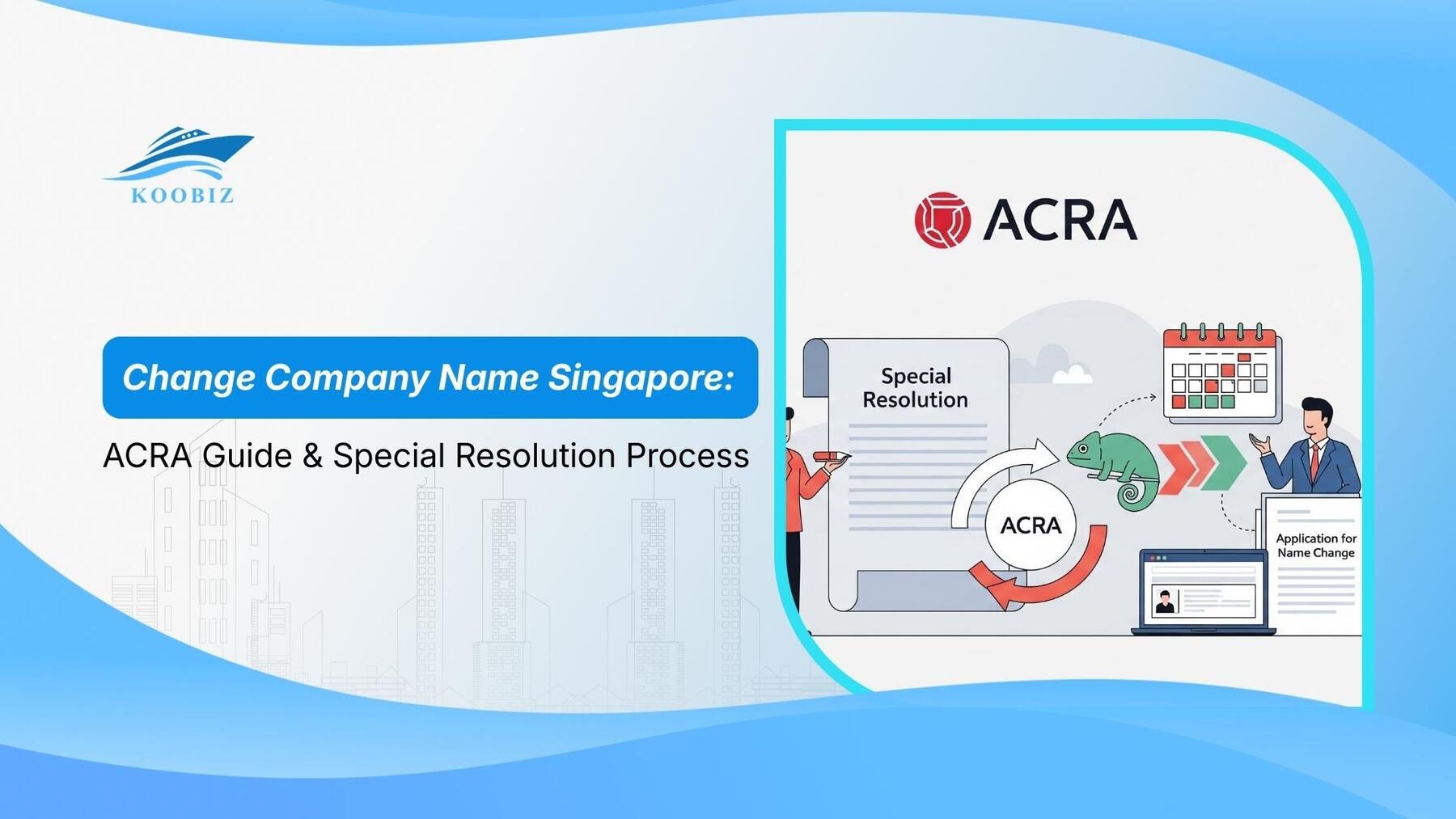
Yes, via a Special Resolution, which requires at least 75% of the votes from shareholders.
The Process:
- Proposal & Meeting: Directors/Shareholders propose the change at a General Meeting.
- Voting: A 75% majority is required to pass the resolution.
- Lodgement: The company must file a “Notice of Resolution” and the new constitution via BizFile+ within 14 days.
Important Note on Entrenched Provisions:
If you wish to add or remove “Entrenched Provisions” (clauses deliberately made difficult to change), Section 26A of the Companies Act usually requires unanimous agreement (100%) from all members,.
Start Your Incorporation Journey with Koobiz
Ready to incorporate your Singapore company with the right governance structure?
Whether you need a simple Model Constitution or complex customized clauses, Koobiz provides expert incorporation and corporate secretarial services to ensure your business foundation is legally sound. We handle the drafting, registration, and ACRA submission so you can focus on growth.
Visit koobiz.com today to incorporate your company with confidence.
![How to Issue Compliant Share Certificates in Singapore [ACRA Guide]](https://cms.koobiz.com/wp-content/uploads/2026/01/how-to-issue-compliant-share-certificates-in-singapore-acra-guide.jpg)