

Singapore is often marketed as a tax haven, but in reality, it is a compliance fortress. Setting up a Singapore company actually increases compliance risk when foreign investors treat it like a loose offshore jurisdiction—ignoring strict statutory demands. At Koobiz, we have extensive experience rescuing businesses facing penalties for this exact error. This guide analyzes the four critical scenarios where burdens outweigh benefits, compares Singapore’s stringency to traditional havens, and uncovers hidden risks like de-banking and director liability.
Is Singapore Company Incorporation Always a Low-Risk Strategy?
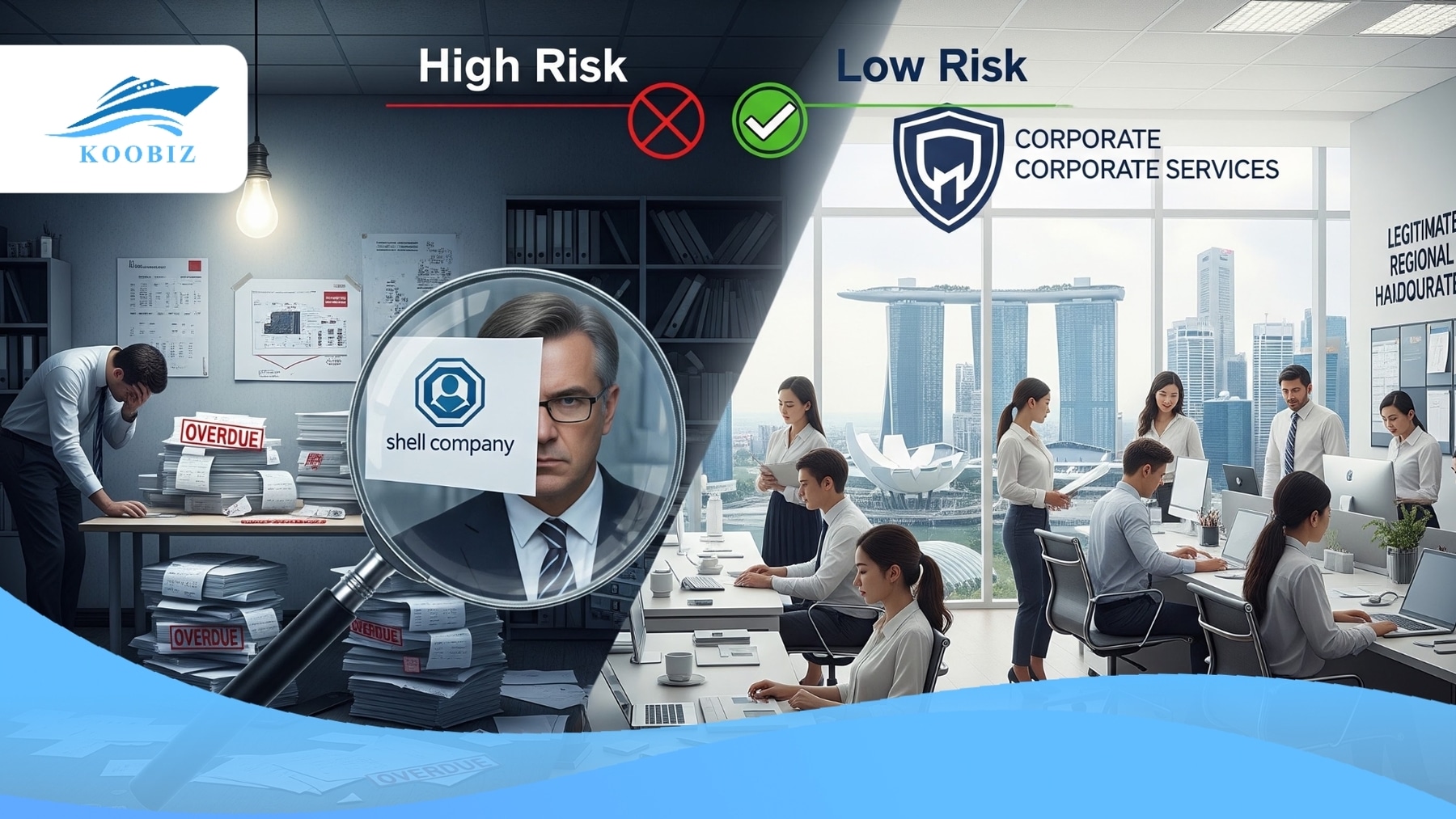
No, Singapore company incorporation is not inherently low-risk; rather the risk depends entirely on whether you treat the jurisdiction as a substantive business hub or a passive tax conduit.
Although the World Bank consistently ranks Singapore highly for its “Ease of Doing Business,” this refers to the speed of setup rather than the leniency of maintenance. The risk profile of your company is not fixed—it fluctuates based on your operational behavior.
- High Risk Scenario: You are a foreign investor using Singapore solely for invoicing, with no local employees, no physical office, and a “cheap” nominee director. In this case, you are a prime target for tax audits and de-banking.
- Low Risk Scenario: You treat Singapore as a legitimate regional headquarters, employing local staff, maintaining accurate financial records, and engaging a professional Corporate Service Provider like Koobiz. In this case, the regulatory framework protects your assets and reputation.
The danger lies in the gap between expectation and reality. If you implement an “off-shore mindset” (anonymity, zero reporting) to Singapore, you are essentially setting yourself up for failure before signing the first contract.
4 Scenarios Where Compliance Burdens Outweigh Tax Benefits
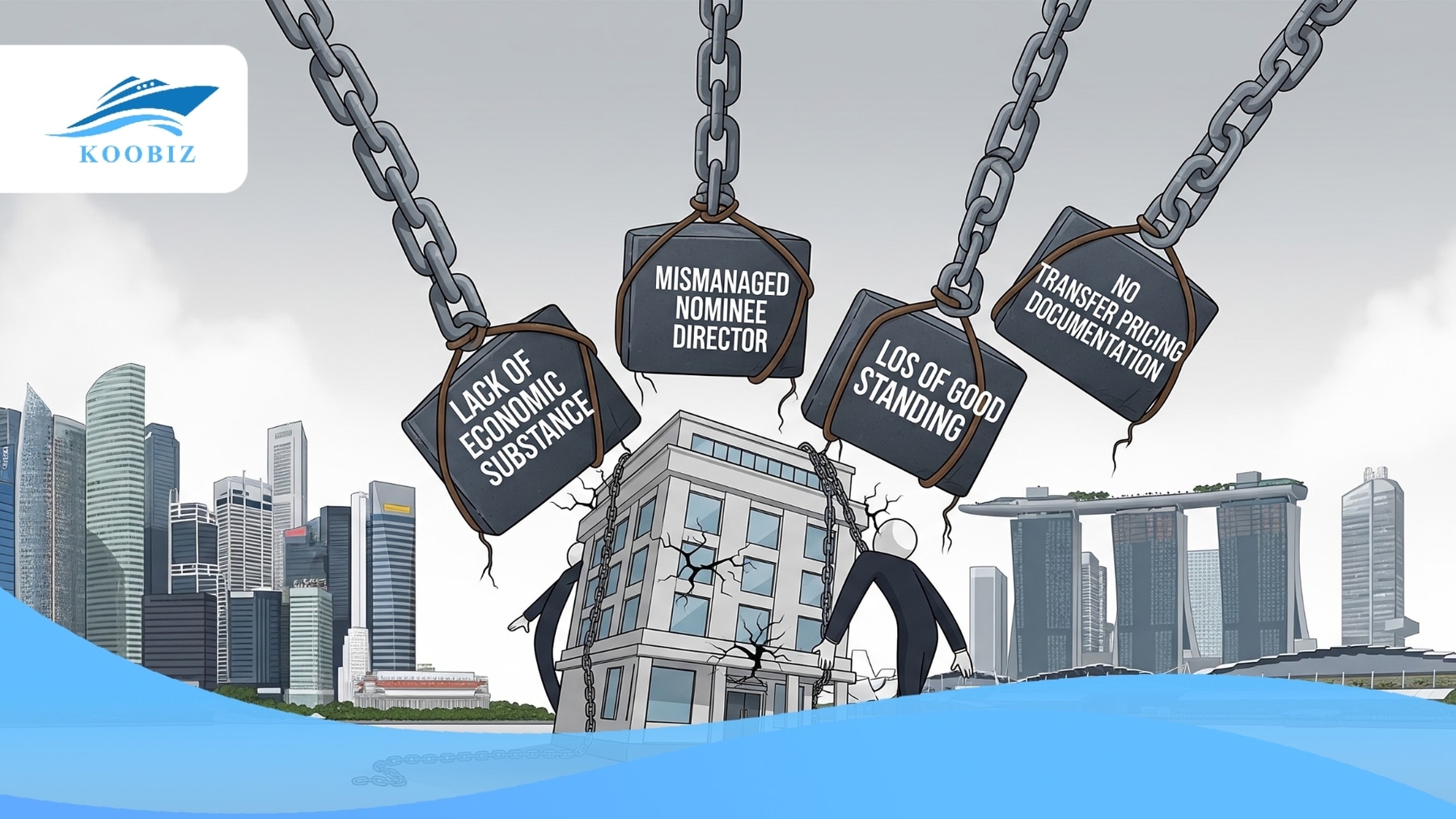
There are four primary scenarios where the compliance burdens of a Singapore company outweigh the intended tax benefits: operating as a “shell company” without substance, mismanaging the local nominee director requirement, failing to maintain “good standing,” and operating complex cross-border structures without transfer pricing documentation.
These scenarios represent the most common pitfalls where the cost of compliance—or the cost of failing it—erodes the value of the Singapore structure.
Operating as a “Shell Company” without Economic Substance
The Scenario: You establish a Singapore entity purely for invoicing purposes. The company has no local employees, no physical office (only a virtual address), and all management decisions are clearly made in another country.
The Risk: Singapore adheres to the OECD’s Base Erosion and Profit Shifting (BEPS) framework.
- Certificate of Residence Denied: IRAS will likely deny your Certificate of Residence (COR), resulting in blocking access to Double Taxation Agreements (DTAs). Without DTA benefits, your foreign income may be taxed at the full 17% rate or higher abroad.
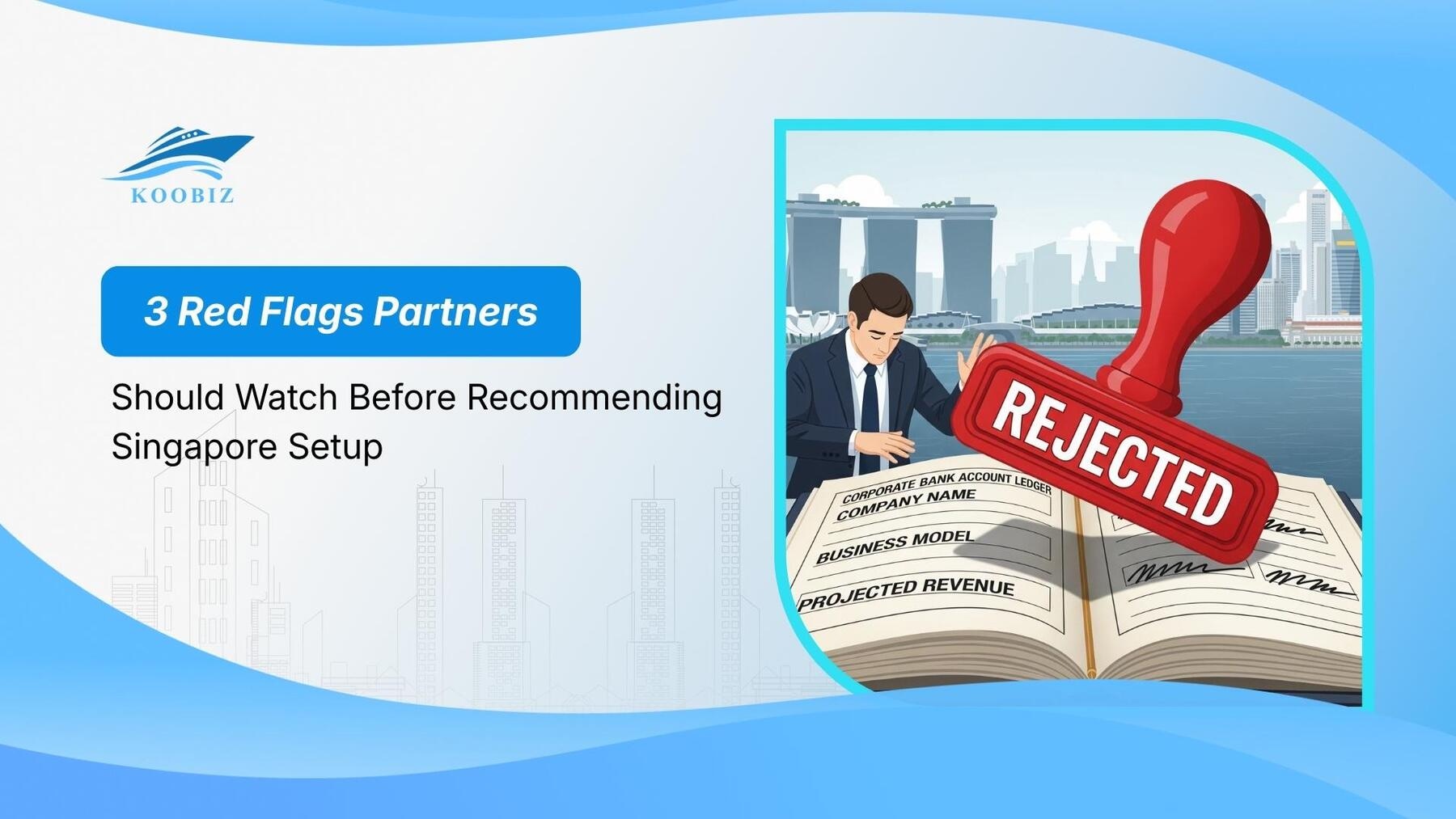
- Bank Account Freezing: Lack of substance often triggers internal risk controls, leading to sudden account closures.
Mismanagement of the Local Nominee Director Requirement
The Scenario: To save costs, you appoint a “cheap,” unresponsive nominee director who provides no oversight, or you appoint a friend/relative in Singapore who lacks professional qualifications.
The Risk: Under the Companies Act, every director has certain fiduciary duties.
- Breach of Law: If a nominee resigns suddenly or refuses to sign documents due to a lack of professional agreement, your company is immediately in breach of the statutory requirement to have a resident director.
- Personal Liability: If you appoint an unqualified friend, they (and you) face personal liability and potential prosecution for the company’s statutory breaches. Professional indemnity is non-existent in casual arrangements.
Failing to maintain “Good Standing” with ACRA and IRAS
The Scenario: The company habitually misses deadlines for Annual General Meetings (AGMs), Annual Returns (AR), or tax filings as “optional” administrative tasks.
The Risk: In Singapore, compliance dates are rigid.
- Commercial Paralysis: A company without a Certificate of Good Standing cannot open foreign bank accounts, apply for loans, or sign major partnerships.
- Strike Off: In severe cases of dormancy or non-filing, ACRA has the power to strike the company off the register. This effectively dissolves your legal entity and can lead to asset seizure.
Complex Cross-Border Structures without Transfer Pricing Documentation
The Scenario: Your Singapore entity engages in significant related-party transactions (e.g., buying goods from a parent company or selling services to a subsidiary) yet lacking formal Transfer Pricing (TP) documentation.
The Risk: IRAS requires all related-party transactions to be at “arm’s length.”
- Tax Adjustments: Without TP documentation, IRAS can arbitrarily adjust your pricing to reflect market rates, resulting in a higher tax bill.
- 5% Surcharge: On top of the adjustment, IRAS imposes a 5% surcharge on the adjusted amount, regardless of whether there was an intent to evade tax.
Singapore vs. Traditional Tax Havens: Comparing Regulatory Stringency
Singapore stands out decisively regarding regulatory stringency and global reputation, whereas traditional tax havens like the BVI or Seychelles prioritize anonymity and deregulation.
However, many investors mistakenly assume that all “low tax” jurisdictions operate the same way. This table illustrates why Singapore’s compliance burden is significantly higher—but also why it offers superior commercial advantages.
| Feature | Traditional Tax Haven (e.g., BVI, Seychelles) | Singapore |
|---|---|---|
| Primary Goal | Anonymity & Deregulation | Reputation & Global Connectivity |
| Financial Reporting | Minimal: often no filing required | Strict: compliance with SFRS & Annual Returns |
| Beneficial Ownership | Often non-transparent or private | Transparent: Mandatory Register of Controllers |
| Audit Requirement | Rare | Mandatory for companies > SGD 10M turnover |
| Banking Access | Difficult: perceived as “High Risk” | Excellent: Access to Tier-1 global banks |
| Tax Treaties (DTAs) | Limited network | Extensive: Over 90+ comprehensive DTAs |
If you treat a Singapore company like a BVI company (i.e., ignoring bookkeeping), you will inevitably breach the law. The rigorous framework is the price you pay for legitimacy.
What Are the Consequences of Non-Compliance in Singapore?
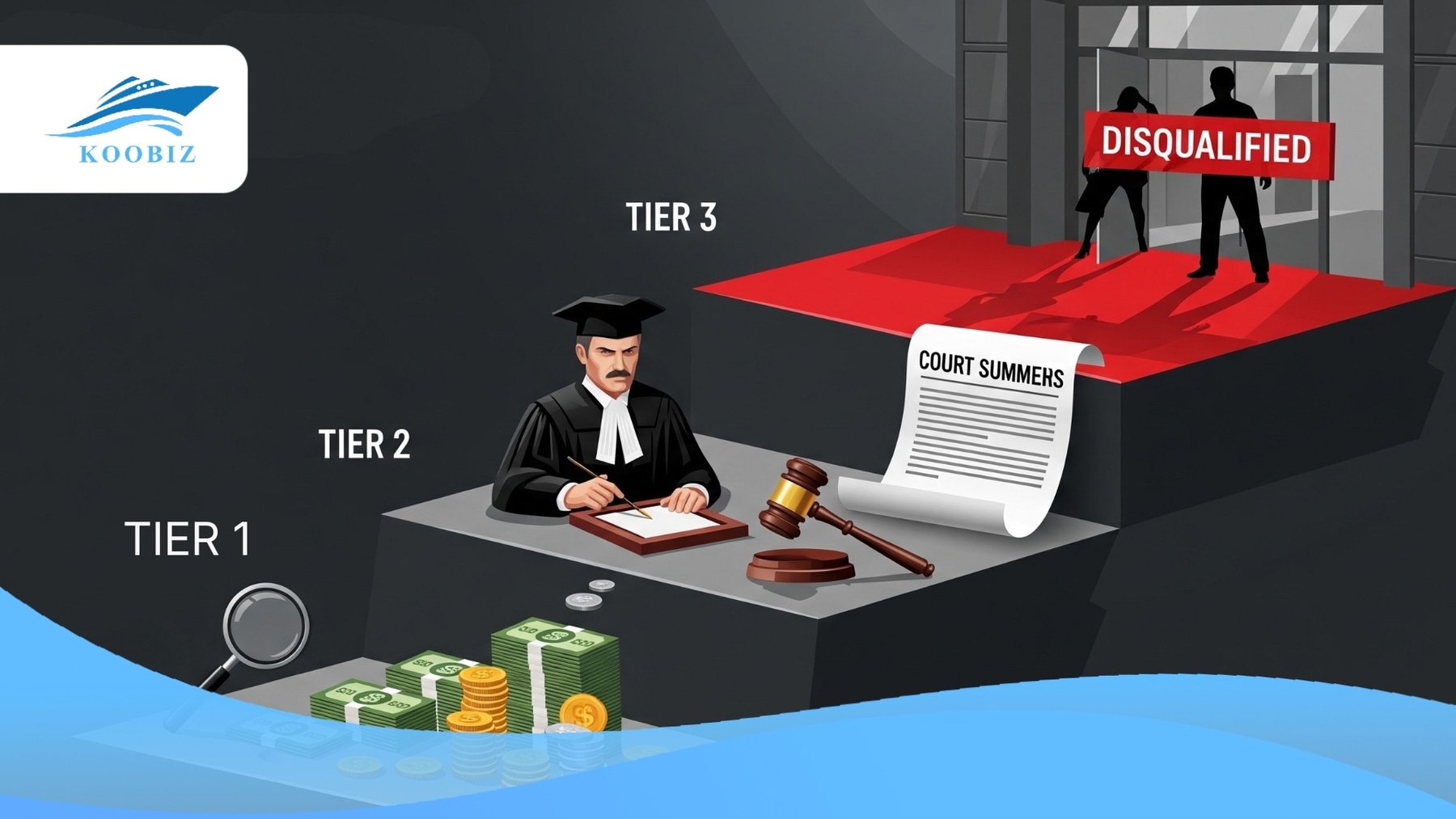
The consequences of non-compliance in Singapore are structured as an “Escalation Ladder.” Penalties increase exponentially based on the duration of the default and the intent.
The “risk” mentioned in the title equals direct prosecution from ACRA and IRAS.
Tier 1: Escalating Financial Penalties
ACRA imposes “composition fines” for late lodgment as the first financial consequence which accumulates per offense.
- Late Filing Fees: Filing an Annual Return late can incur a penalty of up to SGD 600 per offense.
- The Cumulative Trap: If you are late on your AGM, Annual Return, and Tax Filing simultaneously, you can rack up thousands of dollars in fines within a single month.
- Tax Penalties: IRAS imposes separate penalties up to SGD 1,000 for late filing, plus significantly higher penalties (up to 400%) for underpayment or tax evasion.
Tier 2: Court Summons and Prosecution
If financial penalties are ignored, the risk escalates to criminal liability. ACRA will issue a court summons to the directors personally.
- Personal Attendance: Directors will be required to attend court in Singapore.
- Criminal Record: Non-compliance is an offense under the Companies Act. A conviction results in a criminal record, not just a civil fine.
Tier 3: Director Disqualification (The “Nuclear” Option)
This is the ultimate penalty for persistent non-compliance.
- The 3-Strike Rule: Under the Companies Act, a director who has been convicted of three or more filing-related offenses within five years would be disqualified for the position.
- The Ban: A disqualified director cannot take part in the management of any local or foreign company in Singapore for five years.
- Impact: For a foreign entrepreneur, this effectively ends your legal ability to do business in Singapore and destroys your reputation globally.
Hidden Micro-Risks for Foreign Entrepreneurs

There are invisible risks during the incorporation phase which can emerge unexpectedly to disrupt business continuity. These “hidden” dangers have been categorized below.
For the “Hands-Off” Investor: The De-Banking Risk
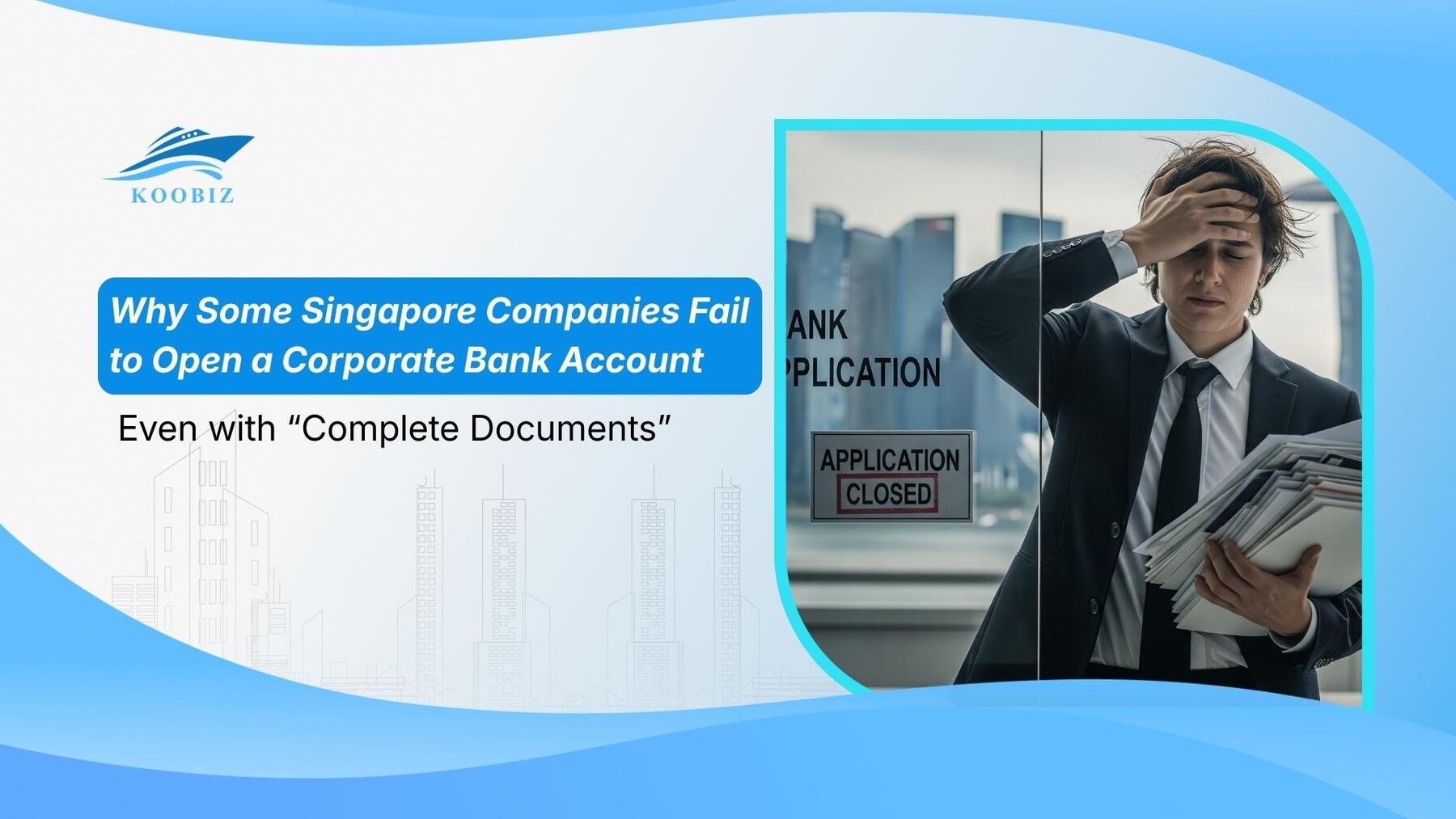
If you are the type of investor who prefers to set up the company and “leave it running” without active oversight, you are at high risk of unilateral account closure.
- The Trigger: Singapore banks conduct periodic “Know Your Customer” (KYC) reviews. They send physical letters or secure emails requesting updated documents.
- The Fallout: “Hands-off” investors often miss these requests. The bank interprets silence as a risk, triggering an immediate account closure (De-banking). Once de-banked, you are flagged on inter-bank risk lists, making it nearly impossible to open an account elsewhere.
For the “Tax Optimizer”: The CRS Data Exchange Risk
If your primary goal is to use Singapore to legally optimize taxes while living elsewhere, you must understand the Common Reporting Standard (CRS).
- The Trigger: Assuming that your Singapore assets are private.
- The Fallout: Singapore is a signatory to CRS. IRAS automatically exchanges financial account information with tax authorities in over 100 jurisdictions. If you are a tax resident of other countries, your home tax authority will receive a report on your Singapore bank balance. If it was undeclared, you face tax evasion charges at home, turning your Singapore asset into a domestic liability.
For the “Shadow Boss”: The De Facto Director Trap
If you are an owner who appoints a nominee but continues to make all executive decisions from the shadows to avoid legal visibility, you are walking into a legal trap.
- The Trigger: Pulling the strings without being on the ACRA register.
- The Fallout: Under Singapore law, a “De Facto” director (someone who acts as a director in practice) has the same legal liabilities as a formally appointed director which means the “shadow boss” also holds liability for debts and compliance failures despite the missing name from the official papers.
How Professional Corporate Services Mitigate These Risks
Professional corporate services mitigate these risks by transforming compliance from a manual burden into a strategic shield. At Koobiz, we act as your regulatory bodyguard.
The table below illustrates exactly how a professional partner defends your business against the vulnerabilities discussed in this article.
| The Vulnerability (The Risk) | The Koobiz Shield (The Solution) |
|---|---|
| Missed Statutory Deadlines
(Leads to fines & court summons) |
Automated Compliance Calendar: We track your Financial Year End (FYE) and AGM dates and send reminders months in advance to ensure zero penalties. |
| Nominee Director Liability
(Leads to “De Facto” risks & disputes) |
Professional Nominee Services: Provision of qualified, indemnified nominees with clear legal agreements, protecting your beneficial ownership rights. |
| Lack of Economic Substance
(Leads to tax residency denial) |
Substance Advisory: Provision of registered office services, employment pass applications, and local payroll to prove genuine business activity to IRAS. |
| Bank Account Closure (De-banking)
(Leads to business freeze) |
Banking Continuity Support: Maintenance of corporate records in “Good Standing” and assist with periodic bank reviews to prevent red flags. |
| Complex Tax/Transfer Pricing
(Leads to audits & surcharges) |
Expert Tax Planning: Cross-border transactions to be reviewed with a view to meeting “arm’s length” standards and preparing necessary documentation. |
Why “Cheap” Incorporation Packages Are Dangerous
There is a direct correlation between price and safety. “Cheap” packages often strip away the crucial protective layers you need. Many foreign entrepreneurs mistakenly view incorporation as a commodity, choosing the lowest bidder (often SGD 300 – SGD 600) without realizing the “Quality Gap.”
When you purchase a budget package, you are paying for automation. When you partner with Koobiz, you are paying for legal oversight and defense.
- The Budget Provider Approach:
- Automation: Uses bots to generate standard constitution forms with no human review of your specific business structure.
- Liability: Provides “bare-bones” nominee directors who often refuse to sign extra documents during banking reviews or audits.
- Support: Relies on chatbots or generic support tickets with no accountability for advice given.
- The Outcome: You save money upfront but face a high risk of fines, audit failures, and operational paralysis when complex issues arise.
- The Professional Partner (Koobiz) Approach:
- Oversight: Strategic review of your business model before filing to ensure correct classification (SSIC codes).
- Security: Indemnified professional nominees who act under a strict legal deed to protect your interests.
- Defense: Proactive advisory on tax queries and direct assistance with bank compliance letters.
- The Outcome: You pay a premium for peace of mind, knowing that a team of experts is watching your blind spots.
Investing in a service that includes tax, accounting, and legal advisory is not an expense—it is an investment in foresight. It ensures that you can focus on business growth rather than worrying about going to jail for a missed filing.
From Singapore company incorporation to opening bank accounts, and providing ongoing tax, accounting, and audit services, Koobiz is your dedicated partner in compliance.
Ensure your expansion into Singapore is a step toward growth, not risk. Contact Koobiz today for a comprehensive compliance health check or to start your incorporation journey on the right foot. Visit us at koobiz.com.