

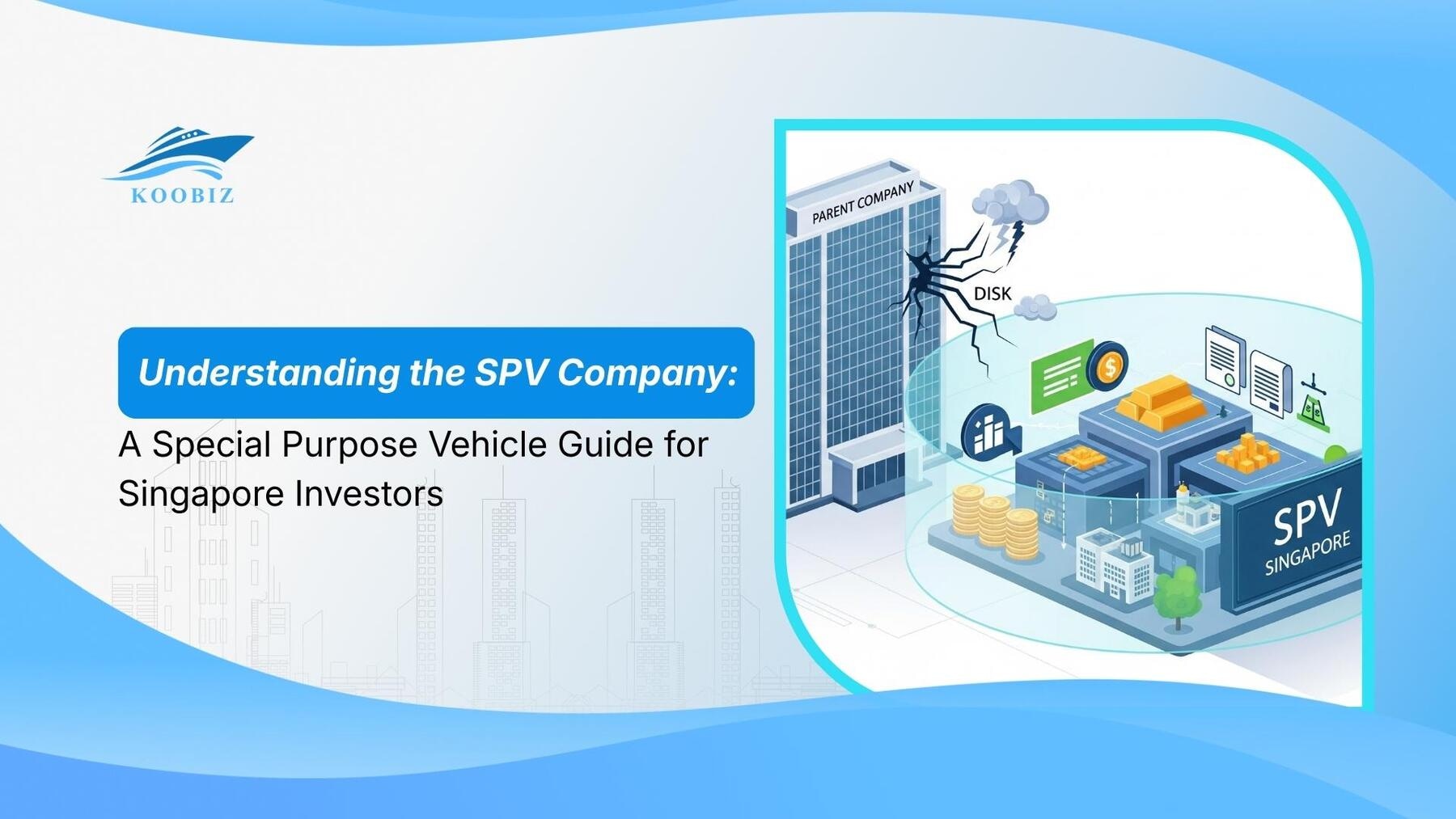
At Koobiz, we frequently guide clients through the nuances of establishing SPV companies with a view to optimizing tax efficiency while mitigating cross-contamination of risks.. This guide will walk you through the definition, primary uses, comparisons with standard subsidiaries, and the procedural steps to set up an SPV in Singapore.
What is a Special Purpose Vehicle (SPV) in Singapore?
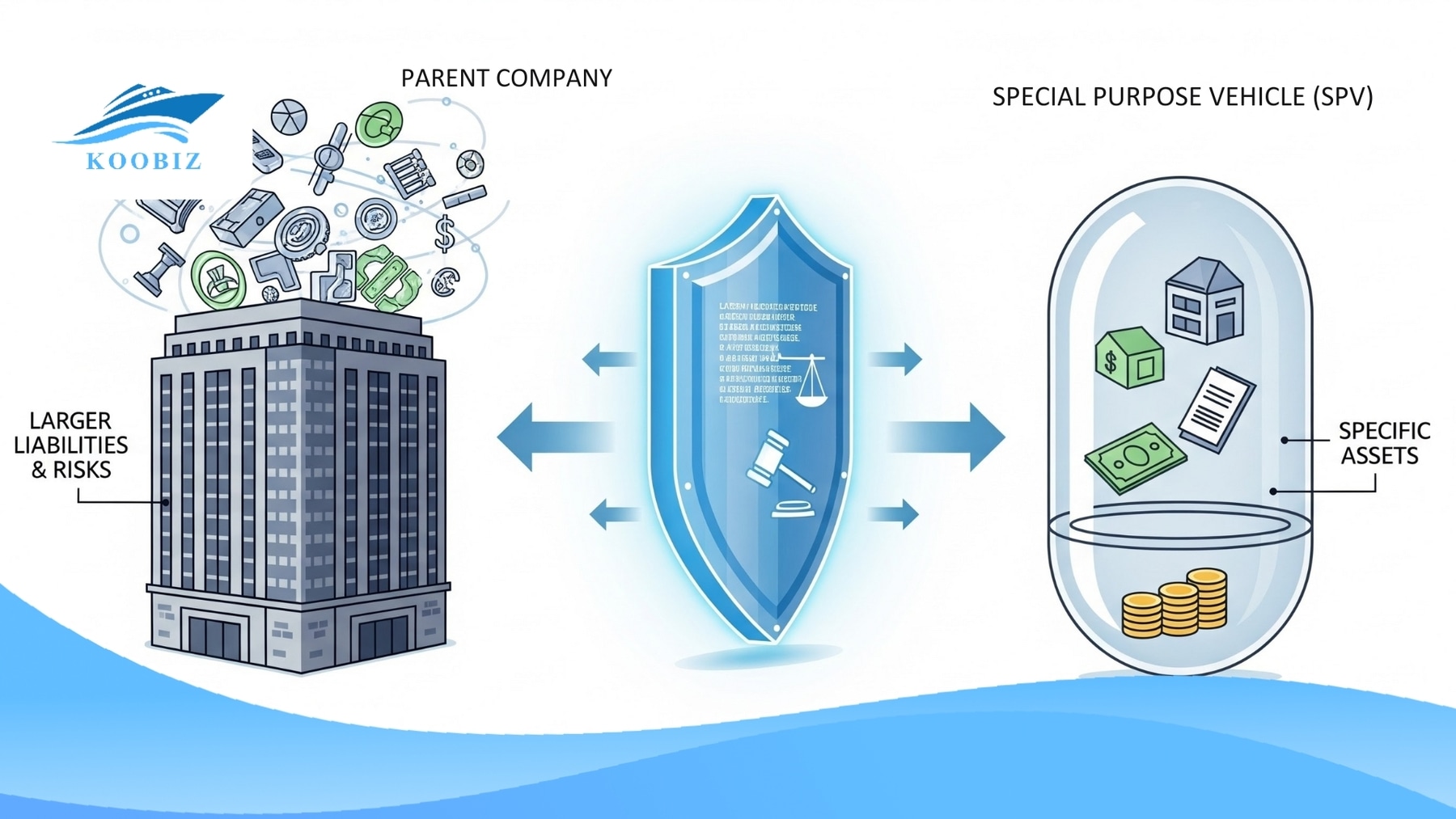
An SPV (Special Purpose Vehicle) is a fiscally distinct subsidiary engineered to facilitate asset securitization, risk isolation and insulate specific assets from the parent entity’s insolvency risks.
To fully grasp why this structure is favored in Singapore, we must look beyond the basic definition and examine its core operational characteristics.
Typically, an SPV is established as a separate legal entity. In Singapore, this often takes the form of a Private Limited Company registered with ACRA. Its “special purpose” implies that its activity is limited to the acquisition and financing of specific assets. This structure establishes a legal ring-fencing mechanism, ensuring that the SPV’s balance sheet remains autonomous. For instance, if the parent company collapses, the assets held within the SPV are generally safe from the parent’s creditors. However, if the SPV fails, the parent company’s liability is usually limited to its equity investment in the SPV. This bi-directional liability shield is the cornerstone of contemporary corporate financial engineering.
What are the Primary Uses of an SPV Company?
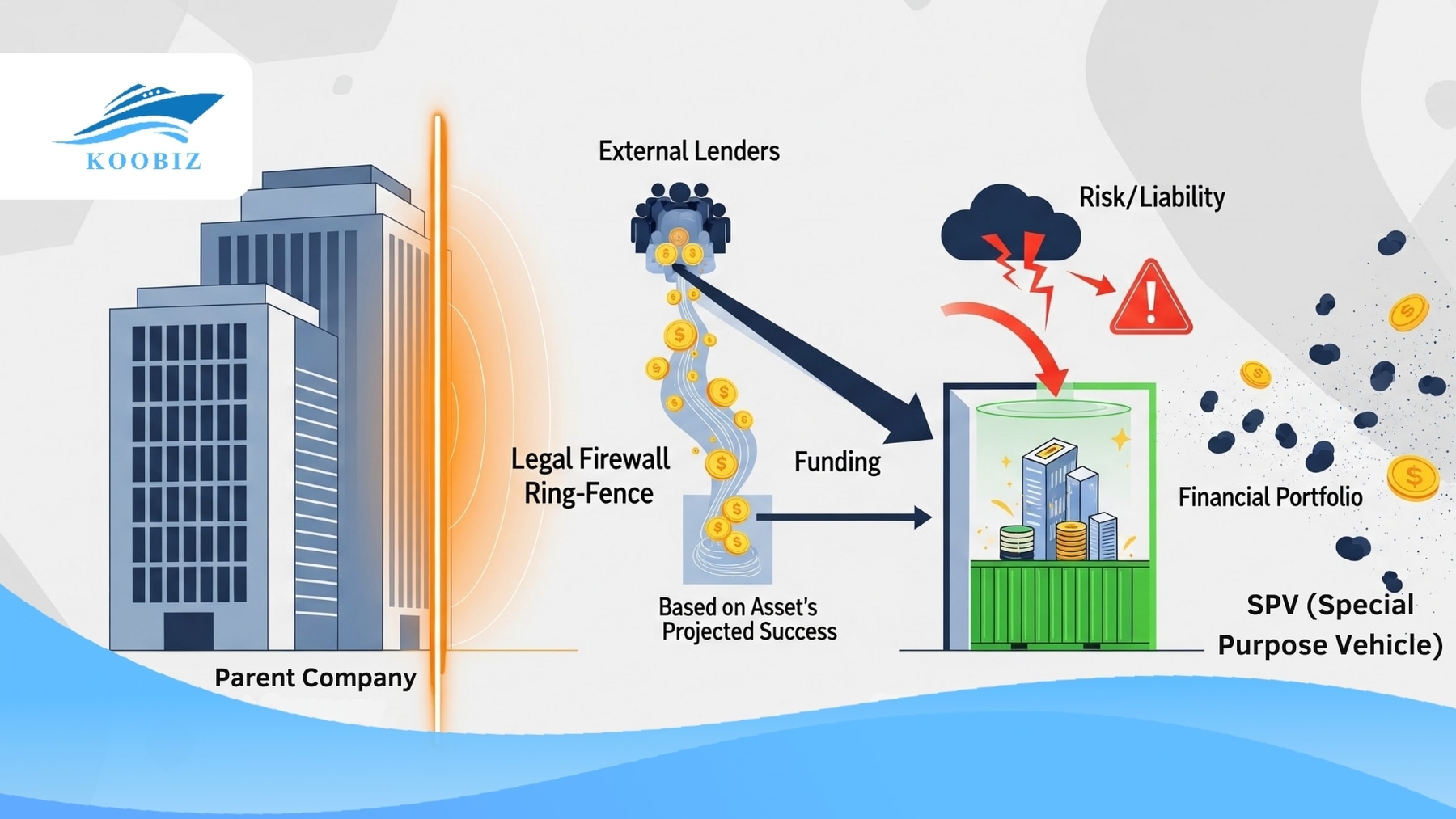
SPVs in Singapore serve as versatile financial instruments, primarily utilized for structured finance, real estate portfolio management, and risk-ringfenced joint ventures.
Let’s explore how these specific applications function in practice to deliver tangible business value.
Asset Transfer and Risk Isolation
Balance Sheet Deconsolidation: Moving volatile assets—such as distressed loans or IP—into an SPV to ensure operational insulation. By moving assets—such as loans, receivables, or intellectual property—into an SPV, the parent company isolates the risk associated with those assets. If the assets underperform, the impact on the parent company is minimized. For example, a construction firm might set up an SPV for a specific hazardous build; if the project faces litigation, the main construction firm’s assets remain protected.
Project Finance and Fundraising
SPVs are instrumental in project finance. When a company wants to launch a new project but facilitates non-recourse or limited-recourse financing, where lenders’ claims are confined to the SPV’s cash flows rather than the parent’s core assets, it is recommended to create an SPV. The SPV can then raise capital or take loans based solely on the projected cash flows of that specific project, rather than the creditworthiness of the parent company. This allows for cleaner accounting and often secures better financing terms for the specific venture.
Real-World Examples: SPV Structures in Action
Strategic Application: From Real Estate Syndication to Tech Ventures.
Case Study 1: The Property Developer
Scenario A: Asset Ring-Fencing in Real Estate Development
The project carries significant risk due to exposure to macroeconomic volatility and construction liability. Instead of developing the condo under the main brand, Summit Holdings incorporates a Singapore SPV named “Summit Project A Pte. Ltd.” The land and construction loans are held strictly within this SPV.
- Outcome: If the condo project fails or faces lawsuits from contractors, the assets of the main parent company, “Summit Holdings,” are protected. Creditors can only claim against the assets in the SPV.
Case Study 2: The Angel Investment Syndicate
A syndicate of 15 individual investors intends to provide capital to a promising Singaporean Fintech startup. However, the startup seeks to maintain a streamlined cap table by avoiding the administrative complexity of managing 15 separate shareholders.
- Solution: The investors establish a Special Purpose Vehicle as a Nominee Entity to streamline governance and facilitate pass-through tax efficiency.
- Outcome: The startup deals with only one shareholder (the SPV), simplifying governance. The 15 investors hold shares in the SPV, which acts solely as a pass-through vehicle for their investment returns.
Structural Comparison: Assessing Liability and Bankruptcy Remoteness across Legal Entities
While the distinction between these entities is often subtle, it lies fundamentally in their legal scope and “bankruptcy remoteness.” The table below outlines the key differences to help you choose the right structure.
| Feature | SPV Company | Holding Company | General Subsidiary |
|---|---|---|---|
| Primary Purpose | Risk isolation, securitization, and specific project finance. | Owning shares and controlling interest in other companies. | Conducting regular operational business activities (sales, services). |
| Operational Scope | Strictly Limited. Operates as a fenced entity with Restricted Object Clauses in its Constitution to ensure transaction integrity. | Governance Focused. A strategic vehicle for Equity Consolidation and Group-wide Governance. | Broad. Deeply integrated with the parent’s brand and daily operations. |
| Bankruptcy Remoteness | High. Engineered via non-petition clauses and asset ring-fencing to survive parent-level insolvency. | Moderate. Offers liability protection but is often tied to group performance. | Low. Usually financially and operationally linked to the parent. |
| Debt Liability | Lenders’ claims are covenanted solely against the SPV’s specific collateral. | Can guarantee debt for subsidiaries. | Debts can often impact the group’s reputation/operations. |
The Concept of “Bankruptcy Remoteness”
Bankruptcy Remoteness: The Core Value Proposition of an SPV. Bankruptcy remoteness means that the SPV is structured in a way that makes it minimizes the risk of substantive consolidation during the parent company’s insolvency. Under Singaporean Law, SPV is viewed as a separate legal unit, such legal separation is achieved through independent directorships and strict governing constitutions. Singapore courts strictly uphold the Doctrine of Separate Legal Entity, reinforcing the corporate veil to insulate the SPV—a service Koobiz specializes in ensuring for our clients.
Is an SPV Structure Necessary for Your Investment?
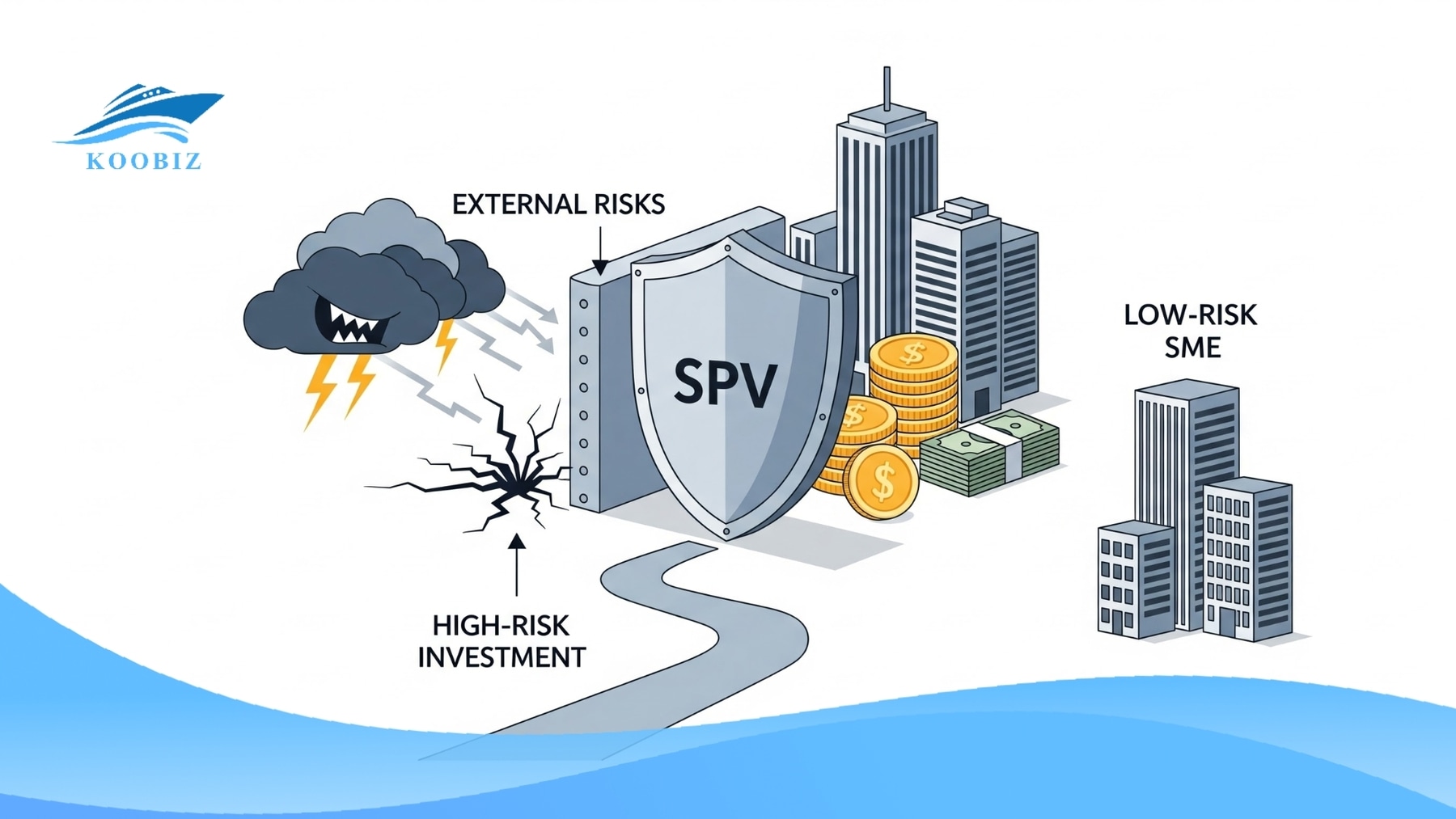
Yes, an SPV structure is necessary if your investment involves high-risk assets, requires ring-fenced financing, or necessitates absolute liability segregation from core operating entities. No, standard operational SMEs with low-risk liability profiles may find the administrative overhead of an SPV unnecessary.
If you are a property developer in Singapore acquiring a new plot of land, using an SPV is almost mandatory to insulate stabilized assets from development-phase liabilities against contingent risks and site-specific operational volatility. Similarly, if you are an investor engaging in capital syndication for a specific startup investment, an SPV facilitates cap table optimization and governance streamlining.
How to Incorporate an SPV in Singapore?
Phase 3: Procedural Execution – Incorporating a Strategic SPV via ACRA, appoint at least one resident director, and define the company’s constitution to reflect its specific limited purpose.
While the process mirrors standard incorporation, complexity arises from the meticulous calibration of the Constitution to preserve structural integrity.
- Name Reservation: Select a unique name for the SPV.
- Define Constitution: Unlike a standard company with broad powers, An SPV’s constitution incorporates Restrictive Covenants and Specific Object Clauses to ensure regulatory compliance.
- Appoint Officers: You need a resident director and a company secretary.
- Share Capital: Determine the shareholding structure.
- Filing: Submit the application via BizFile+ (ACRA’s portal).
The Koobiz Advantage: Ensuring End-to-End Structural Integrity
According to ACRA statistics, the processing time for a new company registration can be as fast as 15 minutes if all documents are in order.
Advanced Regulatory Considerations for Singapore SPVs
Advanced Regulatory Framework: Navigating the Micro-Semantics of SPV Governance
These factors move beyond basic incorporation and touch upon the micro-semantics of financial engineering and fund management in Singapore.
What is the Variable Capital Company (VCC) Relation to SPVs?
The Singapore VCC serves as a robust alternative to Segregated Portfolio Companies (SPCs) found in offshore jurisdictions.A VCC can consist of multiple sub-funds. Within a VCC, each sub-fund operates as a statutory SPV, leveraging asset-liability compartmentalization to eliminate cross-contamination. This allows fund managers to operate multiple investment strategies under one corporate umbrella without incorporating separate private limited companies for each strategy.
How Does “Off-Balance Sheet” Financing Work?
Balance Sheet Optimization: Utilizing SPVs for Deconsolidation and improved Gearing Ratios.By placing certain debt in an SPV which, under certain accounting standards, is not fully recorded in the parent company’s account – the parent company can improve its gearing ratios (debt-to-equity). This makes the parent company look more attractive to investors.
What are the Tax Implications for SPVs in Singapore?
Tax Governance: Leveraging Singapore’s Tax-Neutral Framework for SPVs
- Tax Exemptions: Schemes like 13O and 13U allow for tax exemption on specified income from designated investments, which is essential for Family Offices seeking fiscal optimization through consolidated investment vehicles.
- Double Taxation Agreements (DTAs): An SPV incorporated in Singapore can benefit from Singapore’s extensive DTA network, mitigating withholding tax leakages through Singapore’s extensive Double Taxation Agreement (DTA) network.
Can an SPV be Used for Intellectual Property (IP) Holding?
Strategic IP Asset Protection: The Role of Intellectual Property SPVs.Companies often set up an SPV specifically to own valuable patents or trademarks. The operating company then pays royalties to the SPV for the use of the IP. This protects the IP assets from lawsuits that might target the operating company (e.g., product liability claims). If the operating company is sued, the core IP remains safe within the SPV.
Conclusion
Conclusion: Future-Proofing Investments through Structural Resilience Establishing an SPV company in Singapore is a powerful strategy for risk management and financial efficiency.
At Koobiz, we specialize in empowering businesses to expand into Singapore. From SPV setup to corporate services, tax accounting, and audit assistance, our team provides the expertise required for efficient and compliant operation. If you are ready to structure your next investment vehicle, visit koobiz.com to connect with our experts today.