

Setting up a Singapore Investment Holding Company (IHC) creates a legal entity specifically designed to hold assets rather than conduct active trade. This guide serves as a roadmap for investors looking to leverage Singapore’s framework for asset protection and tax efficiency.
Unlike trading companies, an IHC derives income primarily from passive sources such as dividends, interest, and rentals. Its main function is to act as a vehicle for holding investments like shares, real estate, or intellectual property.
Foreign investors favor Singapore for its political stability, reputation as a financial hub, and territorial tax system. It is the ideal location for managing regional wealth and consolidating global assets.
This guide covers strategic benefits, legal definitions, and a step-by-step registration process to ensure long-term success. Koobiz is here to assist you with every regulatory requirement.
What Is a Singapore Investment Holding Company?
A Singapore Investment Holding Company (IHC) is a limited liability company restricted to holding distinct assets—such as shares, property, or intellectual property—rather than producing goods or services. Specifically, it is a corporate structure where the company’s income is derived primarily from passive investment sources.
To elaborate, the primary characteristic of an IHC is its “passive” nature. Unlike a trading company that interacts with customers to sell products, an IHC exists to own. It serves as a parent entity that owns shares in subsidiaries or holds physical assets like real estate. This structure is often used to protect valuable assets, by keeping them separate from business risks derived from day-to-day operations.
According to the Inland Revenue Authority of Singapore (IRAS), an investment holding company is defined strictly by its income source, which must be primarily investment-based rather than trade-based.
Is Singapore the Best Jurisdiction for an Investment Holding Company?
Yes, Singapore is widely considered the premier jurisdiction for investment holding companies due to its political neutrality, extensive Double Taxation Agreements (DTAs), and transparent legal system. Investors choose Singapore not just for tax reasons, but for the certainty and rule of law it provides.
Furthermore, incorporating in Singapore goes beyond simple ease of business; it is a strategic move for asset security. Unlike traditional tax havens, which may offer low taxes but lack international credibility. Singapore provides both competitive tax rates and a trusted global reputation. This ensures your banking transactions are smooth and your entity is respected worldwide.
What Are the Key Benefits of a Singapore IHC?
There are three primary benefits to setting up a Singapore IHC: tax efficiency, asset protection, and ease of capital flow.
- Tax Efficiency: Singapore operates on a territorial tax system. Foreign-sourced income is often tax-exempt if headline tax conditions are met.
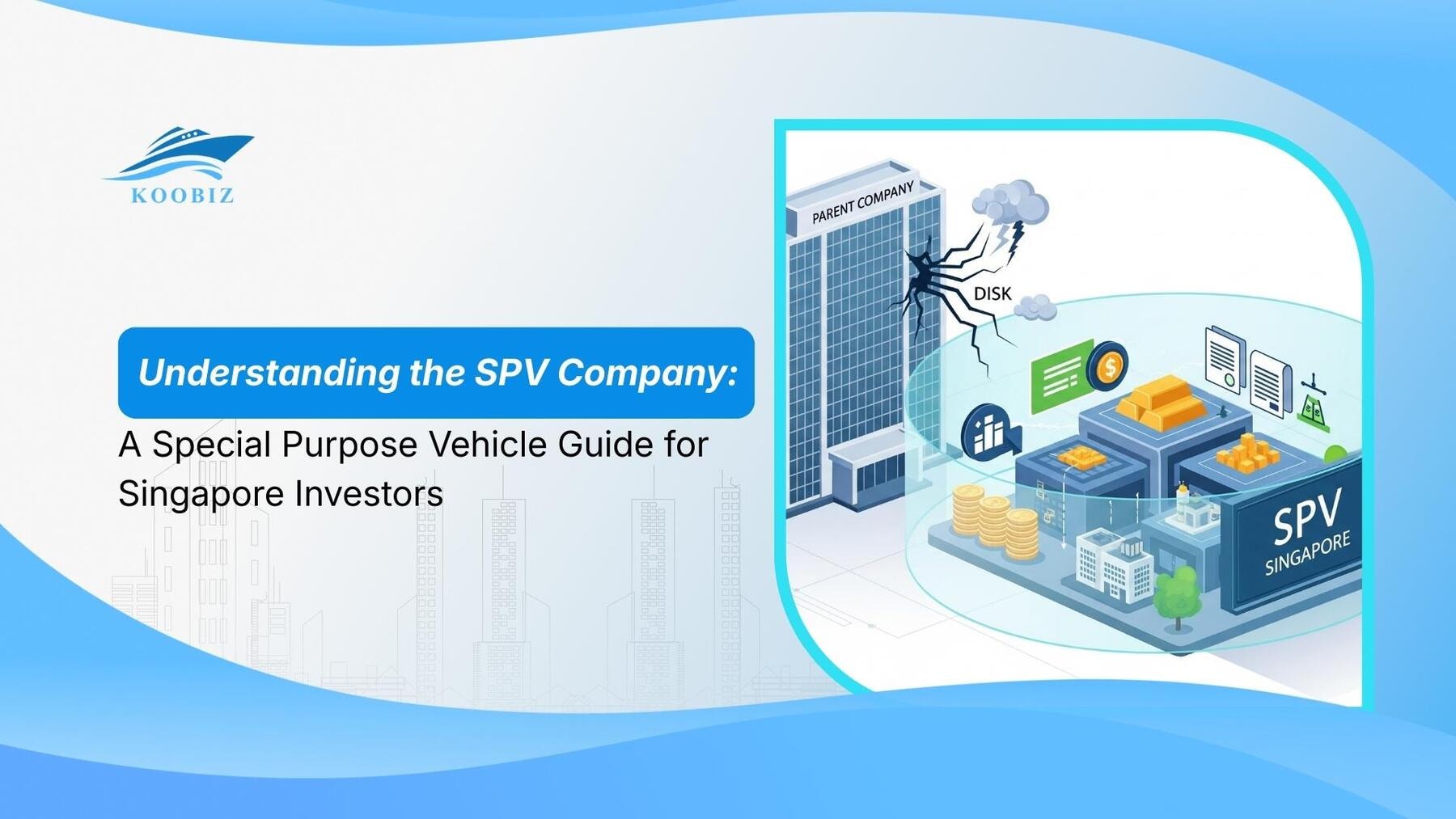
- Asset Protection: By holding assets in a separate legal entity, you insulate them from the liabilities of your operating companies.
- Capital Flow: Singapore does not impose capital gains and no limit on sending the profits out of the country allowing for fluid movement of funds.
What Is the Difference Between an Investment Holding Company and a Trading Company?
The Investment Holding Company excels in asset preservation, whereas the Trading Company is optimized for active revenue generation. The distinction lies heavily in tax treatment and allowable deductions, as outlined below:
| Feature | Investment Holding Company (IHC) | Trading Company |
|---|---|---|
| Primary Function | Asset Holding & Passive Income | Active Trading & Operations |
| Income Source | Dividends, Rentals, Interest | Sales of Goods & Services |
| Expense Deductibility | Strictly Limited. Only direct investment costs (e.g., statutory fees) are deductible. | Broad. Marketing, salaries, rent, and general overheads are deductible against revenue. |
| Capital Allowances | Generally Not Allowed on assets not used for trade. | Allowed on plant and machinery used in the business. |
| Start-Up Tax Exemption (SUTE) | Not Eligible. Only eligible for Partial Tax Exemption (PTE). | Eligible (if conditions met) for tax breaks on the first SGD 100k income. |
Specifically, the most critical difference is the deductibility of expenses. Choosing the right structure depends entirely on whether your primary goal is active business or passive holding.
What Are the Requirements to Set Up a Singapore Holding Company?
These are the non-negotiable statutory pillars mandated by the Accounting and Corporate Regulatory Authority (ACRA).
- Resident Director: You must have at least one director who is “ordinarily resident” in Singapore (a Citizen, Permanent Resident, or EntrePass holder). If you are a foreign investor, you will need a Nominee Director service.Shareholders: Can be individuals or corporate entities, up to a maximum of 50 for a private limited company. 100% foreign ownership is allowed.
- Paid-up Capital: The minimum paid-up capital is SGD 1.
- Company Secretary: Must be appointed within 6 months of incorporation.
How to Register an Investment Holding Company in Singapore?
Registration involves a streamlined three-step process. With the right guidance, this entire process can be completed digitally within a few days.
Step 1: Name Reservation and Approval
The first step is to propose a unique company name and submit it to ACRA for approval. The name must not be identical to an existing entity, nor should it contain undesirable or prohibited words. Once approved, the name is reserved for 60 days (extendable), giving you time to prepare the necessary filings.
Step 2: Preparing Incorporation Documents
Next, you must prepare and sign the company’s constitution and the consent forms for directors and shareholders. This stage involves Know-Your-Customer (KYC) due diligence, which is mandatory for all corporate service providers in Singapore.
- Constitution: Outlines the rules and regulations of the company.
- Consent to Act: Directors and Company Secretaries must sign forms confirming their willingness to serve.
Step 3: Filing with ACRA and Receiving UEN
Once all documents are signed, the formal application is lodged with ACRA via the BizFile+ portal. Upon successful registration, ACRA issues an electronic Notice of Incorporation and a Unique Entity Number (UEN). This serves as your official business certificate.
Need assistance with registration? Koobiz offers comprehensive incorporation packages that handle Name Reservation, Document Preparation, and ACRA Filing on your behalf, ensuring a hassle-free setup.
Practical Case Studies: How Investors Use Singapore Holding Companies
By examining real-world applications, we can see exactly how a Singapore Investment Holding Company creates value through risk mitigation and tax optimization.
Let’s examine two distinct case studies that illustrate the power of this structure.
Case Study 1: The “Risk Firewall” Strategy (Asset Protection)
In this scenario, a successful trading business uses a Holding Company to protect its assets from operational risks.
- The Situation: “TechGlobal Trading,” a software distributor, owns a valuable commercial office and several software patents. They are worried that a client lawsuit could bankrupt the company and force the sale of these assets.
- The Solution: The owners set up “TechGlobal Holdings Pte Ltd.” They transfer the office title and patents to this new Holding Company. TechGlobal Holdings then licenses the IP and rents the office back to the trading entity.
- The Outcome: If the trading business is sued, the assets are safe because they are owned by the Holding Company, which is a separate legal entity not involved in the dispute.
Case Study 2: The “Tax-Efficient Gateway” (Cross-Border Expansion)
This scenario demonstrates how foreign investors use Singapore to minimize tax leakage when investing in the ASEAN region.
- The Situation: Mr. Smith, a UK investor, wants to acquire manufacturing plants in Vietnam and Indonesia. He is concerned about the high withholding taxes on dividends when profits are sent back to the UK.
- The Solution: Mr. Smith incorporates “Smith Asia Holdings” in Singapore. This Singapore company acquires the shares of the Vietnamese and Indonesian manufacturers.
- The Outcome: Due to Singapore’s strong Double Taxation Agreements (DTAs), the withholding tax on dividends flowing from Vietnam/Indonesia to Singapore is significantly reduced. Furthermore, Singapore does not tax these foreign-sourced dividends (under specific exemptions), and there is 0% withholding tax when Singapore sends the money to Mr. Smith in the UK.
How Does the Singapore Tax Regime Benefit Holding Companies?
Singapore’s single-tier corporate tax system is a major advantage. Profits are taxed only once at the corporate level, meaning dividends distributed to shareholders are tax-free.
While the corporate tax rate is capped at 17%, effective rates are often lower due to exemptions. However, it is important to note that Investment Holding Companies do not qualify for the Start-Up Tax Exemption (SUTE) because their primary activity is passive investment. Instead, they are generally eligible for the Partial Tax Exemption (PTE) scheme.
Are Dividends Taxed in Singapore?
No. Dividends paid by a Singapore tax-resident company are completely tax-exempt for shareholders, whether local or foreign. This eliminates double taxation on profit withdrawals.
What Are the Double Taxation Agreements (DTAs)?
Singapore has signed DTAs with over 90 jurisdictions to prevent income from being taxed twice. For a holding company, this significantly reduces withholding taxes on interest or royalties earned from foreign subsidiaries, maximizing retained income.
What Are the Ongoing Compliance and Maintenance Costs?
To maintain good standing and avoid penalties, companies must meet annual obligations:
- AGM: Hold within 6 months of the financial year-end.
- Annual Return: File with ACRA within 7 months of the financial year-end.
- Tax Filing: File Estimated Chargeable Income (ECI) within 3 months of year-end, and the final Tax Return (Form C-S/C) by November 30th (for paper filing) or December 15th (for electronic filing). Even dormant IHCs must file specific returns.
How Does a Holding Company Compare to Other Structures?
Choosing the right structure depends heavily on your investment scale, need for segregation, and banking requirements.
| Feature | Singapore Investment Holding Co. (IHC) | Variable Capital Company (VCC) | BVI / Cayman Offshore Co. |
|---|---|---|---|
| Best For | Single-family offices, small investor groups, holding static assets (property/shares). | Large investment funds needing multiple sub-funds and segregated liabilities. | Investors seeking maximum privacy and zero tax (but willing to face high scrutiny). |
| Asset Segregation | No. Assets and liabilities are pooled in one entity. | Yes. Assets and liabilities can be legally segregated between sub-funds. | No. Standard companies do not offer ring-fencing without complex structuring. |
| Reputation & Banking | High. Regarded as a legitimate onshore business. | High. Regulated by MAS, offering strong credibility for fund managers. | Low/Mixed. High scrutiny from banks (“High Risk”). |
| Cost & Compliance | Moderate. Standard ACRA filing fees and annual maintenance. | High. Higher setup costs, strict MAS oversight, and mandatory fund administrator. | Low Setup / High Maintenance. Cheap to start, but “Economic Substance” rules are increasing ongoing costs. |
What Is the “Economic Substance” Requirement?
To prove it is not a tax-avoidance shell, an IHC must demonstrate management and control in Singapore. This includes holding Board meetings and maintaining records locally.
Ready to Incorporate Your Investment Holding Company?
Setting up a Singapore Investment Holding Company is a powerful strategic move for asset protection. However, the process requires precise adherence to ACRA regulations.
Koobiz specializes in helping foreign and local investors navigate this journey. From providing Nominee Director to handling your Annual Filings, we provide the infrastructure required for success.
Contact Koobiz today for a free consultation on your Holding Company Setup