

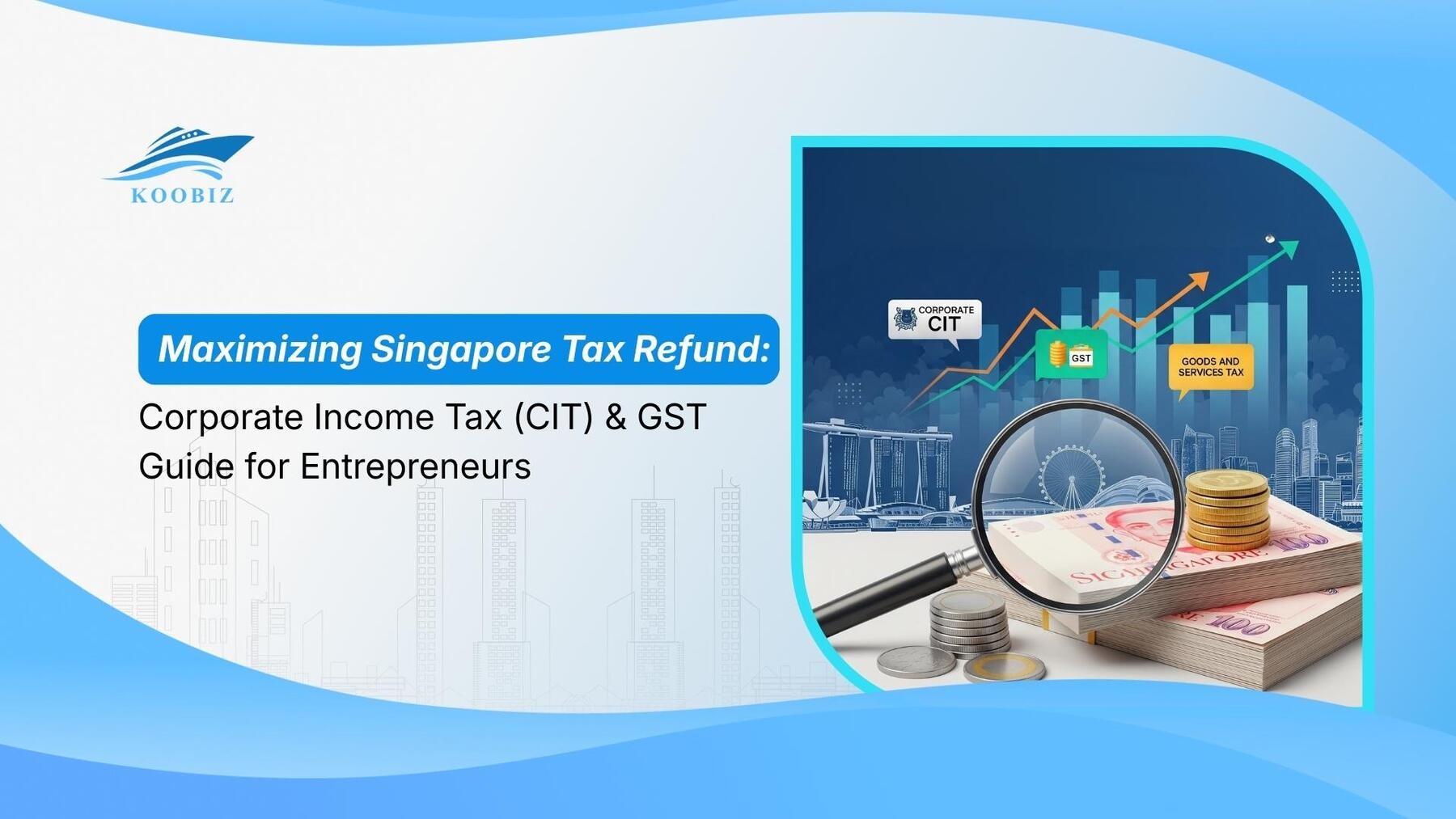
For Singapore businesses, a tax refund is more than just a windfall – it’s crucial working capital. Whether you’re reclaiming an overpayment of Corporate Income Tax or claiming back GST paid on your business purchases, getting the most from these refunds requires careful planning. This guide clarifies the process, helping business owners understand IRAS rules to unlock cash flow and stay fully compliant.
What are the Types of Tax Refunds Available for Singapore Companies?
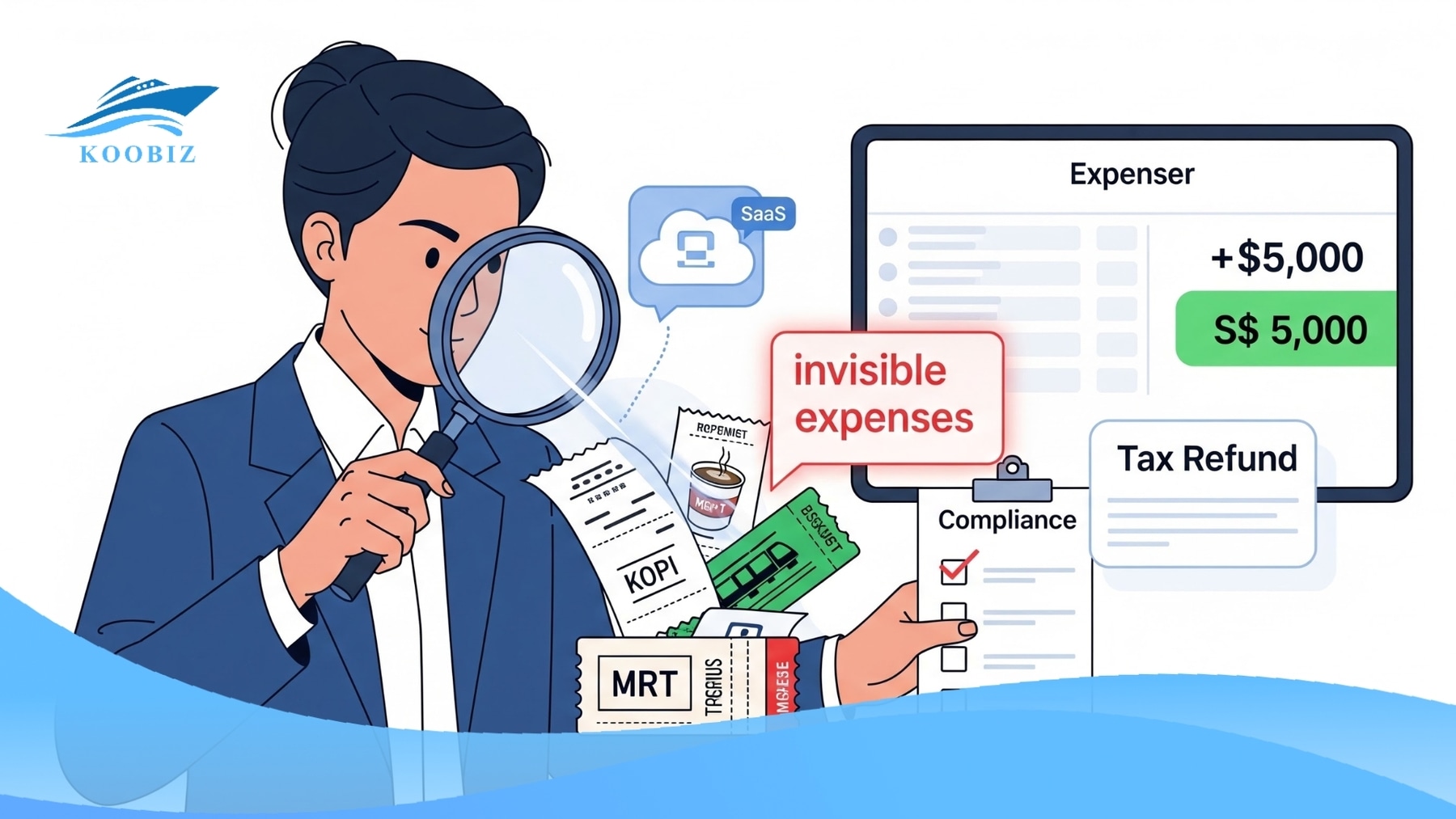
Singapore companies can primarily claim two types of refunds: Corporate Income Tax (CIT) refunds and Goods & Services Tax (GST) refunds. It’s important to understand the difference between a tax on profits and a tax on spending.
| Feature | Corporate Income Tax (CIT) | Goods & Services Tax (GST) |
|---|---|---|
| Nature | Direct Tax on Profits | Indirect Tax on Consumption |
| Filing Frequency | Annual (Year of Assessment) | Quarterly (Typically; monthly/half-yearly options exist) |
| Refund Trigger | Overpayment of Estimated Tax (ECI) vs Actual | Input Tax (Purchases) > Output Tax (Sales) |
CIT refunds usually occur if you paid too much tax during the year based on an early estimate of your profit. GST refunds happen when the tax on your business expenses is greater than the tax on your sales in a given period.
These are two separate processes. Confusing them can disrupt your financial planning. Additionally, specific schemes like Loss Carry-Back Relief can lead to refunds even in years you make a profit, if you apply current losses correctly.
How to Claim Corporate Income Tax (CIT) Refunds?
This process involves comparing the tax you paid based on an early estimate to your final tax bill. It follows a set timeline:
Step 1: File Estimated Chargeable Income (ECI)
Within 3 months of your financial year-end, you file an Estimated Chargeable Income (ECI). Paying tax based on this is like making an advance payment.
Step 2: File Form C-S/C (Actual Income)
By November 30th, you must file your actual tax return (Form C-S/C). If your actual profit is lower than your estimate—perhaps due to more deductions or tax breaks—you have overpaid.
Step 3: Receive Notice of Assessment (NOA)
IRAS reviews your return and sends a Notice of Assessment (NOA). If your final tax bill is less than what you already paid, IRAS will automatically process a refund for the difference.
While this standard process is automated, relying solely on it is passive. Proactive entrepreneurs at Koobiz advise reviewing eligibility for specific reliefs before filing to maximize the refund potential, rather than just correcting estimates. One such powerful mechanism is the Loss Carry-Back Relief system.
What is the Loss Carry-Back Relief System?
This is a valuable system that helps businesses facing a loss after a profitable year. Instead of only using the loss to reduce future taxes, you can apply it to the previous year.
- The Concept (Look-Back): You can “carry back” your current year’s business losses to offset the profit you made in the immediately preceding year.
- The Benefit (Immediate Cash): If you paid tax on profit last year, this reduction creates an overpayment for that year, resulting in a cash refund now. This provides immediate funds when you may need them most.
- The Cap (Limit): The maximum amount of loss you can carry back is currently S$100,000. (Note: This limit can change based on government budget announcements).
When Will IRAS Process the CIT Refund?
IRAS processes refunds efficiently, but timing depends on a few factors:
- The Timeline: Refunds are typically processed within 30 days of the final assessment being issued, provided your submission was complete and accurate.
- The Method: Refunds are not given in cash. If you use GIRO, it goes directly to your bank account. Otherwise, it’s sent via PayNow Corporate.
- The “Arrears Check” (Critical): Before sending any money, IRAS first checks for other unpaid taxes. If you owe GST, withholding tax, or penalties, your CIT refund will be used to offset those debts first. You will only receive the remaining balance, if any.
Strategies to Maximize GST Input Tax Claims
Effective maximization relies on claiming all eligible Input Tax incurred on business purchases and netting it against Output Tax. For GST-registered businesses, the formula is simple: Output Tax (Sales) – Input Tax (Purchases) = Net GST. If Input Tax is higher, IRAS refunds the difference.
Processing Speed Note: Unlike CIT, GST refunds are typically faster—often processed within 7 days for simple cases via GIRO, provided no audit is triggered.
To maximize your refund potential, apply these three core strategies:
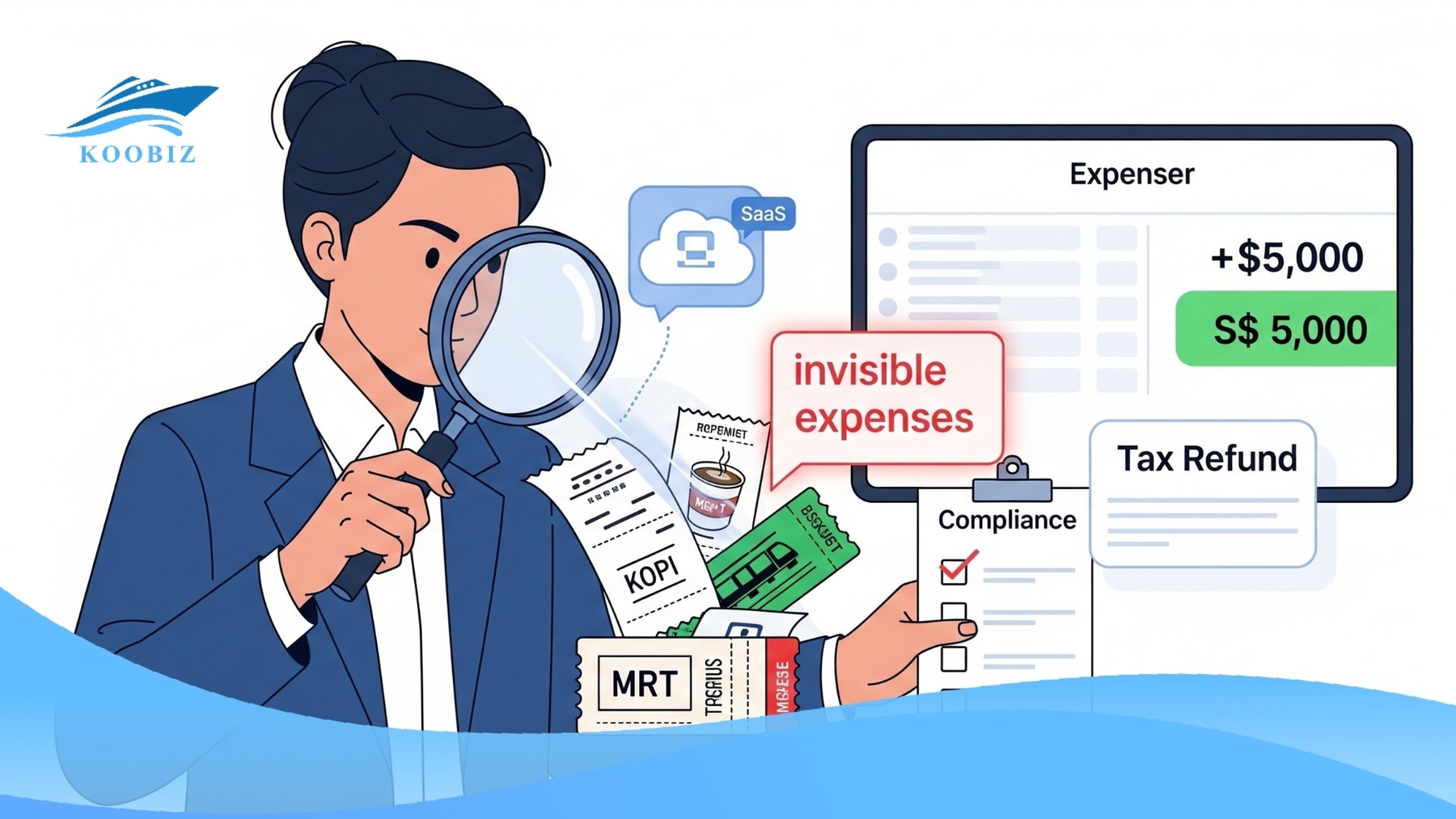
- Capture the “Invisible” Expenses: Don’t just track large equipment purchases. Ensure you claim GST on all business expenses, like software subscriptions, office supplies, and professional fees.
- Plug the Leakage: A frequent error is missing out on claiming GST for small, recurring expenses, which adds up over time.
- Filter for Compliance: Do not claim GST for “blocked” expenses (e.g., personal costs, club memberships). This can trigger an audit and delay all your refunds.
Koobiz emphasizes that aggressive claiming without substantiation triggers audits, so the ultimate strategy must be “maximization through compliance.”
What Conditions Must Be Met to Claim Input Tax?
Yes, strict conditions must be met. To avoid claim rejection, ensure your expenses pass this compliance checklist:
- Valid Tax Invoice: You must have a proper tax invoice addressed to your company, showing the supplier’s GST number and the GST amount.
- Business Purpose: The expense must be for running your business. Personal expenses are not allowed.
- Direct Attribution: The purchase must be related to making sales that are subject to GST. Claims may be restricted if your business makes exempt sales (e.g., certain financial services).
- Non-Blocked Items: The expense must not be on the list of items for which GST cannot be claimed.
Can Startups Claim Pre-registration GST?
Yes. New businesses can claim GST on some costs incurred before they registered for GST, but the rules differ for goods and services:
- For Services (e.g., Rental, Legal Fees, Koobiz Incorporation): You can claim GST incurred on services up to 6 months before your GST registration date.
- For Goods (e.g., Inventory, Machinery): There is no 6-month cap. You can claim GST on goods purchased earlier, provided strict conditions are met: the goods must still be held by your business at the point of GST registration and must not have been consumed or sold.
Case Study: From Liability to Liquidity – A Real-World Example
To visualize how these strategies work in tandem, let’s look at “Novus Tech Pte Ltd”, a hypothetical software startup.
The Scenario: Novus Tech was incorporated in 2022.
- 2022 (Year 1): Profitable. Paid S$15,000 in Corporate Income Tax.
- 2023 (Year 2): Aggressive expansion led to a trade loss of S$80,000.
- Jan 2024: Registered for GST voluntarily to claim input tax on heavy server costs.
The “Passive” Approach: If the founder did nothing, they would simply carry the S$80,000 loss forward to offset future profits (which might not come for years) and start claiming GST only on invoices dated after Jan 2024.
The “Koobiz Maximization” Approach: By applying the strategies in this guide, Novus Tech executed two key moves:
- CIT Refund (Loss Carry-Back): They elected for Loss Carry-Back Relief. Instead of waiting, they carried S$80,000 of the 2023 loss back to 2022.
- Result: The S$15,000 tax paid in 2022 was effectively “cancelled” and refunded in cash.
- GST Refund (Pre-registration Claim): Upon GST registration, they reviewed past invoices.
- Services: Claimed GST on legal fees and rent paid in late 2023 (within 6 months).
- Goods: Claimed GST on unsold laptops purchased in 2022 (held at registration).
- Result: An immediate one-off input tax claim of S$6,500.
Total Liquidity Unlocked: S$21,500 (S$15kCIT +S$6.5k GST) injected back into the business immediately.
While the typical CIT and GST refund procedures cover most recovery scenarios, certain cases—such as compliance failures, unconventional business structures, or audit triggers—need more careful handling to ensure the refund is actually received and not withheld.
Navigating Common Refund Challenges and Pitfalls
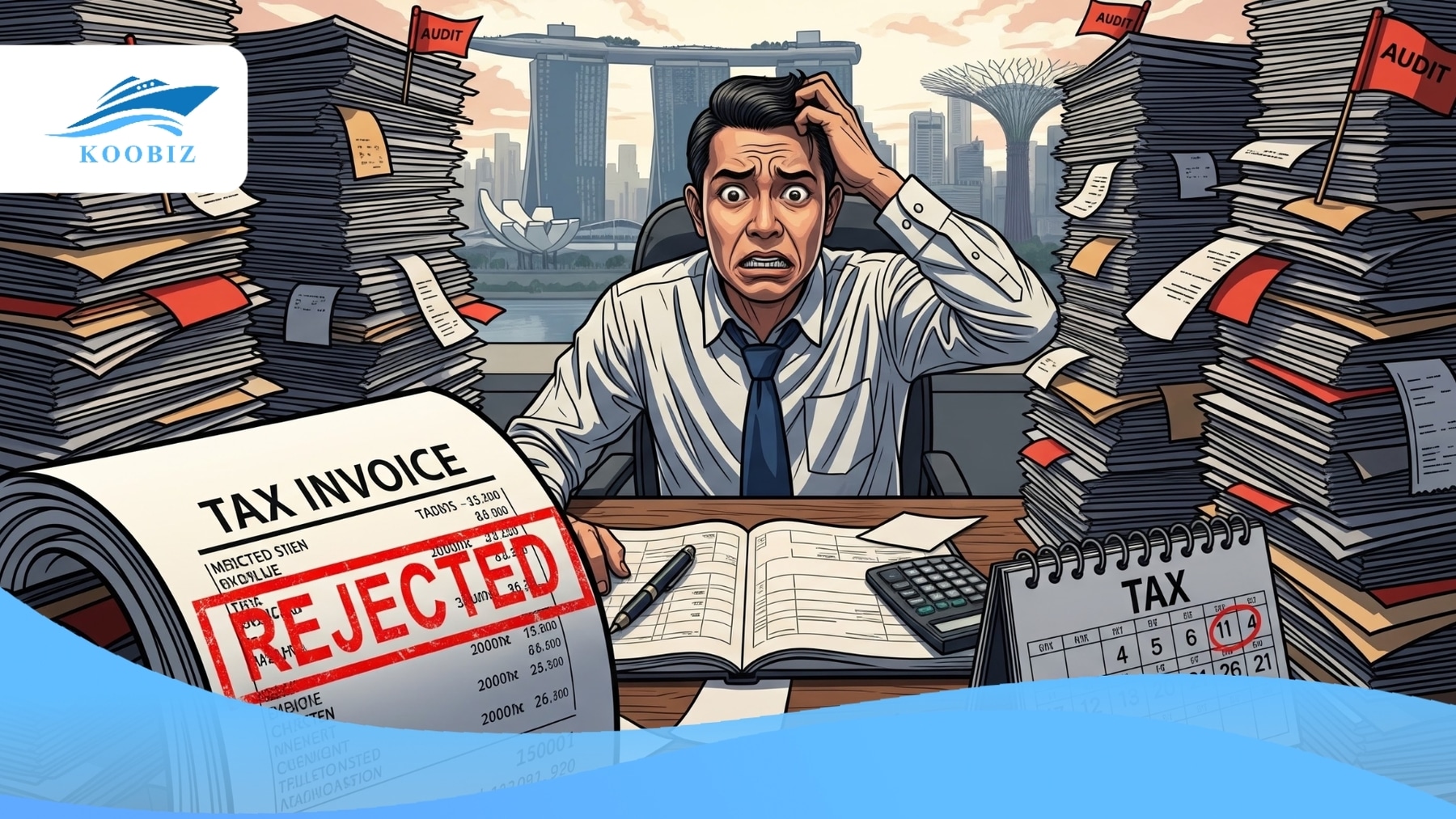
Common challenges often stem from administrative oversights that trigger IRAS audits. Even with a legitimate claim, the path to receiving a Singapore tax refund can be obstructed if red flags are raised.
Common Audit Triggers to Watch:
- Identity Mismatch: Invoices addressed to a director personally instead of the company name will be rejected.
- Statistical Anomalies: A sudden, large increase in GST claims compared to your past history can flag your account for checks.
- Documentation Gaps:Missing receipts or unclear documentation are frequent reasons for claims to be denied.
At Koobiz, our accounting services team frequently intervenes to help clients reconstruct proper documentation to satisfy these IRAS queries. Understanding the nuances below can prevent these delays.
What is the Difference Between a Tax Refund and a Tax Credit?
The distinction matters for cash flow planning. Here’s a concise clarification you can use:
Tax refund: a cash payout received by the company, reducing cash outflows or increasing cash on hand.
Tax credit: a balance that IRAS retains to offset future tax liabilities, reducing future tax payments but not providing immediate cash.
| Feature | Tax Refund | Tax Credit |
|---|---|---|
| Definition | A cash payout sent to the company’s bank account. | A balance retained by IRAS within the tax account. |
| Trigger | Issued only when there are no outstanding tax liabilities. | Retained to offset future or outstanding tax debts. |
| Priority | Low (Last Step). | High (First Step). |
While a cash refund is ideal, IRAS prioritizes settling any debts you owe. If you have a S$5,000 CIT refund but an unpaid S$200 GST penalty, IRAS will pay the penalty first and refund you S$4,800.
Is GST Refundable for Exempt Supplies?
Generally, no. You usually cannot claim back GST on purchases related to making exempt sales (e.g., residential rent). However, there is a small business exception:
- The General Rule: Input tax incurred for making exempt supplies (e.g., residential rental, sale of financial products) is not claimable. It becomes a business cost rather than a refundable item.
- The “De Minimis” Exception: You can claim the input tax in full only if you meet the following thresholds:
- The value of exempt supplies is ≤ S$40,000 (average per month); AND
- The value of exempt supplies is ≤ 5% of your total supplies.
This highlights the importance of precise calculation in mixed-supply businesses. Failing to segregate these expenses is a common compliance error.
How to Handle Refunds for Business Cessation?
Timing is critical when shutting down a company to ensure you receive any final refunds.
- File Final Returns: Submit Form GST F8 (for GST) and Form C-S/C (for CIT) clearly marked as “Final.” This alerts IRAS that no further returns will be filed.
- Await Clearance: Do not proceed to strike off the company with ACRA until tax clearance is received from IRAS.
- Bank the Cash: Ensure the refund hits your corporate bank account before you close the account.
If the company is closed before the refund is processed, the money may be sent to a government holding account, making recovery difficult and lengthy.
Koobiz specializes in simplifying the corporate journey in Singapore. From company formation to ensuring your tax and accounting frameworks are optimized for maximum refunds, our experts are ready to assist. Don’t leave money on the table – ensure your compliance and claim what is rightfully yours.
For expert assistance with your tax filings and refund claims, visit us at Koobiz.com.