

Singapore’s GST rate is now established at 9% as of 2026, a new reality for all businesses and consumers. Yet, clarity on compliance, economic drivers, and future projections remains essential. Whether you are managing household expenses or planning to set up a company with Koobiz, this guide explains the history, current implications, and future outlook of Singapore’s GST.
What is the Current Singapore GST Rate in 2026?
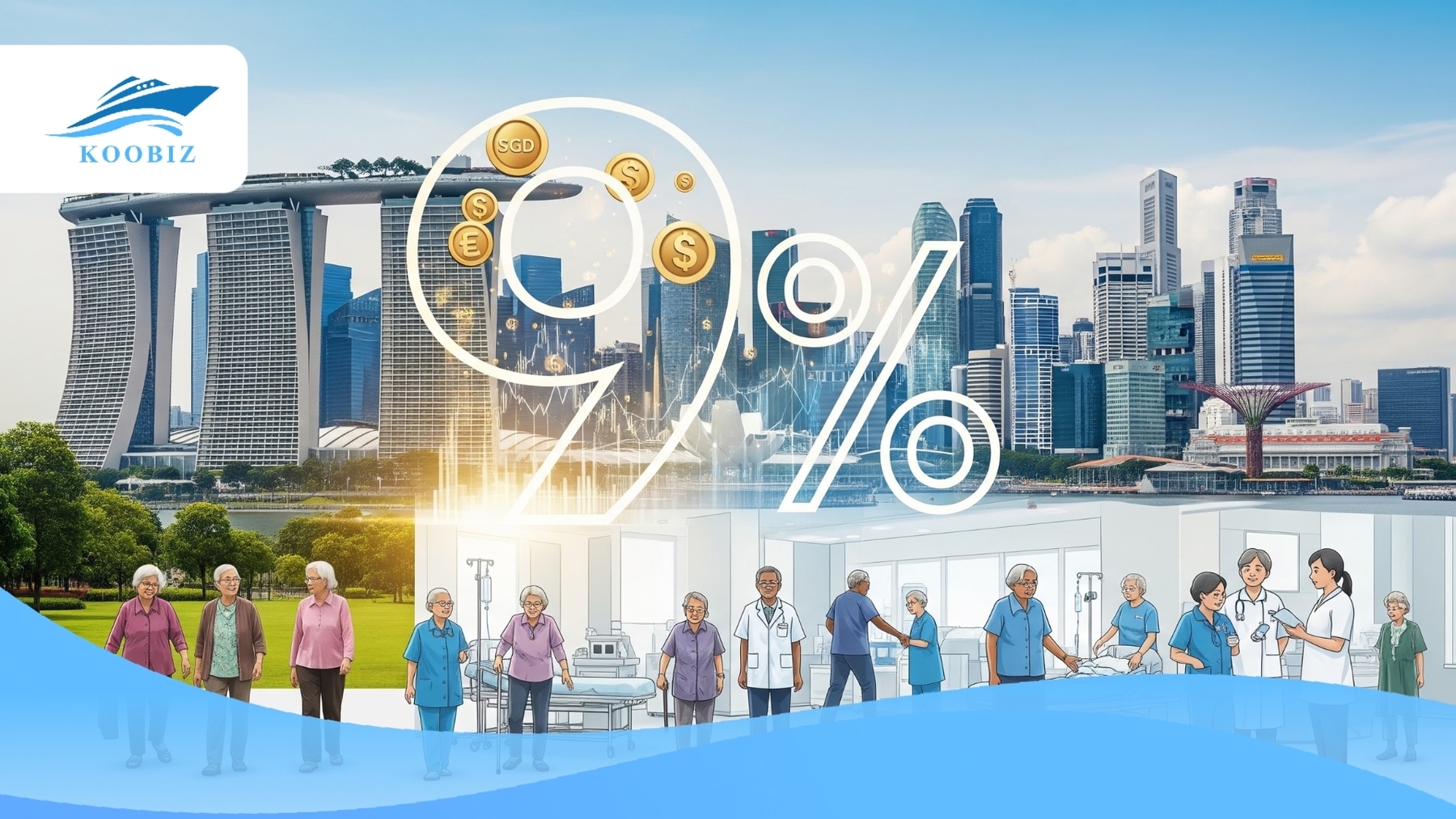
Current Rate: 9%
Effective Since: January 1, 2024
Status in 2026: Standard fixed rate (No changes planned)
The current Singapore GST rate is 9%, applied as a standard consumption tax on most goods and services imported into or supplied within Singapore.
The stability of this rate is best understood by reviewing its implementation timeline. The rate officially reached 9% on January 1, 2024, marking the completion of the government’s two-step rate hike plan. By 2026, the 9% GST is no longer transitional and is fully established as the standard rate. For businesses, all invoices, accounting systems, and price displays must accurately reflect the 9% GST rate. Non-compliance may result in penalties imposed by the Inland Revenue Authority of Singapore (IRAS).
At Koobiz, we regularly assist clients in aligning their accounting systems with the 9% GST rate, supporting smooth compliance for newly incorporated companies. For official verification of current rates, refer to the IRAS website.
The Timeline of GST Hikes: From 3% to 9%
Singapore’s GST rate has evolved through several key milestones, beginning at 3% in 1994 and increasing gradually over the decades to the current 9%.
This progression reflects the government’s long-standing approach of implementing tax changes gradually. The government has consistently adopted a staggered approach to allow businesses and the economy time to adapt.
| Effective Date | GST Rate | Key Context |
|---|---|---|
| 1 Apr 1994 | 3% | Introduction of GST |
| 1 Jan 2003 | 4% | Increased from 3% |
| 1 Jan 2004 | 5% | Increased from 4% |
| 1 Jul 2007 | 7% | Remained stable for 15+ years |
| 1 Jan 2023 | 8% | Phase 1 of the latest hike |
| 1 Jan 2024 | 9% | Phase 2 (Current Rate) |
This historical context shows that GST increases in Singapore are infrequent and implemented following long-term fiscal planning.
Why Was the GST Increased to 9%?
The Challenge: The “Silver Tsunami” (By 2030, 1 in 4 Singaporeans will be ≥65).
The Solution: A broad-based tax (GST) to generate stable, recurrent revenue for healthcare.
The primary driver for the increase to 9% is the need to fund rising healthcare costs linked to Singapore’s rapidly ageing population and long-term public spending.
In particular, the additional revenue addresses what policymakers refer to as the “Silver Tsunami.” By 2030, it is estimated that one in four Singaporeans will be aged 65 or older. This demographic shift places significant pressure on Singapore’s healthcare system. As a broad-based tax, GST is regarded by policymakers as a sustainable source of recurrent revenue, allowing healthcare spending to be funded without heavy reliance on the Net Investment Returns Contribution (NIRC) or higher income taxes.
According to the Ministry of Finance (MOF), revenue from the GST increase is allocated within the national budget to subsidise healthcare, expand hospital capacity, and strengthen community care facilities. You can read the full rationale on the MOF website.
Will GST Increase Again Before 2030?
Verdict: NO
Government Commitment: No further hikes planned before 2030.
Implication: Tax stability for the next decade.
This assurance provides greater certainty for Singapore’s business environment. Deputy Prime Minister Lawrence Wong stated during the initial announcement and subsequent budget debates that the increase to 9% would generate sufficient revenue to address funding needs through the end of the decade. For investors and business owners planning long-term strategies with Koobiz, this commitment to tax stability is an important factor when considering Singapore as a regional hub. This reduces uncertainty around near-term tax changes and supports more accurate financial forecasting over the coming years.
How Singapore’s GST Compares to Global VAT Rates
Singapore’s 9% GST remains significantly lower than the global average VAT/GST rate of approximately 19% and is competitive compared with many regional and developed economies.
When viewed in an international context, Singapore’s tax regime remains competitive.
| Region | Country | Standard Tax Rate |
|---|---|---|
| Singapore | Singapore | 9% |
| Regional | Vietnam | 10% |
| Philippines | 12% | |
| China | 13% | |
| Global | UK / France | 20% |
| OECD Average | ~19% |
This comparative advantage supports Singapore’s position as a leading business and investment destination. Even with the increase, the overall tax burden (including corporate tax) remains lower than in most Western jurisdictions.
Mitigating the Impact: The Assurance Package and GST Vouchers
To offset the 9% GST rate, the government introduced the Assurance Package and enhanced GST Vouchers to help reduce the impact on lower-income households.
How the Government Offsets the Hike:
- Cash Payouts: For immediate cost-of-living expenses (tiered by income).
- U-Save Rebates: Directly offsets utility bills for HDB households.
- MediSave Top-ups: Dedicated support for elderly healthcare costs.
These measures are structured so that the effective GST burden for low-income households remains minimal or close to zero for several years.
Who is Eligible for the 2026 GST Voucher Payouts?
Eligibility for the 2026 payouts is determined by Assessable Income and the Annual Value (AV) of the beneficiary’s residence.
Note on 2026 Payouts:
Specific payout amounts are typically finalized during the Singapore Budget announcement in February each year. If no major policy changes are announced, recent payout trends suggest cash amounts may range from $450 to $850, depending on income tier and property value.
- Income Threshold: typically up to $34,000 for maximum benefits.
- Age: Singaporeans aged 21 and above.
How the Permanent GST Voucher Scheme Works
It is important to distinguish between the temporary Assurance Package (designed to cushion the transition) and the permanent GST Voucher (GSTV) scheme.
| Feature | Assurance Package (AP) | Permanent GST Voucher (GSTV) |
|---|---|---|
| Purpose | Cushion the specific impact of the hike. | Ongoing support to offset GST costs for lower-income households. |
| Duration | Temporary (Ends ~2028). | Ongoing (Permanent). |
| Key Benefit | Cash Payouts, CDC Vouchers. | Cash, U-Save, MediSave Top-ups. |
While the Assurance Package payouts are distributed over five years (ending around 2027/2028), the GSTV scheme is a permanent feature of Singapore’s fiscal system. This ensures that after transitional support ends, lower- to middle-income Singaporeans continue to receive ongoing assistance to offset GST costs.
GST on Digital Services and Imported Low-Value Goods
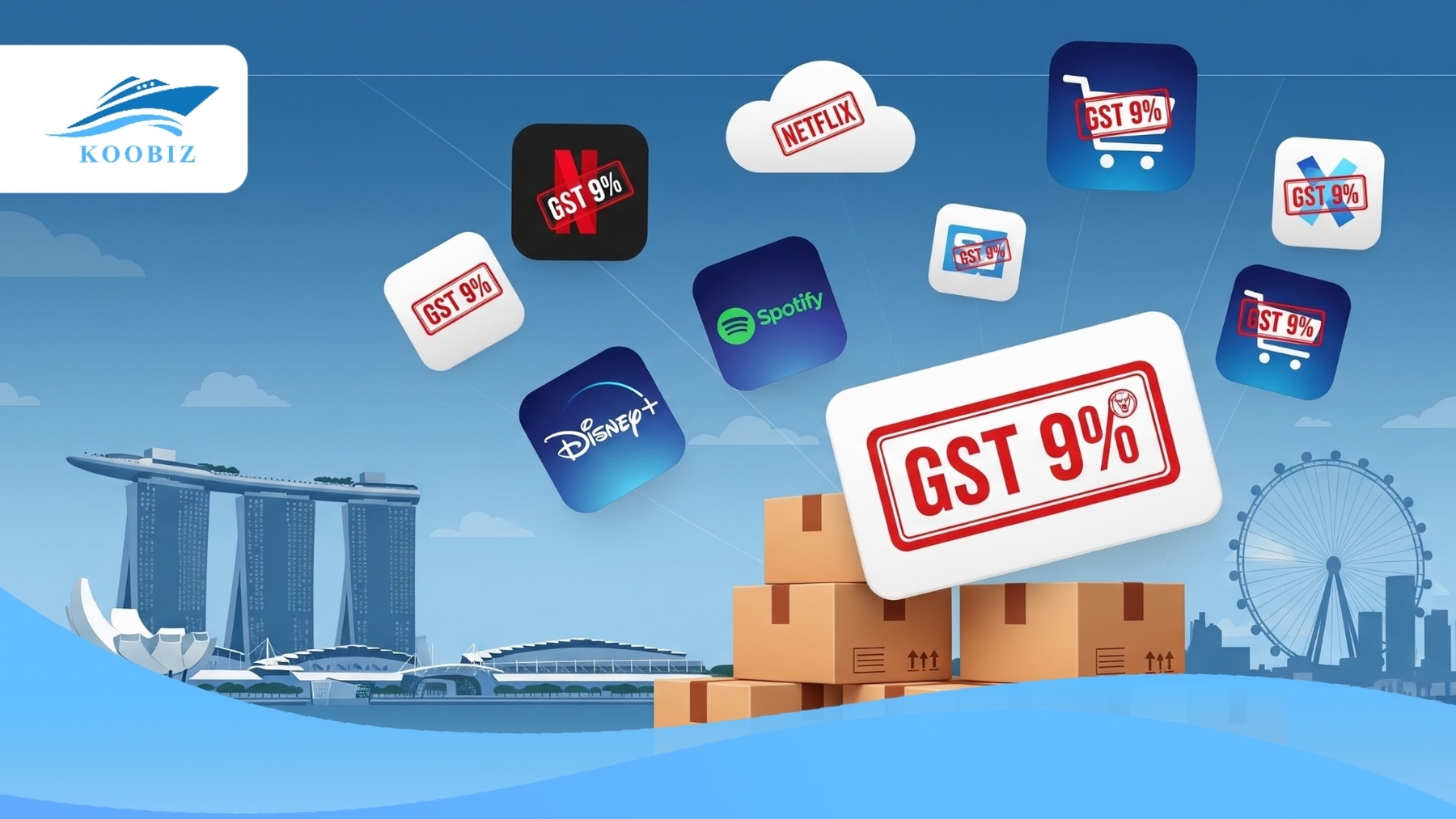
GST now applies to imported low-value goods under $400 and remote digital services, ensuring consistent tax treatment between local and overseas suppliers.
What is now subject to 9% GST?
- Imported Goods (<$400): Items bought online from platforms like Amazon or Taobao.
- Digital Subscriptions: Netflix, Spotify, Disney+.
- Digital Services: Software, cloud storage, and downloadable content.
This regime, known as the Overseas Vendor Registration (OVR), is an important compl
iance requirement for digital businesses supplying services to Singapore. Previously, goods imported via air or post valued below $400 were GST-exempt, resulting in differential tax treatment between overseas and local sellers. Since 2023/2024, this loophole has been closed.
Do You Pay 9% GST on Netflix and Spotify?
Yes, consumers in Singapore are required to pay 9% GST on “remote services,” including digital subscriptions such as Netflix, Spotify, and software-as-a-service (SaaS) products. Overseas providers with a global turnover exceeding $1 million and supplies to Singapore exceeding $100,000 must register for GST under the OVR regime. If you are an international digital service provider looking to enter the Singapore market, Koobiz can assist in assessing your GST registration liability and managing the OVR process.
Tourist Refund Scheme (TRS) with the New Rate
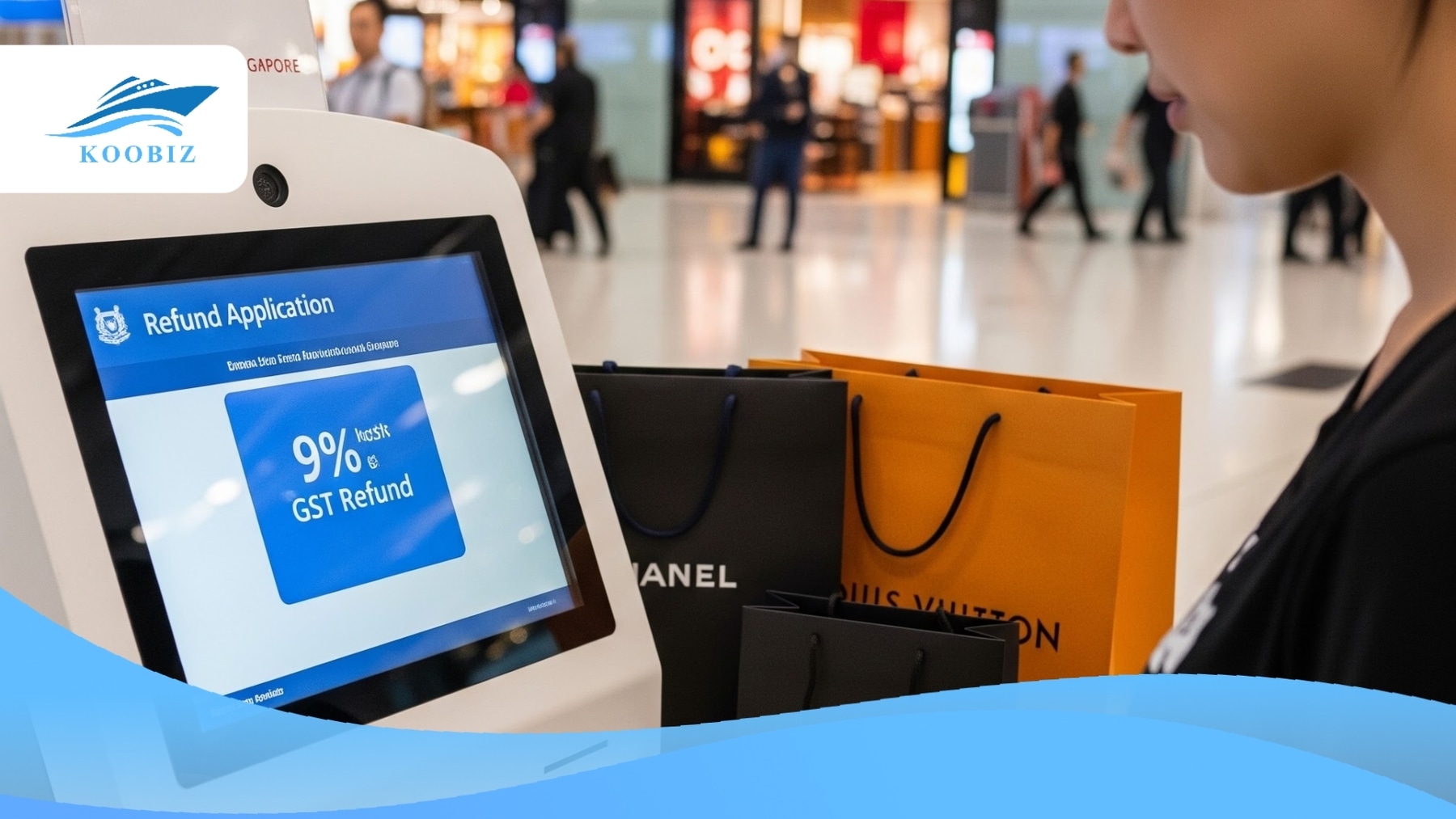
Tourists can claim a refund on the 9% GST paid for goods over $100 via the electronic Tourist Refund Scheme (eTRS) at Changi Airport.
How to Claim Your 9% Refund:
- Shop: Spend at least $100 (incl. GST) at participating stores.
- Apply: Show your passport at checkout to capture the transaction digitally.
- Claim: Use the eTRS Kiosks at Changi Airport before checking in your luggage.
Visitors must present their passports at the point of purchase for the transaction to be recorded digitally.While the GST rate is higher, the refund mechanism remains efficient and fully digital. It is worth noting that the refund applies only to goods brought out of the country; services consumed within Singapore (like hotel stays or dining) are not refundable. While the higher GST rate may affect the overall cost of luxury purchases, the efficiency of the eTRS system continues to support a smooth refund process for tourists.
Common Misconceptions About GST Absorption
Stores advertising “GST Absorbed” are offering a commercial discount and are not exempt from paying the 9% GST to IRAS.
How “GST Absorption” Actually Works:
- Product Price: $109.00
- Discount: -$9.00 (Retailer absorbs cost)
- Final Price: $100.00
- Taxable Amount: ~$8.26 (Included in the $100 final price and paid to IRAS).
This is a common marketing practice that often leads to misunderstanding. When a retailer claims to “absorb GST,” it means the 9% tax is paid from the retailer’s profit margin instead of being charged separately to the customer. The receipt must still reflect the GST amount as included in the final price. Businesses cannot legally waive GST; they may only reduce prices to offset the tax amount borne by the consumer.
Conclusion & Koobiz Services
Managing the 9% GST framework in Singapore requires a clear understanding of regulatory requirements and their financial implications. This includes understanding the government’s position on future GST rates and the compliance requirements under the OVR regime for digital goods and services.
For businesses, the shift to 9% involves more than updating invoices; it requires proper compliance processes and sound financial planning.
Grow Your Business in Singapore with Koobiz
At Koobiz, we support businesses in navigating Singapore’s regulatory and compliance requirements. Our team provides comprehensive support for:
- Company Incorporation: Set up your Singapore entity seamlessly.
- Corporate Banking: Expert consultation to open business bank accounts in Singapore’s top financial institutions.
- Tax & Accounting: From GST registration and quarterly filing to annual returns and audit services.
Ensure your business is fully compliant with the latest GST regulations. Visit us at koobiz.com to learn how we can support your growth in Asia’s financial hub.