

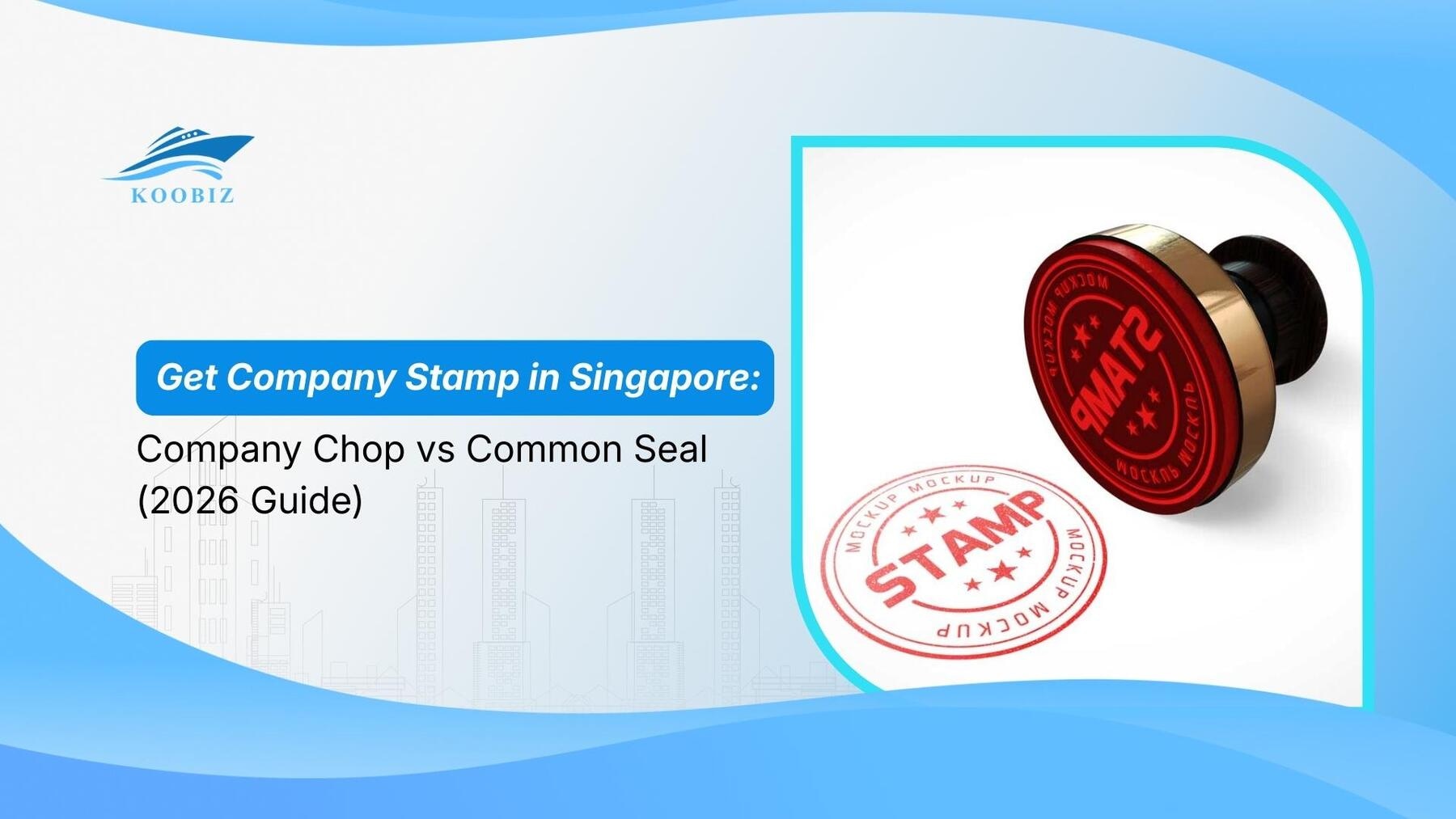
Navigating Singapore’s business requirements can be confusing, especially when it comes to understanding the difference between a Company Stamp (commonly called a “chop”) and a Common Seal. While one is used for routine daily documents, the other carries formal legal significance that has evolved under changes to Singapore company law. This Koobiz guide explains current ACRA regulations, clearly separating what is mandatory from what is optional, so you can obtain the right company stamp in Singapore and stay fully compliant.
2026 Update: As of 2026, the Common Seal remains optional for Singapore companies, with no changes to the Companies Act requirements. However, the adoption of digital signing tools (like DocuSign and SingPass) has become the standard for most business contracts, further reducing the reliance on physical seals.
What is a Company Stamp (Chop) in Singapore?
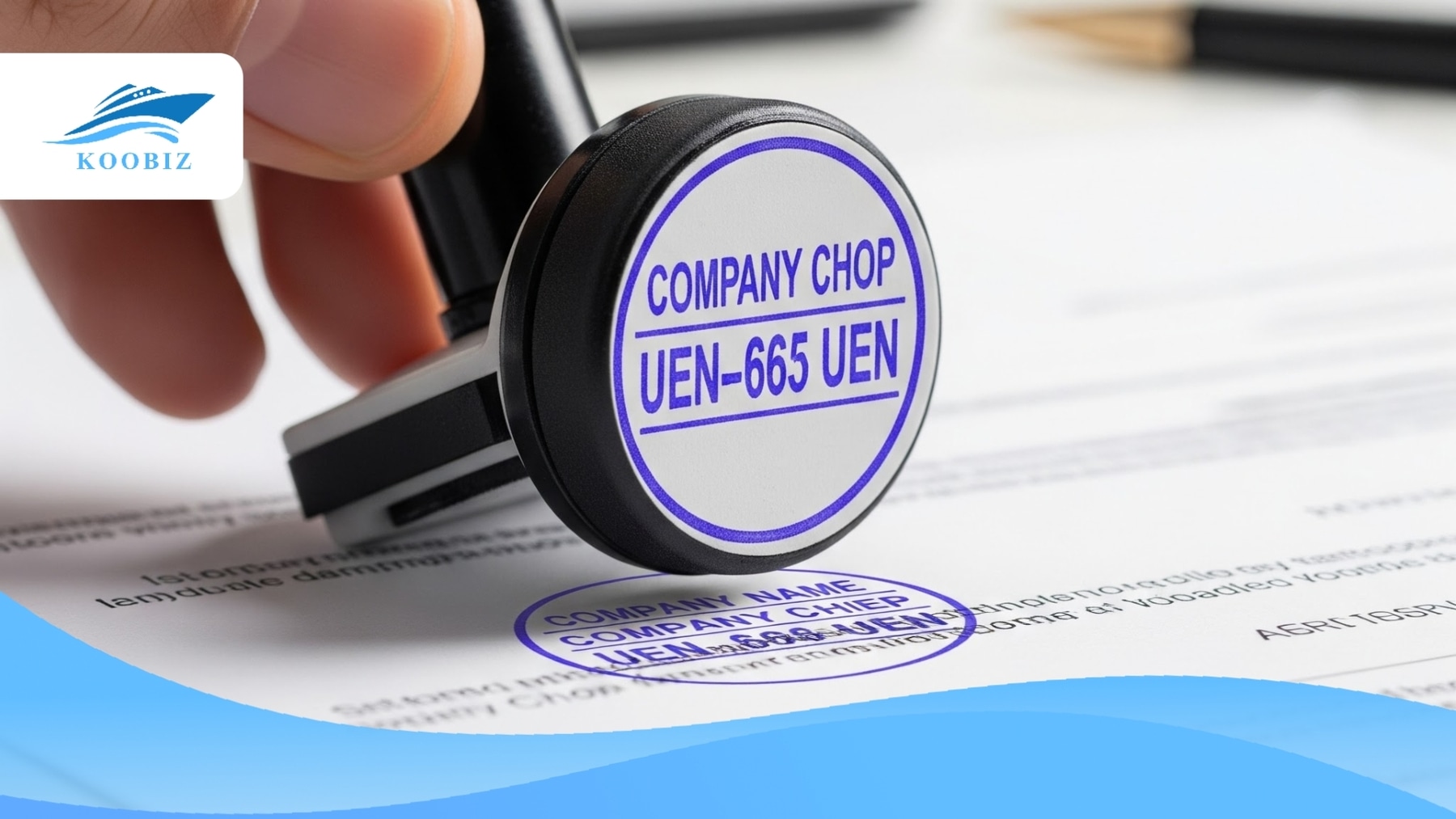
A Company Stamp, widely known locally as a “Rubber Chop,” is a standardised rubber stamp used by Singapore businesses to authenticate documents and indicate official company acknowledgement.
Key Characteristics:
- Origin: Derived from the colonial-era Malay and Hindi word “cap”, meaning “stamp.”
- Function: Provides visual confirmation that the company entity (not just an individual) acknowledges the transaction.
- Appearance: Typically round or rectangular, using blue or purple ink to stand out from black printed text.
- Usage: Commonly used for daily operations, although increasingly supplemented by digital signatures and electronic document headers.
For clients incorporating with Koobiz, obtaining a company stamp is typically one of the first post-incorporation steps to support smooth day-to-day operations.
Company Stamp vs Common Seal: What Is the Difference?
While both represent the company on paper, they serve very different legal and operational purposes. Here is the quick breakdown:
| Feature | Company Stamp (Rubber Chop) | Common Seal |
|---|---|---|
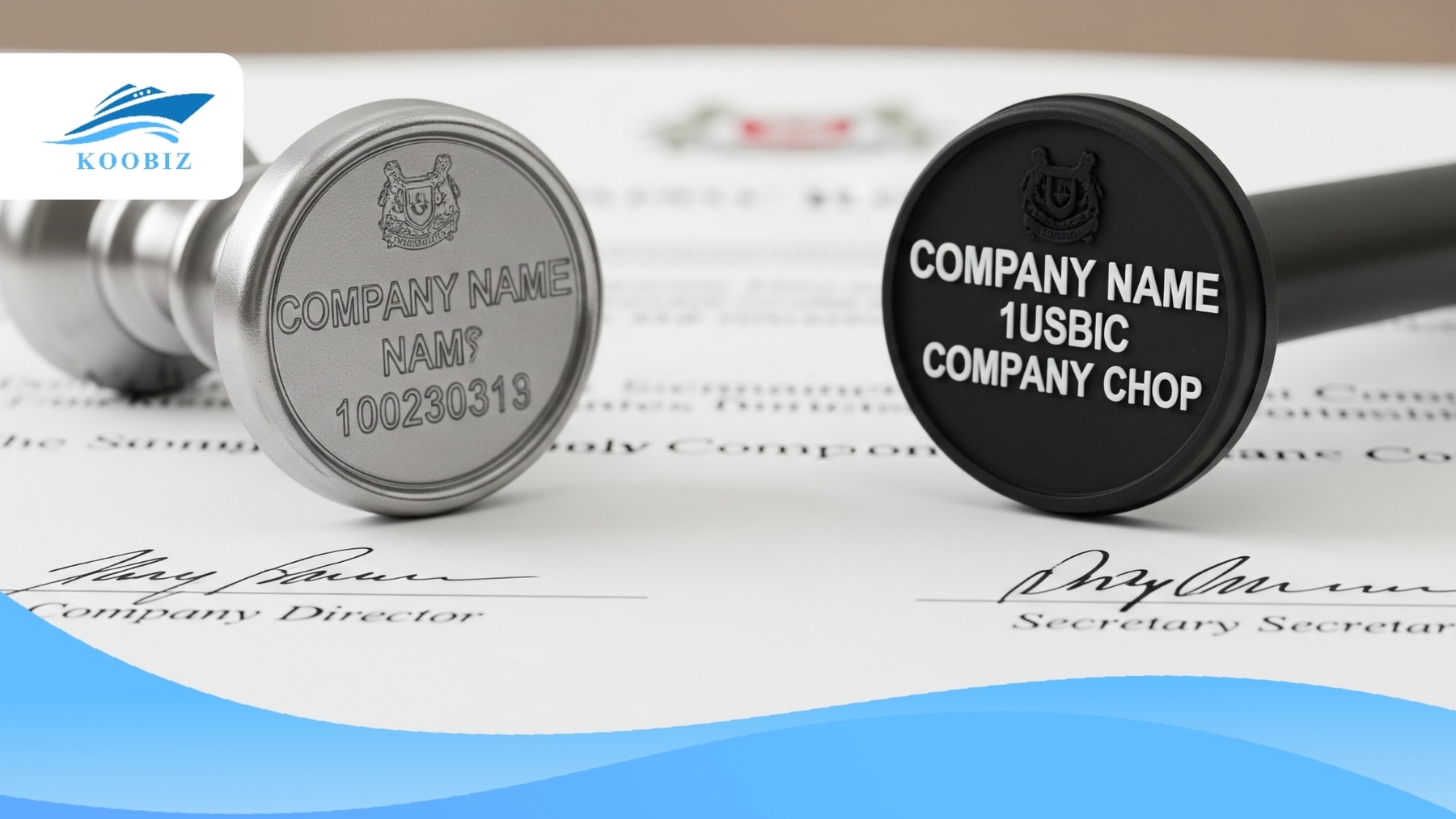
| Material | Rubber (Self-inking) | Metal Embosser (3D Impression) |
| Legal Role | Administrative / Operational | Ceremonial / Formal “Act of Company” |
| Frequency | Daily (10+ times/day) | Rare (Once a year or less) |
| Key Use | Invoices, Delivery Orders, Contracts | Share Certs, Deeds, Real Estate |
The Key Takeaway: Using a rubber chop on a document that legally requires execution as a deed may result in the document being challenged or deemed invalid.
Is a Common Seal Still Mandatory for Singapore Companies?
The Short Answer: No.
Since the Companies Act amendment effective 31 March 2017, Singapore companies are no longer required to have a Common Seal.
How to Execute Documents Without a Seal:
Under Sections 41A-C, a document is validly executed if signed by “Authorised Persons”:
- Two Directors
- One Director + Company Secretary
- One Director + A Witness
This means a company can be incorporated and operated in Singapore without purchasing a metal Common Seal. While Koobiz can assist in obtaining a Common Seal for companies that value tradition or formality, it is not legally required for valid incorporation in Singapore.
When Should You Use a Common Seal?
Despite the 2017 amendment, there are still specific situations where the use of a Common Seal is preferred or practically required. Use the seal for high-stakes, one-off events:
- Scenario A: Executing Deeds. While signatures by Authorised Persons now suffice legally, some older contracts or land titles may explicitly demand “Signed, Sealed, and Delivered.” In these cases, using a seal avoids ambiguity, though it is strictly no longer required if the correct signature protocols are followed.
- Scenario B: Issuing Share Certificates. Investors often expect the formal embossed Common Seal on share certificates as a sign of authenticity and corporate formality.
- Scenario C: International Contracts. In jurisdictions that have not modernised their company laws, counterparties may still require a physical company seal for contracts to be recognised as valid.
Koobiz Tip: Check your Company Constitution. Older constitutions may explicitly require certain documents to be executed under seal. You must follow this internal rule until you amend the Constitution—a service we can assist with.
When Should You Use a Company Stamp (Chop)?
A Company Stamp is used for virtually all routine administrative and commercial interactions. Use the company chop for recurring day-to-day operations, including:
- Scenario A: Validating Invoices. Stamping outgoing invoices or receipts to formally acknowledge them for tax and accounting records.
- Scenario B: Logistics & Delivery. Acknowledging receipt of goods on Delivery Orders (DOs) as proof that items were received by the company.
- Scenario C: Bank & Government Forms. When opening a corporate bank account (a service Koobiz specialises in), the bank will request a specimen of the “authorised chop” used to verify future physical checks.
Koobiz Tip: Always use blue or purple ink for your company chop. This helps distinguish the original “wet ink” stamp from a black-and-white photocopy of the document, reducing the risk of rejected filings.
Real-Life Scenarios: Seal vs. Stamp in Action
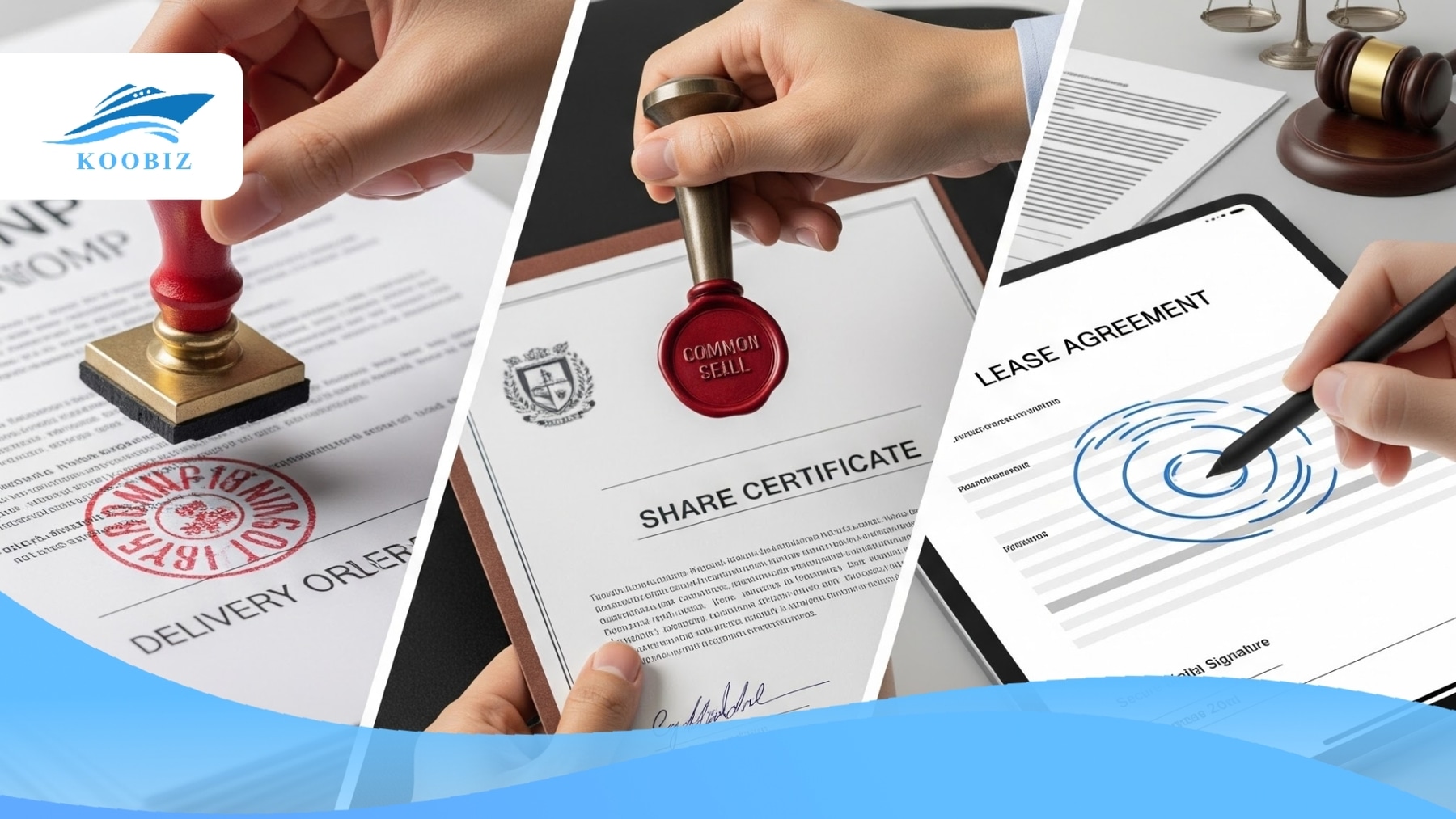
To illustrate how these rules apply in practice, below are four common scenarios faced by a typical Singapore SME (for example, “Koobiz Trading Pte. Ltd.”).
Scenario 1: Receiving Goods (The Daily Routine)
- The Situation: A supplier delivers a batch of office furniture. The delivery order needs to be acknowledged.
- The Tool: Company Stamp (Chop).
- The Action: Administrative staff stamp the delivery order with the round blue company chop and sign it.
- Why: This is an administrative act confirming receipt. It does not require a deed.
Scenario 2: Issuing Share Certificates (A Formal Corporate Event)
- The Situation: The company brings on a new shareholder who requests a physical share certificate.
- The Tool: Common Seal.
- The Action: The Company Secretary retrieves the metal seal. Two directors sign the certificate, and the seal is embossed over a red wafer.
- Why: While not strictly mandatory if the constitution allows otherwise, using the seal adds the necessary formality and prestige expected by investors for title documents.
Scenario 3: Signing a Bank Deed (The Compliance Trap)
- The Situation: The company is taking a loan and must sign a “Deed of Guarantee.”
- The Mistake: The Director simply signs and uses the rubber chop.
- The Fix: The bank rejects the document. Deeds must be executed either “under seal” or by “Authorised Persons” (for example, signatures of two directors), without relying on a rubber chop.
Scenario 4: Signing a Lease Digitally (Modern Practice in Singapore)
- The Situation: The company is renting a new office and the landlord sends a digital tenancy agreement via DocuSign.
- The Tool: Digital Signature (No Stamp).
- The Action: The Director signs the document online using a secure digital identity such as SingPass.
- Why: Under Singapore’s Electronic Transactions Act, digital execution is legally binding, and no physical stamp is required.
Essential Details Required on a Company Stamp
Under the Companies Act, a company’s registered name and UEN must appear on official business documents. A company stamp is simply a practical tool to ensure these mandatory details are consistently displayed.
| Detail | Status | Why is it needed? |
|---|---|---|
| Company Name | Mandatory | Identifies the legal entity binding the contract. |
| UEN | Mandatory | Required by ACRA on all official invoices/letters. |
| Address | Optional | Useful for “return address” stamps, but not for the official round chop. |
| Logo | Optional | Enhances branding but may reduce legibility if the stamp becomes overcrowded. |
We have now covered what company stamps and Common Seals are, their legal status in Singapore, and the information they should contain. Next, we move beyond basic acquisition to practical management considerations—secure handling, digital alternatives, and proper disposal of stamps and seals.
Proper Custody and Legal Use of the Common Seal
Improper use of a Common Seal can lead to unauthorized deeds and potential fraud. Follow these key rules for proper custody:
- Strict Authorisation: Never affix the seal without a written Board Resolution approving the specific transaction.
- Secure Storage: The seal should be kept under lock and key, ideally in the custody of the Corporate Secretary.
- Usage Log: Maintain a “Register of Seal Usage” to record every instance the seal is accessed or used.
Koobiz Protocol: When Koobiz acts as your Company Secretary, we act as a gatekeeper to ensure every use of the Common Seal is supported by a valid board resolution.
Can Digital Signatures Replace Company Stamps in Singapore?
The Legal Reality: Yes. Under Singapore’s Electronic Transactions Act, digital signatures such as DocuSign and SingPass are legally binding for most contracts.
The Business Reality: Business practice often lags behind legal reform.
- Banks & Landlords: Many traditional institutions still require a “wet-ink” company chop on physical forms.
- Cross-Border: Customs documents or foreign contracts may still require a physical company stamp.
Verdict: Go digital for efficiency, but retain at least one physical company stamp as a compliance backup.
Types of Self-Inking Company Stamps Commonly Used
Most companies typically require two types of stamps to cover common operational needs:
1. The “Signing” Chop (Round, 24mm-26mm)
- Purpose: Used primarily to authenticate authorised signatures on documents.
- Details: Contains only the Company Name and UEN, and is sized to fit standard signature boxes.
2. The “Address” Stamp (Rectangular)
- Purpose: Used for filling out forms and envelopes.
- Details: Contains the Company Name, UEN, registered address, and contact number, reducing the need for repeated manual entry.
How Should Old Company Seals and Stamps Be Disposed Of?
When a company is struck off or changes its name, the old tools become a potential security risk. These items should never be discarded intact.
The Destruction Protocol:
- Rubber Stamps: Use scissors or a box cutter to cut the rubber text face into unrecognisable fragments.
- Common Seals: Use a hammer to deform the metal embossing plates or a heavy file to scratch out the company name.
- Why? This prevents fraudsters from retrieving them to create fake invoices or contracts in your company’s name.
Conclusion
Understanding the difference between a Company Stamp and a Common Seal is not merely a stationery decision—it is essential for compliance and legally enforceable business transactions. While the Common Seal is no longer mandatory, the Company Stamp remains a vital tool for daily operations in Singapore.
Koobiz is committed to simplifying the process of doing business in Singapore. From incorporation and opening bank accounts to acting as your Company Secretary and managing your tax and accounting, we ensure ongoing compliance with ACRA requirements at every stage. If you are setting up a new company, we can advise you on your constitution’s seal requirements and help you get started on the right foot.
Visit koobiz.com today to streamline your Singapore business operations.
![How to Issue Compliant Share Certificates in Singapore [ACRA Guide]](https://cms.koobiz.com/wp-content/uploads/2026/01/how-to-issue-compliant-share-certificates-in-singapore-acra-guide.jpg)