


A common seal has traditionally been used as a company’s official stamp to execute legal documents such as contracts, deeds, and share certificates in Singapore. Although the Companies Act no longer requires companies to maintain a common seal, it may still be used for certain formal or high-value transactions, and this guide explains the key legal requirements and compliance considerations in 2026
What Is a Common Seal?
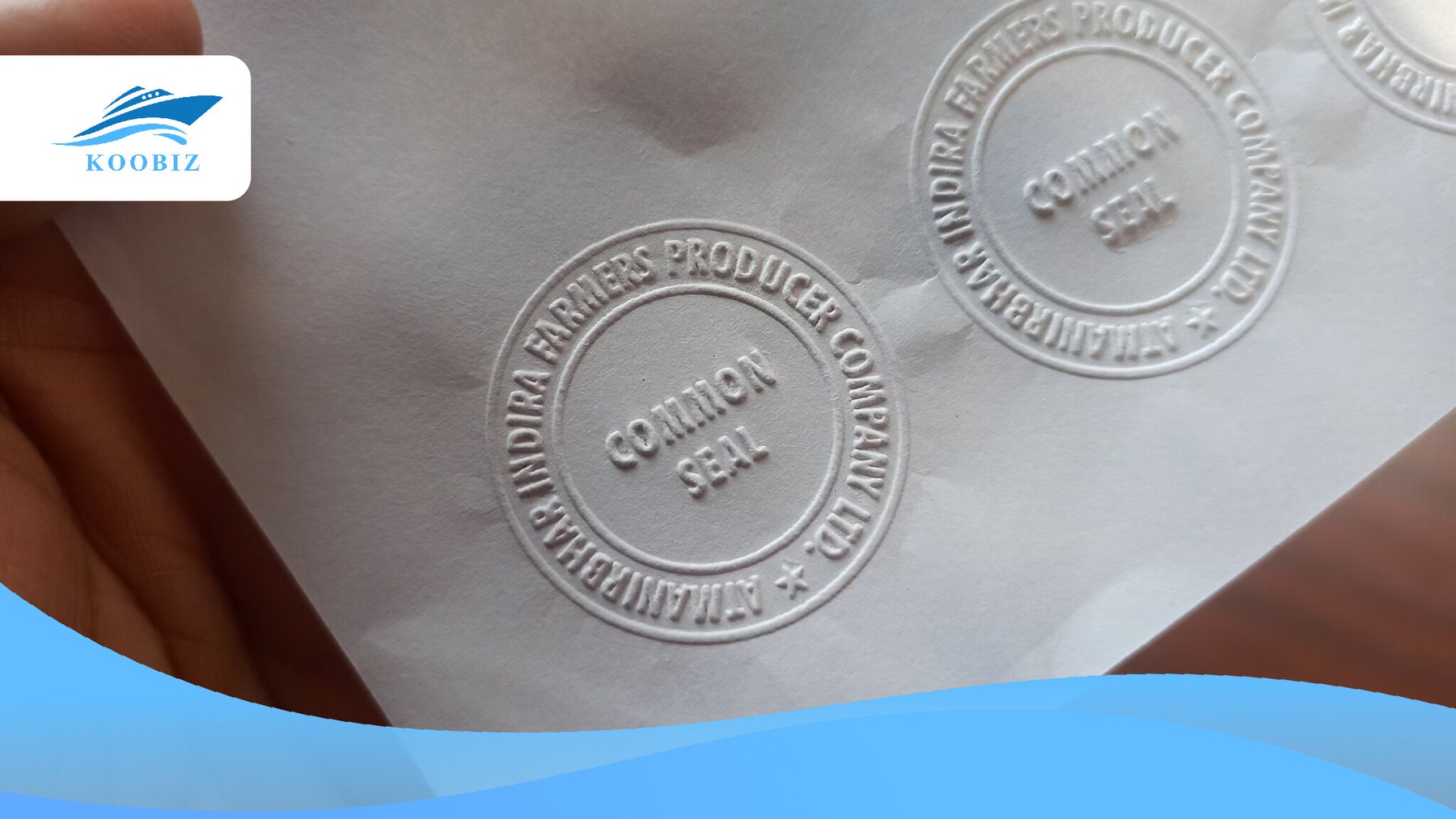
A Common Seal (also known as a corporate seal) is a metal device used to create a raised, embossed impression on documents. It represents the official signature of a company as a legal entity, typically displaying the company’s registered name and Unique Entity Number (UEN).
Key Characteristics
- Authentication: Affixing the seal indicates that the document has been formally approved and executed by the company.
- Physical Distinction: Unlike rubber stamps, a common seal uses no ink and leaves a permanent embossed mark on paper.
- Execution Process: The seal is usually applied in the presence of authorized officers-typically two directors or one director and the company secretary-who sign the document to confirm proper execution.
- Symbol of Authority: Although optional since the 2017 amendments to the Singapore Companies Act, the common seal is still used for deeds, high-value contracts, and certain international transactions.
Is a Common Seal Mandatory in Singapore in 2026?
No. A common seal is not mandatory for companies in Singapore in 2026.
Following the 2017 amendments to the Singapore Companies Act, companies can execute documents-including deeds-without using a common seal. Under Sections 41A, 41B, and 41C of the Act, documents may instead be signed by authorized individuals, such as company directors or the company secretary.
However, companies should still consider two practical factors:
- Company Constitution: If a company’s Constitution requires the use of a common seal for certain transactions, the company must comply with that requirement or amend the Constitution through a special resolution.
- Business Practice: Despite the legal flexibility, many companies-especially in industries such as construction, maritime, and real estate-still maintain a common seal. This is often to meet the expectations of overseas partners or financial institutions that require a formal company seal.
In short, while a common seal is no longer legally required, some companies choose to keep one for operational or compliance purposes.
Common Seal vs. Rubber Company Stamp: Key Differences

Although both represent a company, a common seal and a rubber company stamp serve different purposes and are not interchangeable.
| Feature | Common Seal | Rubber Company Stamp |
|---|---|---|
| Physical form | Metal press creating a raised embossed mark | Rubber or self-inking stamp creating a flat ink mark |
| Legal nature | Official “signature” of the legal entity | Administrative identification tool |
| Typical use | Legal deeds and share certificates | Invoices, purchase orders, routine correspondence |
| Authority | Indicates formal company approval | Used for operational paperwork |
| Visibility | Colorless embossed impression | Usually blue, red, or black ink |
Key takeaway
- Use the common seal when the law or your company constitution requires a document to be executed as a deed.
- Use the rubber company stamp for daily administrative documents, ensuring the company name and UEN are clearly shown on paperwork.
When Is a Common Seal Still Preferred or Necessary?
Although Singapore law no longer requires a common seal, it is still used in certain formal or cross-border situations.
Below are common scenarios where companies may still prefer to maintain a common seal.
Executing Deeds and Property Documents
Under Section 41B of the Companies Act, deeds can be executed through authorized signatures. However, in property transactions or certain legal instruments, some law firms, real estate agencies, or the Singapore Land Authority (SLA) may still expect documents to carry a company seal as an added assurance of authenticity.
Issuing Physical Share Certificates
Many private companies still issue physical share certificates to investors. Affixing a raised common seal adds an extra layer of security and reinforces the official nature of the document.
International Transactions and Banking
Cross-border dealings are one of the most common reasons companies keep a common seal.
Foreign jurisdictions: Some countries-particularly in parts of Asia and the Middle East-still require corporate seals for certain legal documents.
Cross-border banking: Overseas banks may request a sealed board resolution when opening corporate accounts or approving major financing arrangements.
How to Legally Execute Documents Without a Common Seal

Under Section 41B of the Singapore Companies Act, a company can execute a document as a deed without using a common seal. Instead, the document becomes legally binding when it is signed by authorized officers of the company.
Signature by Two Directors
A document may be executed when two company directors sign the document on behalf of the company.
This method is commonly used by companies with multiple directors and provides clear confirmation that the document has been formally authorized by the company.
Signature by a Director and a Company Secretary
Another valid execution method is when one director and the company secretary sign the document together.
This approach is widely accepted because the company secretary plays an official role in ensuring the company complies with corporate governance and regulatory requirements.
Signature by a Director in the Presence of a Witness
If the company has only one director, the document may be executed when:
- The sole director signs the document, and
- A witness is present to attest the signature
The witness confirms that the document was properly signed.
Key Compliance Requirements
- Expressed Intent: The document should clearly state that it is “executed by the company” to avoid ambiguity about the signatory’s authority.
- Company Constitution Check: Before using signature-based execution, ensure that the company’s constitution does not specifically require the use of a common seal for that type of document.
How to Phase Out the Common Seal: Amending Your Company Constitution
If your company was incorporated before 31 March 2017, its Constitution (formerly the Memorandum and Articles of Association) may still contain a “Seal Clause” requiring the use of a common seal for executing deeds.
To formally discontinue the seal, the company must amend its Constitution so that document execution can be carried out through authorized signatures.
Step 1: Review the Constitution
Conduct a legal review to identify clauses that require the use of a common seal for executing company documents.
Without amending these provisions, documents signed without a seal could potentially be challenged as non-compliant with the company’s internal rules, even though the Companies Act allows alternative execution methods.
Step 2: Pass a Special Resolution
Amending a company’s Constitution requires a Special Resolution under Section 26 of the Companies Act.
This means:
- A formal notice of meeting must be sent to all shareholders
- The resolution must be approved by at least 75% of voting shareholders
Step 3: File the Amendment with ACRA
After the Special Resolution is passed, the company must file:
- The Notice of Resolution, and
- The updated Constitution
with ACRA through the BizFile+ portal, typically within 14 days.
Step 4: Update Internal Corporate Records
Finally, update the company’s minute book and internal registers to reflect that the common seal has been discontinued.
The company may either destroy the physical seal or retain it for historical record, but the amended Constitution will now serve as the legal basis for signature-based document execution.
Safekeeping & Best Practices: Managing Your Common Seal

Because the common seal carries significant legal authority, companies should implement clear internal controls to prevent unauthorized use. Proper management ensures that sealed documents accurately reflect the company’s formal approval.
Below are recommended best practices for managing a company seal.
Centralized Custody
The common seal should be kept in a secure, locked location, such as a safe or restricted cabinet.
In many Singapore companies, the Company Secretary acts as the designated custodian, responsible for safeguarding the seal and controlling its use.
Restricted Access & Authorization
Access to the seal should be strictly limited to authorized personnel.
The seal should only be affixed to documents that have received formal approval from the board or authorized management, typically through a board resolution or documented approval.
Maintaining a Seal Register
Companies should maintain a Seal Register to create a clear audit trail of seal usage.
The register typically records:
- Date of sealing
- Description of the document (e.g., Share Certificate No. X, Property Deed for Address Y)
- Names of the authorized officers who witnessed the sealing
Periodic Audits
During annual compliance reviews, the board or company secretary should verify that:
- The common seal is properly safeguarded, and
- The entries in the Seal Register match the company’s approved resolutions and corporate records.
Following these practices helps ensure the common seal is used responsibly and in line with good corporate governance standards.
How to Obtain a Common Seal in Singapore
If your company chooses to maintain a common seal for formal documentation or international transactions, obtaining one is a simple administrative process. Most companies order their seal through corporate secretarial firms or specialized corporate stationers.
Required Information
To ensure legal accuracy, the details engraved on the seal must exactly match the company records registered with ACRA (BizFile+).
You will typically need to provide:
- Full Registered Company Name – including the suffix “Pte. Ltd.” or “Limited”
- Unique Entity Number (UEN) – the official identification number issued by ACRA
- Company Type – to ensure the seal format complies with the company’s legal structure
Ordering Process & Costs
Obtaining a common seal in Singapore is usually fast and straightforward.
- Lead Time: Standard production typically takes 1–2 business days, although same-day express services may be available for urgent corporate needs.
- Estimated Costs: Prices generally range between SGD 40 and SGD 100, depending on the quality of the metal press and delivery speed.
- Procedure: Companies usually submit their ACRA Business Profile to the provider, who will prepare a digital proof of the seal design for approval before engraving the metal die.
How Koobiz Corporate Secretarial Services Can Help
Ensuring proper document execution and corporate compliance is essential for companies operating in Singapore. Whether your business uses a common seal or executes documents through authorized signatures, the correct legal procedures must be followed.
Koobiz Corporate Secretarial Services supports businesses with:
- Document execution guidance: Ensuring company documents are properly executed, whether with a common seal or through authorized signatories.
- Constitution review and amendment: Advising companies on removing or updating common seal clauses to align with current Companies Act regulations.
- Corporate documentation support: Assisting with the preparation of share certificates, board resolutions, and statutory records.
- Ongoing compliance management: Helping companies stay compliant with Singapore Companies Act requirements and corporate governance standards.
With professional corporate secretarial support, businesses can maintain compliance, reduce administrative risks, and focus on long-term growth.
![How to Issue Compliant Share Certificates in Singapore [ACRA Guide]](https://cms.koobiz.com/wp-content/uploads/2026/01/how-to-issue-compliant-share-certificates-in-singapore-acra-guide.jpg)