

Navigating local compliance in Singapore starts with one key question: what is a TIN number? In 2026, the Tax Identification Number (TIN) is the digital DNA of your fiscal identity, used by the Inland Revenue Authority of Singapore (IRAS) to track tax obligations. Whether you are an individual or a business partner of Koobiz, your TIN is the gateway to financial services.
Singapore streamlines this by using existing IDs—NRIC for locals and UEN for businesses—as the official Tax Reference Number (TRN). Below, we explore the definitions and applications of these numbers to ensure you remain fully compliant.
What is a TIN Number in the Singapore Context?
A Tax Identification Number (TIN) is a unique alphanumeric identifier issued by a national tax authority to track tax obligations, income, and government identification for individuals and business entities. In Singapore, the term “TIN” is technically referred to as the Tax Reference Number (TRN), which is used by IRAS for all income tax, GST, and corporate tax matters.
The TIN is a core identifier for fiscal interactions, ensuring that all transactions—from employment income to corporate distributions—are attributed to the correct legal person. In the 2026 Singapore’s digital economy, your TIN is integrated into the national Singpass ecosystem and functions as a key underlying component of your financial administration.
Is the TIN different from my NRIC or FIN?
For the vast majority of individuals residing in the Lion City, the TIN is not a separate number you need to apply for; rather, it is your NRIC (National Registration Identity Card) or FIN (Foreign Identification Number). Singapore citizens and Permanent Residents (PRs) use their NRIC as their default TIN, whereas foreign professionals holding Employment Passes or S-Passes use their FIN for tax identification purposes.
This integrated ID system significantly reduces administrative errors compared to countries that maintain separate social security and tax identification registries, streamlining cross-border verification.
The Role of TIN in 2026 Financial Transactions
The TIN functions as the primary identifier for all financial transactions and is relied upon by banks and government agencies. It is required for opening personal bank accounts, making CPF (Central Provident Fund) contributions, and accessing government subsidies such as GST vouchers or the Assurance Package.
As banking security evolves, the TIN is now verified instantly via real-time API calls to the MyInfo database. This means that when you provide your NRIC or FIN to a financial institution, they are simultaneously verifying your tax residency and identity status to ensure compliance with Anti-Money Laundering (AML) laws.
Identification of TIN Types: Individual vs. Business
There are three main types of identification numbers in Singapore categorized by the residency status of the individual or the legal nature of the entity. Identifying which category you fall into is essential because using the wrong format can lead to rejected tax filings or delays in business operations.
| TIN Type | Full Name | Category | Primary Audience |
|---|---|---|---|
| NRIC | National Registration Identity Card | Individual | Singapore Citizens & Permanent Residents |
| FIN | Foreign Identification Number | Individual | Foreigners (EP, S-Pass, Long-term Pass) |
| UEN | Unique Entity Number | Business | Registered Companies, LLPs, Societies |
Identifying the correct TIN type is the first thing our consultants at Koobiz verify when assisting clients with company formation or tax advisory. Transitioning from individual status to business ownership requires a shift in which number you use for different fiscal purposes.
For Singapore Citizens and PRs: The NRIC
The NRIC is the primary identification number for all Singaporeans, and it follows a specific format that denotes the era of the holder’s birth or registration, followed by seven digits and a final checksum letter (e.g., S1234567A).
- Prefix S: Used for citizens and PRs born before January 1, 2000.
- Prefix T: Used for citizens and PRs born on or after January 1, 2000.
Your NRIC remains your TIN as long as you maintain your citizenship or residency status.
For Foreign Professionals: The FIN
The Foreign Identification Number (FIN) is assigned to foreigners who have a long-term pass by the Ministry of Manpower (MOM) or the Immigration and Checkpoints Authority (ICA). The FIN system now utilizes three main prefixes to manage the volume of residents.
- Prefix F: Issued to foreigners who were granted passes before January 1, 2000.
- Prefix G: Issued to foreigners who were granted passes between January 1, 2000, and December 31, 2021.
- Prefix M: The newest series introduced on January 1, 2022, to accommodate the increasing number of foreign professionals in the digital and tech sectors.
For Corporate Entities: The Unique Entity Number (UEN)
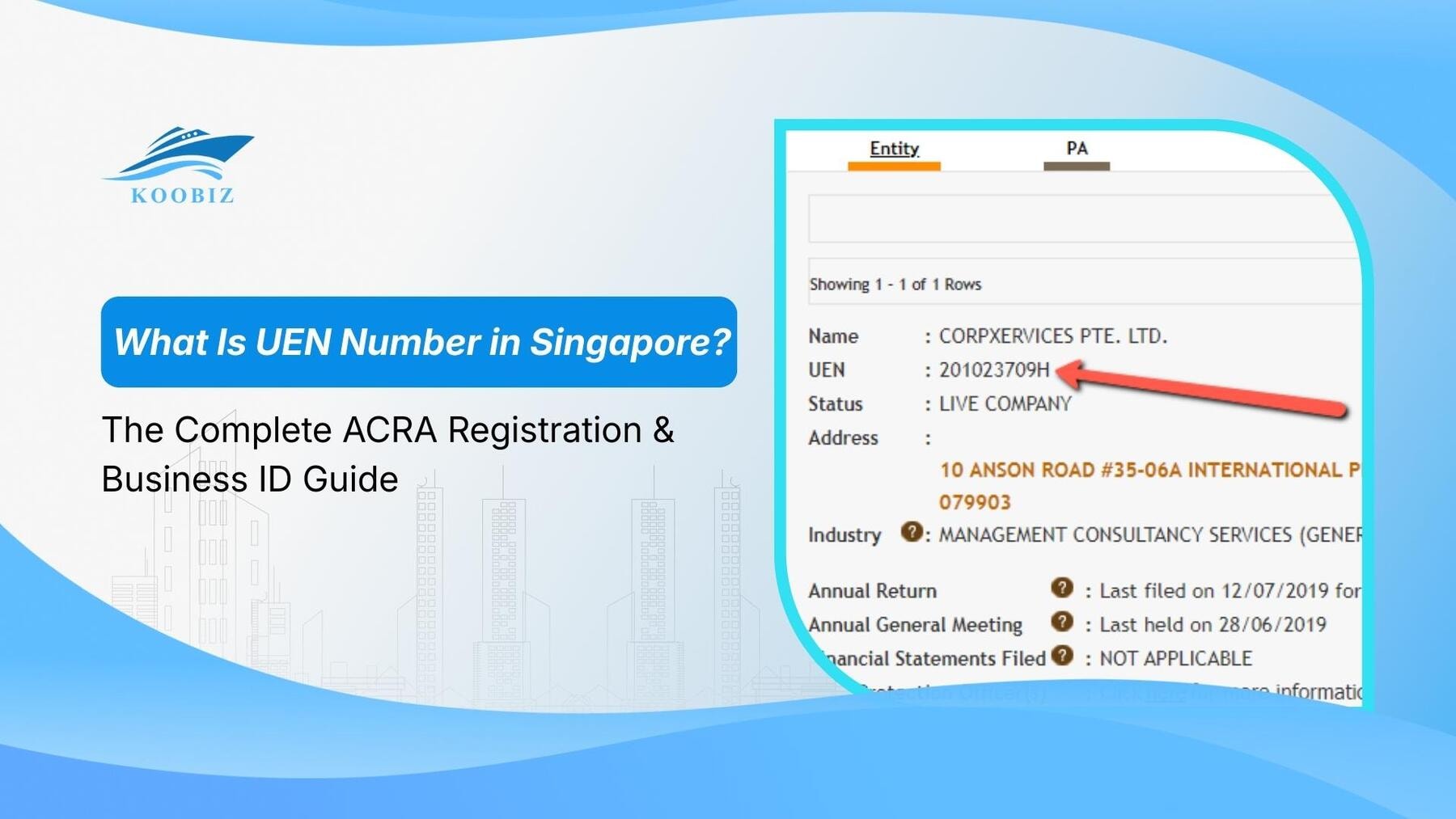
The Unique Entity Number (UEN) is the 9 or 10-digit identification number for all registered entities in Singapore, including local companies, LLPs, and societies. For businesses, the UEN serves as the single identifier for interactions with ACRA, IRAS, and Singapore Customs.
How to Find and Verify Your TIN in 2026
Finding your TIN in Singapore is straightforward depending on your identification status and access to digital government services. For most residents, if you hold a valid identity card or work pass, you already have a TIN. For Koobiz clients, tax information no longer requires manual record searches. The following step-by-step guides are the most efficient ways to retrieve and verify your number.
Do I Need to Apply for a Separate TIN?
The answer is No for most individuals and businesses because the TIN is automatically issued upon the successful registration of your identity or entity. However, there are rare exceptions where IRAS may issue an “ASGD” (Assigned) number for specific cases where an individual is not eligible for an NRIC or FIN but has tax obligations in Singapore.
If you are a non-resident who owns property in Singapore and derives rental income, you may need to apply for an Income Tax Reference Number through the IRAS portal. In summary, if you have a Singpass account, you already have a TIN; if you are an overseas investor without an ID, you must contact IRAS to have a number assigned.
Step-by-Step Retrieval Guide
If you need to retrieve your TIN for an official form or banking application, follow the steps below corresponding to your status.
For Individuals (Using Singpass App)
- Launch App: Open the Singpass app on your mobile device.
- Access Digital IC: Tap on the Digital IC card located on the home screen.
- Authenticate: Use your fingerprint, face ID, or passcode to verify your identity.
- Reveal: Tap the “Show details” button or the eye icon next to the masked number. This unmasked NRIC or FIN is your official Tax Reference Number.
For Businesses (Using myTax Portal)
- Visit Portal: Go to mytax.iras.gov.sg.
- Log In: Select “Business Tax” and log in using your Singpass (Corppass) credentials.
- Select Entity: If you are an authorized officer for multiple entities, select the correct UEN from the dropdown list.
- View Dashboard: Your company’s UEN and current tax balance will be displayed clearly at the top of the dashboard.
For Public Verification (Checking a Vendor)
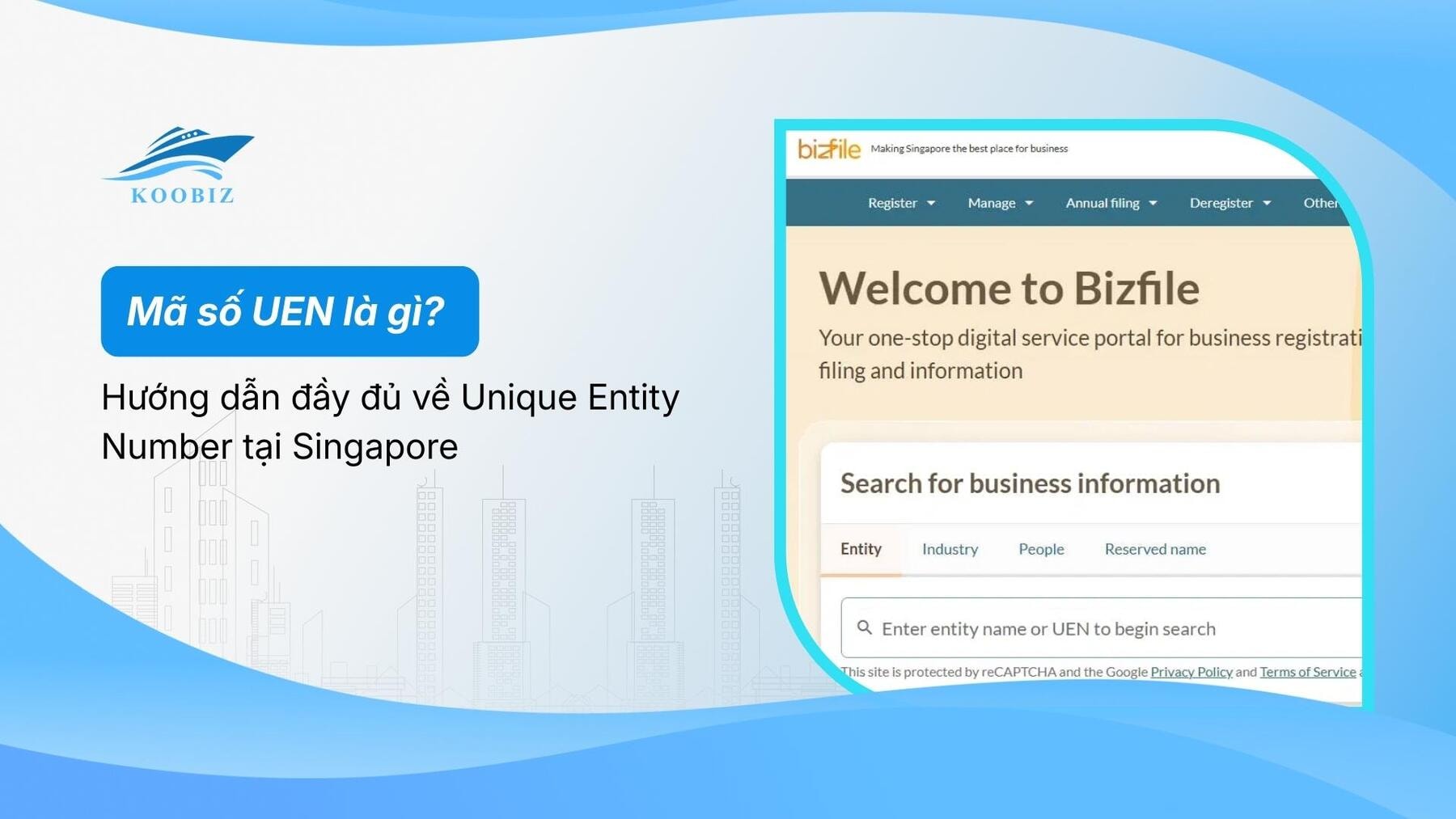
- Visit Directory: Go to uen.gov.sg or bizfile.gov.sg.
- Search: Enter the company name in the search bar.
- Verify: The system will display the valid UEN and entity status (e.g., “Live”), confirming the business is registered and active.
Understanding TIN Formats and Checksum Verification
Comparing TIN formats is essential to distinguish between individual and corporate identifiers and avoid errors in official documentation. While all TINs in Singapore are alphanumeric, the individual format (NRIC/FIN) and the business format (UEN) follow distinct structures that reflect their administrative origins.
Understanding these formats allows you to manually verify if a number is valid before submitting it for a cross-border transaction. Meanwhile, at Koobiz, we use automated tools to validate every UEN or FIN provided by our clients for absolute accuracy.
Individual Format: #0000000@
The individual format (NRIC and FIN) always consists of nine characters: one prefix letter, seven digits, and one trailing checksum letter. The seven digits are a unique serial number, while the final letter is calculated based on a mathematical formula to prevent transcription errors.
To illustrate, an NRIC might look like S1234567A. The trailing letter ‘A’ is not random; it is the result of a specific weightage applied to the digits. This format is recognized worldwide by financial institutions, ensuring that your tax identity is unique and verifiable across international borders.
Business Format: YYYYNNNNNC vs. NNNNNNNNC
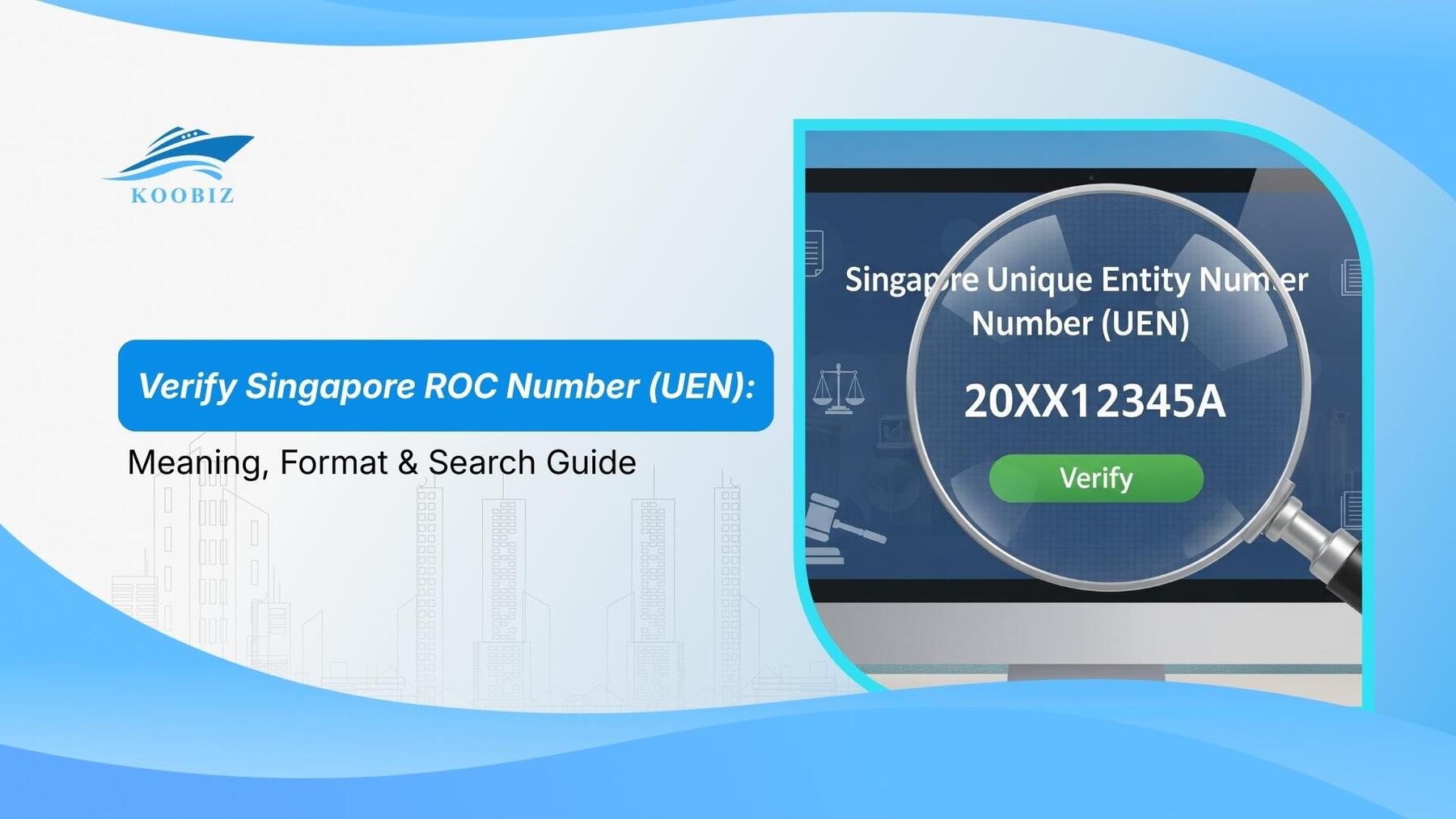
Older entities (registered before 2009) typically have an 8-digit number followed by a letter, while newer entities use a 10-character string that begins with the year of registration.
| Criteria | Old UEN Format | Modern UEN Format (Post-2009) |
|---|---|---|
| Length | 9 Characters | 10 Characters |
| Structure | NNNNNNNNC (e.g., 12345678A) | YYYYNNNNNC (e.g., 202612345G) |
| Advantage | Simplified for older systems | High transparency (Year of birth) |
The modern 10-digit UEN is now the standard for new businesses, immediately identifying them as contemporary entities.
Checksum Calculation Basics
Verifying a TIN often involves a checksum calculation. While the specific algorithms are technical, understanding the logic helps in spotting obvious errors.
| TIN Type | Format Example | Checksum Logic |
|---|---|---|
| NRIC/FIN | S1234567A | Weighted sum of digits + prefix offset, Modulo 11 determines the letter. |
| UEN (Old) | 12345678A | Weighted sum of digits, Modulo 11 determines the final letter. |
| UEN (New) | 202612345G | Year prefix + Serial Number + Weighted Modulo 11 check. |
Global Compliance and the 2026 Regional Shift
In the globalized world of 2026, your Singaporean TIN is not just for local use; it is a critical component of international tax compliance. Specifically, your TIN wins on cross-border transparency, while neighboring countries’ systems are still catching up to the optimal ID Convergence model that Singapore has mastered.
Let’s look at how the TIN interacts with foreign tax authorities and the emerging trends in Southeast Asia. This transition from a purely local identifier to a global compliance tool of a firm like Koobiz becomes invaluable for expat entrepreneurs and multinational corporations.
Using your Singapore TIN for US Tax (Form W-8BEN)
For Singapore-based freelancers or investors receiving income from the United States, providing your NRIC or FIN as a “Foreign Tax Identifying Number” on Form W-8BEN—while establishing your Singapore tax residency—is mandatory. This allows you to claim tax treaty benefits (if applicable) and prevents the US Internal Revenue Service (IRS) from withholding the standard 30% of your income.
Providing your UEN as the TIN is recommended as a Business Entity. Following the implementation of enhanced reporting standards, failure to provide a valid TIN often results in an automatic freeze of US-sourced payments until the identity is verified.
Regional Trend: Vietnam’s PIN Transition (2025-2026)
One of the most significant shifts in the region is the Vietnam PIN Transition, which officially replaced dedicated tax codes with a 12-digit Personal Identification Number (PIN) starting July 1, 2025. By 2026, this system will be fully implemented, mirroring Singapore’s model of using a single ID for all government interactions.
As of 2026, this streamlined system is easing the administrative burden on cross-border business setups and facilitating faster entity verification across the region.
TIN and the Common Reporting Standard (CRS)
The TIN is the primary data point exchanged under the Common Reporting Standard (CRS), a global framework for the automatic exchange of financial account information. Singapore, along with over 100 other jurisdictions, uses the TIN to ensure all residents with offshore accounts are accurately reporting their income to their home tax authority.
In summary, your TIN is the link that connects your bank accounts worldwide to your tax residency in Singapore. Tax authorities increasingly use data matching algorithms to flag discrepancies between global account balances and reported income using the TIN as the primary search key.
About Koobiz Services
At Koobiz, we understand that navigating tax identification and compliance is the backbone of a successful business. Our team of specialists provides end-to-end support for entrepreneurs and corporations looking to establish or optimize their presence in Singapore and beyond.
Our core services include:
- Company Formation: Seamless incorporation in Singapore, including immediate UEN/TIN issuance. Learn more about starting a business
- Banking Account Advisory: Assistance in opening corporate bank accounts in Singapore with full KYC and TIN documentation support.
- Tax and Accounting: Comprehensive tax filing services for individuals and businesses, ensuring you leverage all available deductions.
- Audit and Compliance: Keeping your entity in good standing with IRAS and ACRA through professional corporate secretarial services.
Visit koobiz.com to schedule a consultation with our corporate advisory specialists today.
Disclaimer: This article is for general informational purposes only and does not constitute professional legal or tax advice. Regulations and tax laws are subject to change. Please consult with the Inland Revenue Authority of Singapore (IRAS) or a qualified tax professional at Koobiz for advice specific to your situation. Last updated: May 2026.