

Looking to launch your own company in Singapore? Learn how to start a business in Singapore with our 2026 updated guide. From choosing the right business structure to handling visas, licenses, and compliance, discover practical tips to set up smoothly and grow your business confidently in one of the world’s most business-friendly cities.
Why Singapore Is the Best Place to Start a Business
Singapore is one of the world’s most competitive economies and a top gateway for entrepreneurs looking to expand in Asia. Here’s why investors and business owners choose the Lion City:
- Prime Location: At the heart of Southeast Asia, Singapore connects you to high-growth markets like China, India, and ASEAN countries.
- Business-Friendly Taxes: Enjoy a territorial tax system, a flat corporate tax rate of 17%, and Double Taxation Agreements with over 90 countries.
- Stable & Secure Environment: Transparent laws and strong intellectual property (IP) protection ensure your business operates safely and predictably.
- Quick Company Setup: A fully digital registration system allows most businesses to start within 24 hours.
- Access to Capital & Talent: Singapore offers venture capital, government grants, and a highly skilled, multilingual workforce to help your business thrive.
With these advantages, Singapore is not just a place to start a business – it’s a launchpad for growth across Asia. Start your journey in Singapore today.
Can a Foreigner Open a Company in Singapore?

Yes! Foreigners can fully own most types of companies in Singapore, making it an ideal choice for international entrepreneurs looking to enter the Asian market.
The main requirement is to appoint at least one local resident director. Apart from that, foreigners can serve as shareholders, directors, or company secretaries, giving them full flexibility to manage their business.
The registration process is simple and mostly digital, allowing companies to be incorporated quickly. Singapore’s welcoming legal and business environment ensures that foreigners can start and run a business with minimal restrictions.
Requirements for Foreigners to Set Up a Company in Singapore
To maintain its reputation as a transparent financial hub, Singapore’s Accounting and Corporate Regulatory Authority (ACRA) enforces clear and strict compliance standards. Here are the six mandatory requirements:
Minimum Director Requirement (Local Resident)
Every Singapore company must appoint at least one ordinarily resident director. This person can be:
- A Singapore Citizen or Permanent Resident (PR)
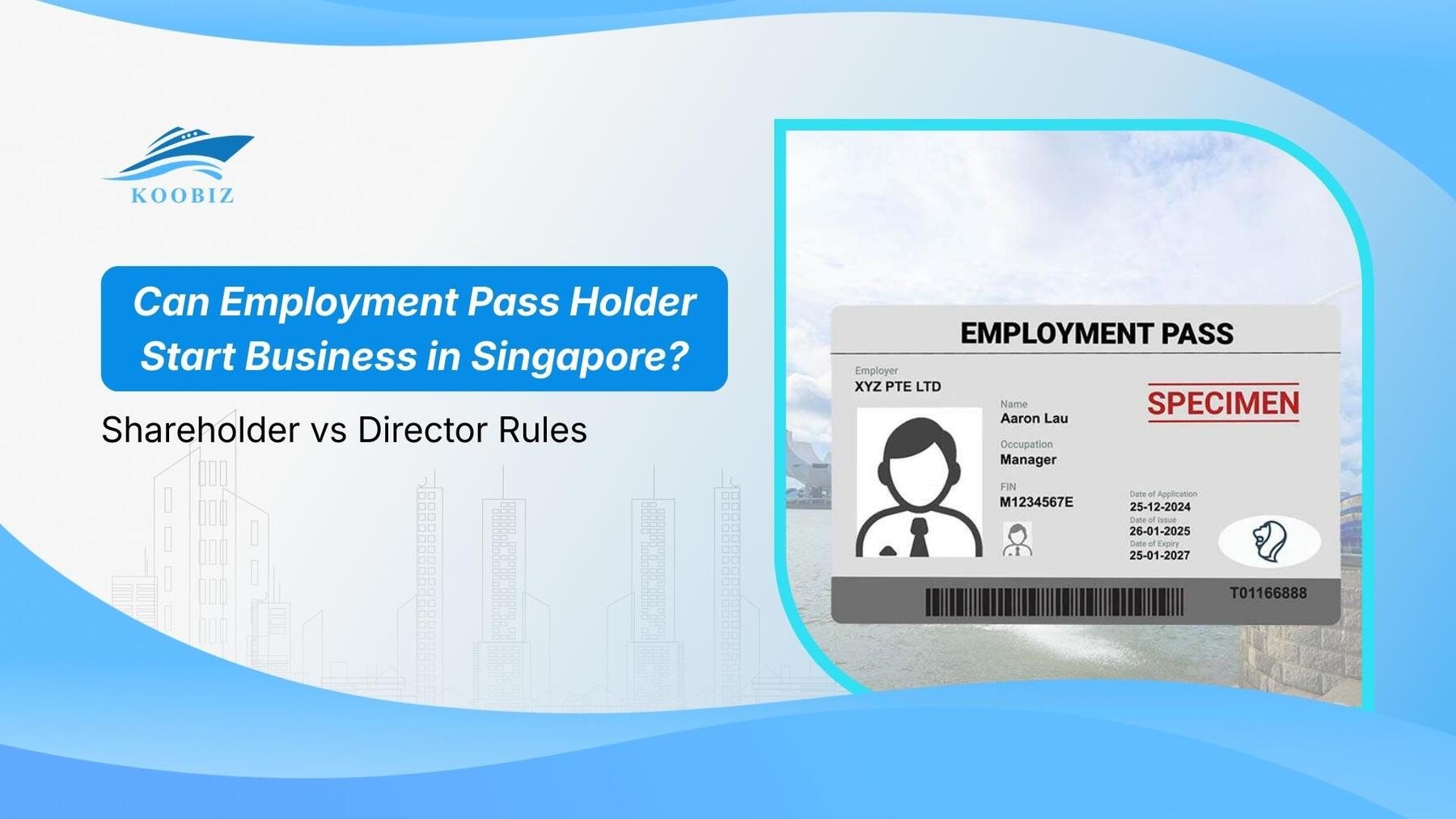
- An EntrePass or Employment Pass (EP) holder
Solution for Foreigners: If you are not relocating, you can use a Nominee Director Service to meet this statutory requirement.
Shareholders
Singapore allows 100% foreign ownership for most private companies, giving you full control over your business.
- Exempt Private Company: 1-20 shareholders (individuals only).
- Private Limited Company (Pte Ltd): minimum 1 shareholder, can have more than 50, either individuals or corporate entities.
- Unlimited Public Company: minimum 1 shareholder, can exceed 50, individuals or companies allowed.
Shareholders don’t need to be residents, offering maximum flexibility for foreign entrepreneurs to own and manage their Singapore company while staying fully compliant with ACRA regulations.
Registered Business Address
A physical Singapore address is required for official correspondence.
- P.O. Boxes are not permitted.
- Virtual Offices: Many startups use virtual office services to meet this requirement efficiently and professionally.
Company Secretary
- Under Section 171 of the Companies Act, all companies must appoint a qualified company secretary within six months of incorporation.
- Constraint: A sole director cannot act as the company secretary.
Minimum Paid-Up Capital
- Entry Point: As low as S$1
- Flexibility: Capital can be increased after incorporation. Higher capital may be required for regulated industries (e.g., travel agencies, financial services).
Business Activity (SSIC Code)
You must select up to two Singapore Standard Industrial Classification (SSIC) codes to describe your business activities.
Why it matters: Choosing the wrong SSIC code can cause delays in bank account setup or complications with government grant applications.
Types of Business Structures in Singapore

Choosing the right business structure is one of the first and most important steps when starting a company in Singapore. Your choice will affect legal liability, taxation, and business management. Here are the main options for both locals and foreigners:
Private Limited Company (Most Common for Foreigners)
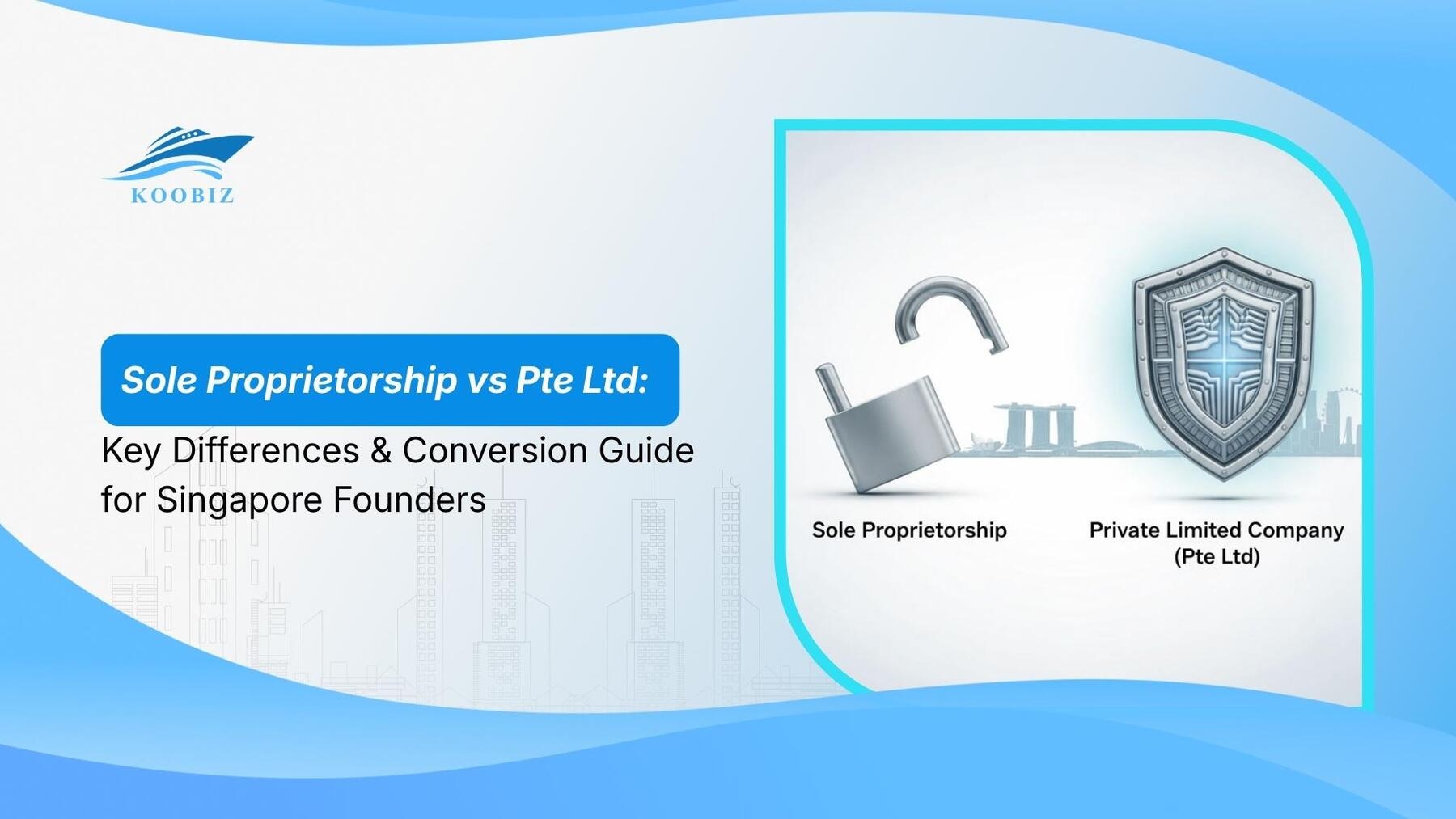
The Private Limited Company (Pte Ltd) is the most popular choice for foreign entrepreneurs. It allows 100% foreign ownership, limits personal liability, and provides a professional corporate image. A Pte Ltd is a separate legal entity, meaning the company itself—not its shareholders—is responsible for its debts and obligations. This structure is ideal for businesses aiming to grow, attract investors, or expand regionally.
Sole Proprietorship
A Sole Proprietorship is the simplest business structure in Singapore. It is fully owned by one person, who is personally liable for all business debts and obligations. While easy and inexpensive to set up, it may not be suitable for high-risk businesses or those planning to scale internationally. It is typically used by small businesses or freelancers.
LLP / Partnership
A Limited Liability Partnership (LLP) or general Partnership is a business structure where two or more partners share management responsibilities. An LLP provides limited liability protection, protecting personal assets, while a general partnership does not. These structures are popular for professional services like law firms, accounting practices, or consultancies due to their flexibility and simplicity.
However, LLPs are not ideal for foreign entrepreneurs seeking to raise capital or attract investors, as venture capitalists usually prefer Private Limited Companies (Pte Ltd). If your business aims for high growth, external funding, or scaling internationally, Pte Ltd is generally the better choice.
Step-by-Step Guide – How to Start a Business in Singapore
Registering a company in Singapore is a fully digital process that can be completed in as little as 24 hours. However, foreigners cannot self-register without a Singpass, so you must use a licensed corporate service provider.
Step 1 – Choose Business Structure
Choose a business structure that suits your goals. Most international founders select a Private Limited Company (Pte Ltd) for its scalability, limited liability, and tax advantages. Other options include Sole Proprietorship or Limited Liability Partnership (LLP), depending on your business size, risk level, and growth plans.
Step 2 – Reserve Company Name
Reserve your company name via the ACRA BizFile+ portal.
- Criteria: Must be unique, not infringe trademarks, and not “undesirable” (vulgar or offensive).
- Pro Tip: Once approved, your company name is reserved for 120 days. You must complete the incorporation within this period; otherwise, the name will be released and become available for others to register.
Step 3 – Prepare Incorporation Documents
Your filing agent will prepare:
- Company Constitution: Legal rules and regulations governing the company.
- Signed Consents: Form 45 (Consent to Act as Director) and Form 45B (Consent to Act as Secretary).
- Identification: Passports and proof of residential address for all foreign officers.
Step 4 – Appoint Local Director
Every company must have at least one director who is “ordinarily resident” in Singapore. Foreign founders can use a Nominee Director Service if managing the business from abroad.
Step 5 – Engage a Registered Filing Agent to Submit Application
As a foreigner, you cannot log in to ACRA’s BizFile+ portalwithout a Singpass (Digital ID). A licensed Filing Agent or corporate service provider (like Koobiz) can submit your incorporation application on your behalf, ensuring all documents meet local requirements and avoid delays or errors.
Using a professional service not only saves time but also ensures a smooth, compliant setup for your Singapore company.
Step 6 – Open a Corporate Bank Account
Once incorporated, open a corporate bank account:
- Traditional Banks (DBS, OCBC, UOB): Stable but may require an in-person visit.
- Neobanks (Aspire, Airwallex): Fast, fully remote onboarding, ideal for startups.
Step 7 – Apply for Licenses & Permits (If Required)
- Licenses: Check if your SSIC code requires specific licenses (e.g., F&B, Travel, Finance) via the GoBusiness portal.
- GST Registration: Only mandatory if your annual taxable turnover exceeds S$1 million.
By following these steps, foreign entrepreneurs can legally and efficiently establish a company in Singapore, ready to operate in one of Asia’s most business-friendly markets.
What to Do After Company Registration?
After registering your company, take these key steps to operate legally and efficiently in Singapore:
- Register for Taxes – Sign up with IRAS for corporate tax. Register for GST if annual revenue exceeds S$1 million.
- Set Up Accounting & Bookkeeping – Keep proper records. Consider hiring a local accountant or professional service.
- Open a Corporate Bank Account – Manage transactions, receive payments, and pay suppliers.
- Comply with Annual Filings – File annual returns with ACRA and corporate tax returns to IRAS on time.
- Obtain Licenses or Permits (If Required) – Depending on your business (e.g., F&B, education, healthcare, finance).
- Plan for Growth – Focus on marketing, hiring, funding, and business expansion opportunities.
Following these steps helps your company stay compliant, operate smoothly, and grow successfully in Singapore.
Do You Need a Visa to Operate a Business in Singapore?

Owning a company does not automatically grant residency. Physically working or residing in Singapore requires a valid work pass:
- Employment Pass (EP): For professionals and owners. Requires a minimum qualifying salary of S$5,600 (S$6,200 for Financial Services), increasing with age up to S$10,700. Applicants must also score at least 40 points under the COMPASS framework.
- EntrePass: For innovators and venture-backed entrepreneurs. No minimum salary is required, but the business must meet specific “innovation criteria” (e.g., holding a patent or receiving recognized VC funding).
- Remote Management: You can manage the company from abroad by appointing a Nominee Director to satisfy local legal requirements while you remain overseas.
Without a proper visa, you may only enter on a Short-Term Visit Pass for limited activities like meetings or consultations. You cannot legally handle day-to-day business operations or be based in Singapore.
Timeline & Costs to Start a Business in Singapore (2026)
Singapore is renowned for its efficiency and fast incorporation process. Here’s what to expect in 2026:
Timeline
- Company Name Approval: 15 minutes – 24 hours.
- Company Incorporation: Usually within 24 hours after name approval and signing documents.
- Opening a Bank Account:
- Neobanks (Aspire, Airwallex): 1-3 business days.
- Traditional Banks (DBS, UOB, OCBC): 2-4 weeks.
Overall: Most businesses can be fully incorporated and ready to trade within 2-5 business days.
Costs
- ACRA Registration Fee: S$315 (S$15 for name application + S$300 for registration).
- Nominee Director Service: S$2,000 – S$4,000 per year (usually requires a refundable security deposit).
- Corporate Secretary: S$300 – S$600 per year (mandatory).
- Registered Office Address: S$150 – S$500 per year.
- Minimum Paid-up Capital: As low as S$1.
- Bank Initial Deposit:
- Traditional Banks: S$1,000 – S$3,000 depending on the bank.
- Neobanks: Often S$0 initial deposit.
Singapore’s fast incorporation, low capital requirement, and transparent fees make it easy for foreign entrepreneurs to start a company quickly and efficiently.
Common Mistakes and Practical Tips for Foreigners
Starting a business in Singapore is straightforward, but foreign entrepreneurs often face common challenges.
- Ignoring local requirements: Failing to appoint a local director, provide a registered address, or obtain necessary licenses.
- Choosing the wrong business structure: Can lead to higher taxes, personal liability, or difficulty attracting investors. Private Limited Company is usually the best choice.
- Incomplete or incorrect documentation: Mistakes in shareholder or director information can delay incorporation.
- Neglecting accounting and taxes: Annual filings and corporate tax compliance are mandatory.
- Overlooking visa and employment rules: Owning a company does not automatically grant the right to work.
Why Choose Koobiz to Set Up Your Company in Singapore?
Setting up a business in Singapore can be complex for foreigners. Koobiz simplifies the process by offering:
- Expert Guidance: Understand legal requirements, licenses, and SSIC codes.
- Fast Incorporation: Reserve company names, prepare documents, and submit applications efficiently.
- Nominee Director Services: Meet local director requirements without relocating.
- Corporate Secretarial Support: Ensure annual filings and compliance are handled professionally.
- Tailored Solutions: Customized support for your business structure and operations.
With Koobiz, you can launch your Singapore business confidently and smoothly.