

Navigating Singapore’s administrative requirements can be challenging, especially when a valid Proof of Address is needed for bank accounts or contracts. Whether you are incorporating a company through Koobiz, relocating as an expat, or just updating records, meeting Singapore’s strict KYC standards is mandatory. This guide provides a comprehensive list of accepted documents—from utility bills to Singpass—and offers practical solutions if you don’t have bills in your own name.
What Constitutes a Valid Proof of Address in Singapore?

A valid Proof of Address in Singapore is a formal document that explicitly links your identity to your residence. To be accepted by Singaporean financial institutions and government bodies, your document must pass these three strict criteria:
- Recent: The document must be dated within the last 3 months (though some banks may allow up to 6 months).
- Personal: It must clearly display your Full Name exactly as it appears on your ID or Passport.
- Residential: It must show a valid Residential Address (P.O. Boxes and Virtual Offices are generally rejected).
Note: Handwritten notes or informal letters are automatically rejected.
The source of the document is crucial. The document must originate from a “trusted source,” such as a government agency, a licensed bank, a utility provider, or an insurance company. For clients receiving Koobiz’s bank account opening services, ensuring your documents meet these specific “freshness” and “source” criteria is the first step we verify to guarantee a successful application.
Comprehensive List of Accepted Documents for Proof of Address
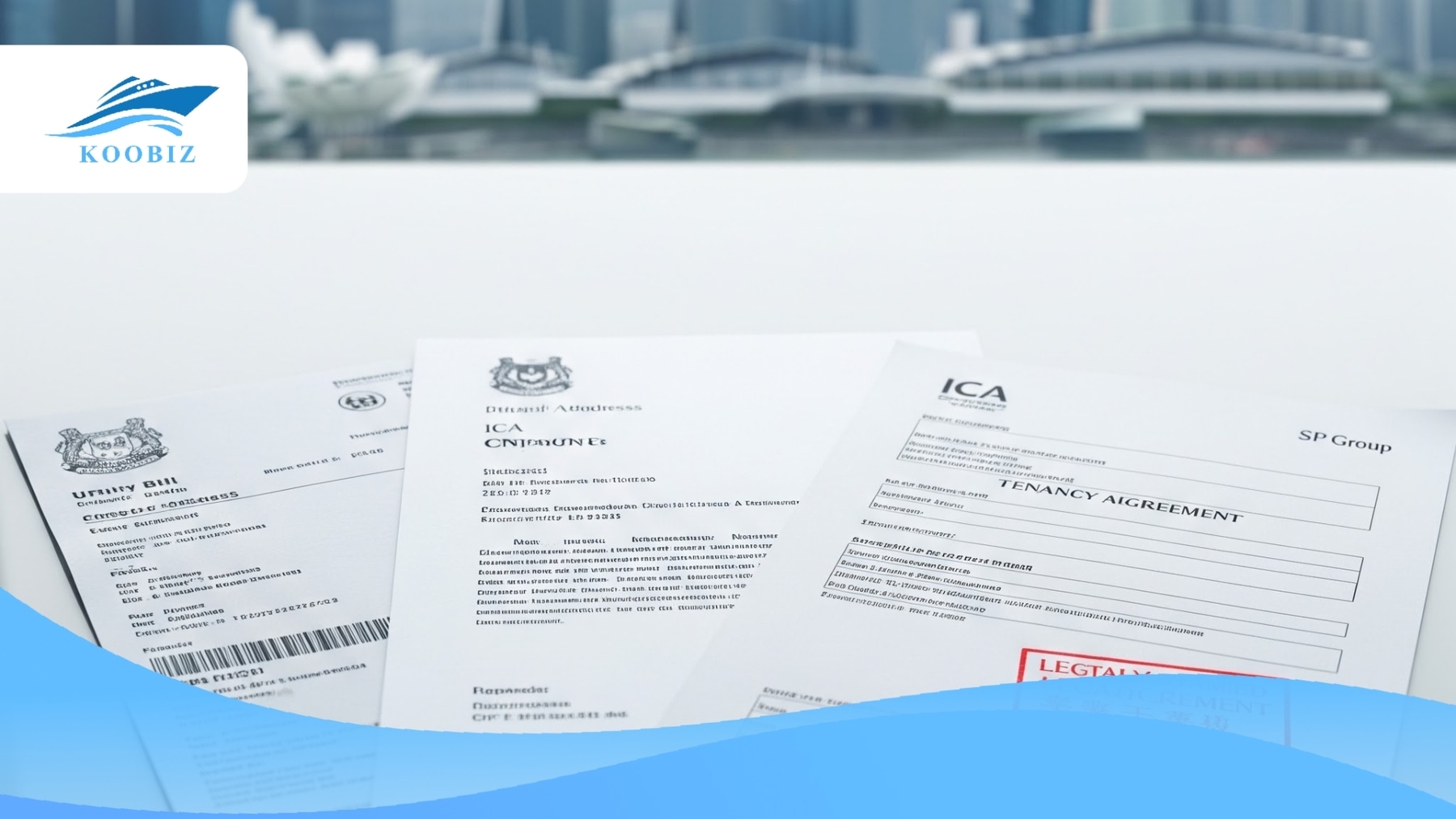
There are three primary categories of accepted documents: Utility/Telco bills, Government correspondence, and Property-related agreements, classified based on their authority and verification reliability.
Institutions require documents that demonstrate an ongoing service or legal obligation tied to the property. While the acceptance criteria can vary slightly between banks (e.g., OCBC vs. DBS) or government agencies (e.g., MOM vs. ICA), the following groups below represent the industry standard for 2026.
Utility and Telecommunication Bills
Utility bills are widely regarded as the “Gold Standard” for proof of address because they demonstrate active residency and consumption at the location.
- SP Group Bills: The most universally accepted document. A bill from Singapore Power (SP Group) covering electricity, water, or gas is accepted by virtually every institution in Singapore.
- Private Retailer Bills: If you purchase electricity from Open Electricity Market (OEM) retailers, these monthly statements are also fully valid.
- Telecommunication Bills: Post-paid mobile phone or home broadband bills from major providers like Singtel, StarHub, M1, or Simba are accepted. However, ensure it is a monthly statement showing the address, not just a receipt for a top-up.
- Note: Some stricter banks may prefer a home broadband bill over a mobile phone bill, as broadband implies a fixed physical connection to the home.
Government-Issued Letters and Documents
Government letters carry the highest level of authority and are rarely disputed during verification processes.
- ICA Letters: Correspondence from the Immigration & Checkpoints Authority, such as long-term visit pass approvals or ID card collection slips.
- MOM Letters: Letters from the Ministry of Manpower (MOM) are critical for foreign workers
- CPF Statements: The Central Provident Fund (CPF) usage statement is a strong proof of residence regarding local and PRs.
- IRAS Tax Assessments: The Notice of Assessment (NOA) from the Inland Revenue Authority of Singapore is highly credible, though it is issued annually, so ensure the date is within the acceptable window or supported by other documents.
Tenancy Agreements and Property Documents
A signed Tenancy Agreement is acceptable provided it has been legally stamped by the Inland Revenue Authority of Singapore (IRAS).
- Stamped Tenancy Agreement: A private contract between landlord and tenant must include the E-Stamp Certificate to prove that stamp duty has been paid.
- Title Deed/Property Purchase Documents: For homeowners, legal documents proving ownership of the property serve as permanent proof of address.
- Home Insurance Policies: An active policy schedule for home contents or fire insurance showing the insured address is also a valid form of proof.
According to guidelines from the Monetary Authority of Singapore (MAS), institutions must conduct due diligence, and stamped tenancy agreements are prioritized over unstamped ones.
Using Singpass and MyInfo for Digital Verification
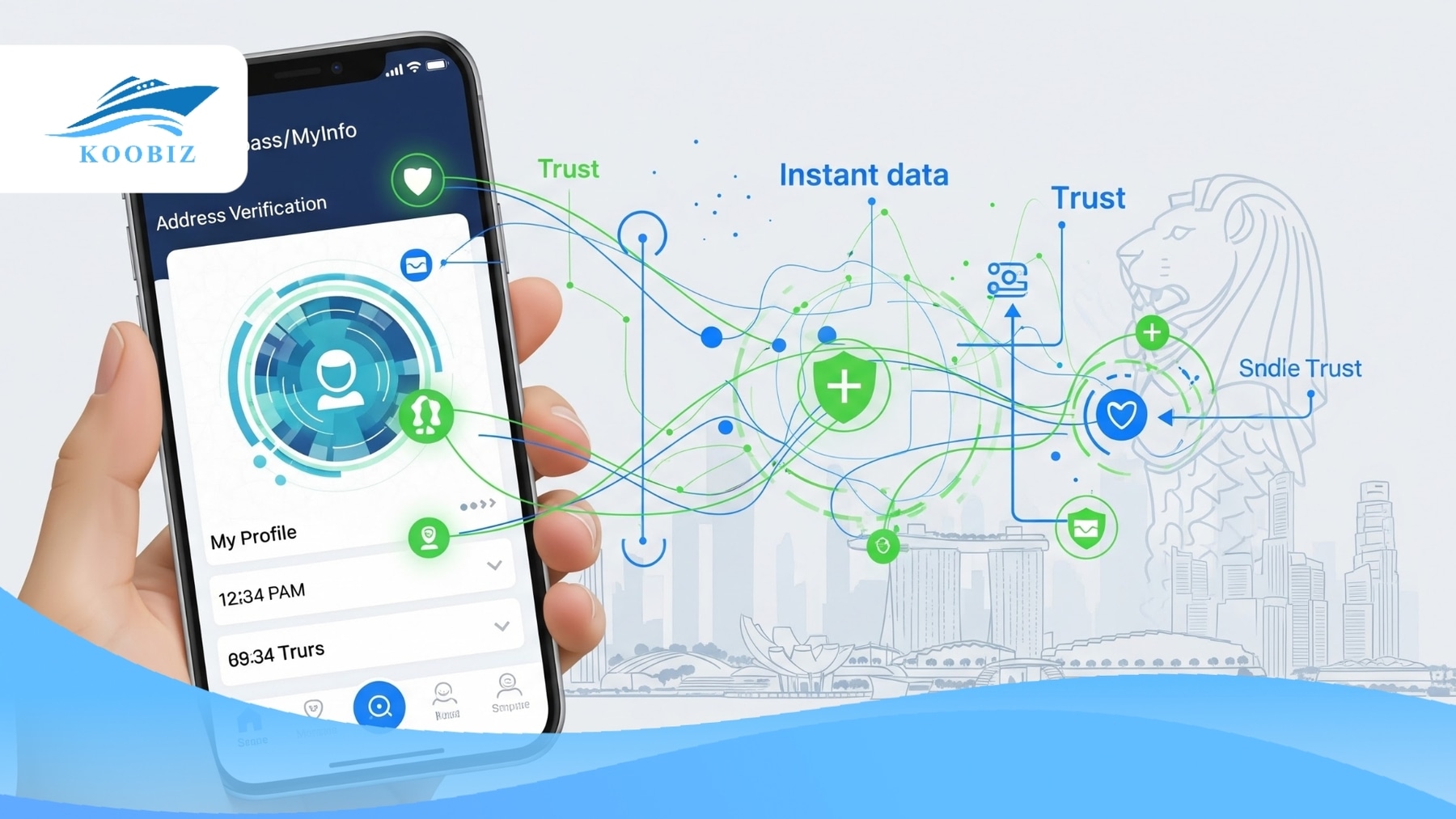
Using Singpass is the fastest and most seamless method to prove your address, leveraging the government-backed MyInfo data platform for instant verification without the need for physical paperwork.
The data is “source-verified” by the government (ICA). For Koobiz clients incorporating companies or setting up corporate accounts, we strongly recommend setting up Singpass immediately upon receiving your FIN (Foreign Identification Number).
Here are the two ways to use Singpass for verification:
Method 1: Instant Verification (MyInfo)
This is used for digital applications (e.g., opening a bank account online or applying for a credit card).
- Step 1: Select “Retrieve MyInfo with Singpass” on the application form.
- Step 2: Scan the QR code using your Singpass App.
- Step 3: Consent to share your data.
- Result: The “Address” field is auto-filled with verified data from ICA. No document upload is needed.
Method 2: Generating a Physical Document (PDF)
This is used when a landlord, school, or organization specifically asks for a “hard copy” or PDF document.
- Step 1: Log in to the Singpass Website or App.
- Step 2: Navigate to the “My Profile” section.
- Step 3: Scroll down to the address section or look for the “Print Profile” / “Save as PDF” button.
- Result: You get a secure PDF featuring the Singpass logo, your full name, and your registered address, which acts as an official proof of address.
How to Get Proof of Address as a Foreigner or Expat
Foreigners often encounter a “chicken and egg” problem when relocating to Singapore: a bank account is required to rent a flat yet a flat address is needed to open a bank account. The following chronological roadmap outlines how to secure valid proof at every stage of your relocation.
Step 1: Immediate Arrival – Use the In-Principle Approval (IPA) Letter
The IPA Letter issued by the Ministry of Manpower (MOM) will be your first valid proof of address.
- What it is: The pre-approval letter sent to you or your employer before you arrive.
- Action: Ensure your employer has declared your temporary address (e.g., hotel or serviced apartment) in the MOM application.
- Usage: Present this letter at major banks (DBS, OCBC, UOB) to open a “starter” savings account.
- Limitation: This is a temporary solution valid while waiting for your official pass to be issued.
Step 2: Transitional Living – Request an Employer Introduction Letter
If you are staying in corporate housing or serviced apartments where bills are not in your name, you cannot use utility bills.
- What it is: A formal letter from your company’s HR department or Director.
- Action: Request a letter on official company letterhead signed by an authorized manager.
- Required Wording: It must explicitly state: “We confirm that [Employee Name], holder of passport [Number], currently resides at [Full Address].”
Step 3: Permanent Settlement – Secure Tenancy & Utility Bills
Once you sign a lease for your own place, you should upgrade your proof of address to a permanent “Gold Standard” document.
- Action A: Sign a Tenancy Agreement and ensure it is e-stamped by IRAS.
- Action B: Open an SP Group (utilities) account immediately. Your first bill (even if it’s just the deposit confirmation or opening letter) serves as the ultimate proof of address.
- Final Step: Update your bank and HR records with this new permanent address to ensure long-term compliance.
Alternatives: What If You Don’t Have Bills in Your Name?
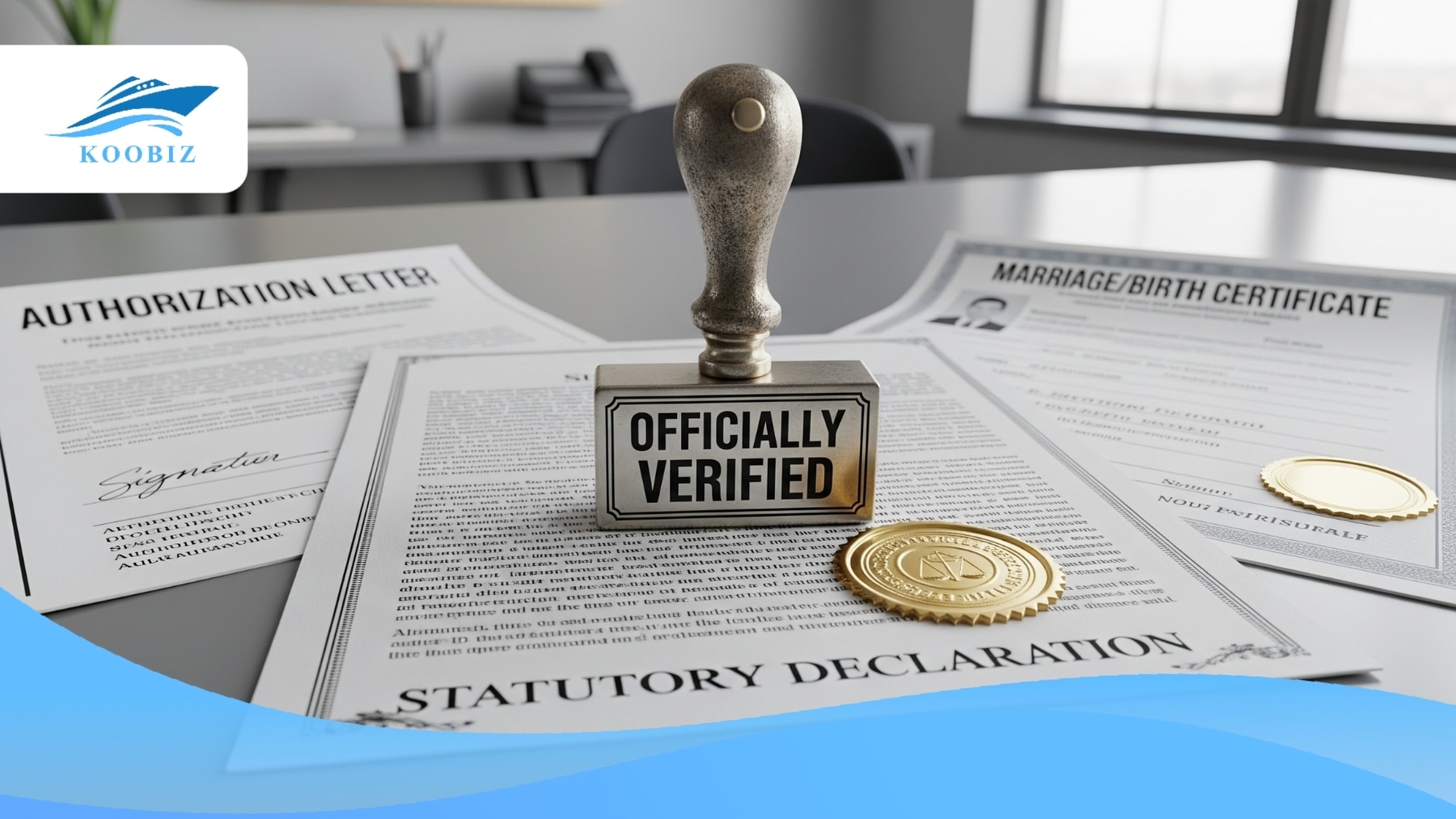
Yes, it is possible to provide proof of address even without bills in your name by using legal Statutory Declarations or Authorization Letters accompanied by relationship proof.
This situation frequently affects students, spouses, or young adults living with parents. Financial institutions acknowledge this gap and provide specific “alternative” routes to verify residence through association.
Using a Statutory Declaration for Address Proof
A Statutory Declaration is a legal document signed in the presence of a Commissioner for Oaths or a Notary Public, where you legally swear that you reside at a specific address.
- Process: Draft a declaration stating your identity and your permanent address.
- Execution: To be signed and stamped by a Commissioner for Oaths (available at law firms or the Supreme Court).
- Authority: Since lying on a Statutory Declaration is a criminal offense, this document carries very high weight and is accepted when no other documents exist.
Authorization Letter from Immediate Family or Landlord
An authorization letter allows you to rely on the proof of address of a family member or landlord you live with.
- Requirements: You need three things: (1) The utility bill/bank statement of the main resident (e.g., your spouse or parent), (2) Proof of relationship (Marriage Certificate or Birth Certificate), and (3) A signed letter confirming your residency.
- For Tenants: If bills are included in your rent (under the landlord’s name), ask the landlord for a confirmation letter attached to their utility bill and your tenancy agreement.
According to standard banking protocols in Singapore, verification via immediate family relationship is a recognized KYC procedure, provided the lineage can be proven via official certificates.
Comparison: Bank Statements vs. Utility Bills vs. Government Letters
Understanding the hierarchy of documents will save you time. Not all proofs are created equal in the eyes of compliance officers. Below is a breakdown of how different documents rank in terms of acceptance and authority.
| Document Type | Acceptance Tier | Main Strength | Common Limitation |
|---|---|---|---|
| Government Letters
(MOM, ICA, IRAS) |
Tier 1 (Highest) | Indisputable authority on identity and legal status. | “Freshness” issue (often issued annually rather than monthly). |
| Utility Bills
(SP Group, OEM) |
Tier 1 (Gold Standard) | Proves active physical residency & habitability. | Must be in your own name (difficult for tenants/spouses). |
| Bank Statements
(Major Local Banks) |
Tier 2 (Standard) | Widely available & easy to download via apps. | Perceived as less rigorous; addresses can sometimes be changed online easily. |
| Telco Bills
(Mobile/Broadband) |
Tier 2/3 (Secondary) | Good backup if utilities aren’t available. | Prepaid plans or purely digital telcos are often rejected. |
About Koobiz:
At Koobiz, we understand that paperwork is the last thing you want to worry about when expanding your business or life to Singapore. We specialize in seamless Singapore company incorporation, professional accounting and tax services, and expert assistance with corporate bank account opening. Whether you need help drafting employer letters for your staff or navigating the complex compliance landscape, our team is ready to assist.
Visit us at koobiz.com to learn how we can simplify your business journey in Singapore.