

For Singapore employers, grasping the ir8a meaning is essential for Year of Assessment (YA) 2026 compliance. Koobiz emphasizes that Form IR8A is more than just a statutory return; it is the primary instrument for reporting employee remuneration to the Inland Revenue Authority of Singapore (IRAS), ensuring accurate tax assessments.
Beyond the basic form, IR8A is central to the mandatory Auto-Inclusion Scheme (AIS). With stricter thresholds in place, businesses must accurately report for all staff—including directors and resigned employees. This guide covers these legal obligations and the critical appendices (8A, 8B, and IR8S) required for declaring non-cash benefits and stock options.
Disclaimer: Information is based on IRAS and CPF Board guidelines as of January 2026. Always verify with official sources.
What is the Meaning of Form IR8A in Singapore?
Think of Form IR8A as your company’s official annual report to the tax authority (IRAS) detailing what you paid each employee. It’s not optional—it’s a legal requirement under Singapore’s Income Tax Act. For the Year of Assessment 2026 (which covers income earned in 2025), you must report all forms of compensation, including salaries, bonuses, commissions, and director fees.
Koobiz notes that for most employees, this data is now pre-filled in their electronic tax returns. This automation significantly reduces the margin for manual error during the filing season.
Legal Basis Under Section 68(2) of the Income Tax Act
Under Singapore law, specifically the Income Tax Act, preparing Form IR8A is a legal requirement, not just a standard HR duty. When requested, companies must provide complete and accurate details of all employee earnings. The ultimate responsibility for ensuring this information is correct falls on the company’s directors and management.
IR8A vs. IR21: Understanding the Difference
| Feature | Form IR8A | Form IR21 |
|---|---|---|
| Purpose | Annual income reporting for tax assessment. | Tax clearance for foreign employees leaving Singapore. |
| Frequency | Annually (Recurring). | Ad-hoc (Upon cessation of employment/departure). |
| Deadline | By 1 March of the following year. | At least 1 month before the employee leaves. |
| Coverage | Entire calendar year (Jan 1 – Dec 31). | Employment period up to the date of departure. |
| Who it’s for | All employees (Residents, Non-residents, Directors). | Non-Singapore Citizen employees (Foreigners) only. |
Note: Even if an employer files an IR21 for a foreign employee leaving in June 2025, they may still need to include that employee’s data in the annual IR8A/AIS submission for YA 2026 if the employee was a tax resident.
Who Needs to File IR8A in 2026?
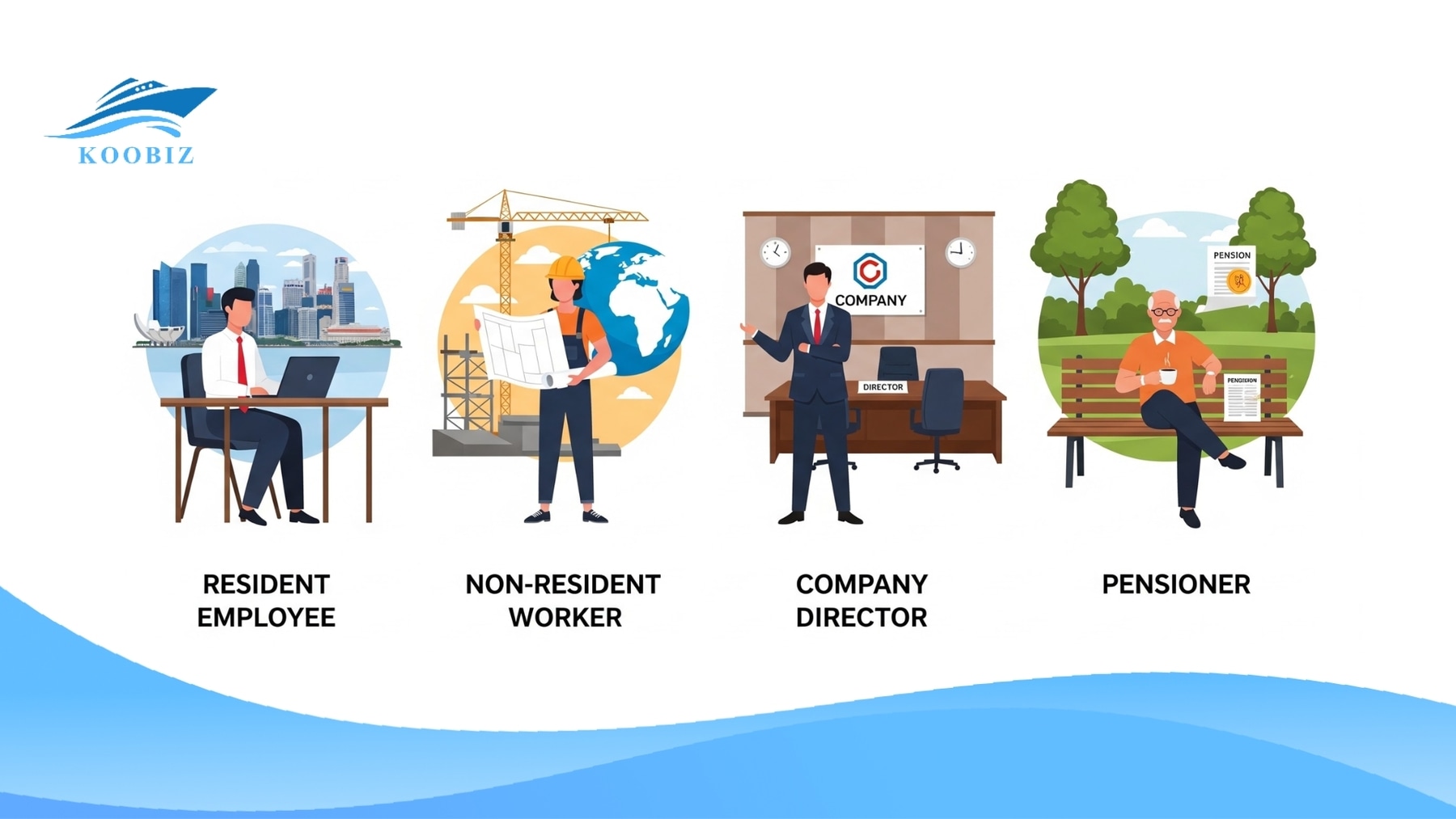
There are four main categories of individuals for whom an employer must prepare an IR8A. These are classified by their employment relationship and source of income in Singapore:
- Full-time and Part-time Resident Employees: Any individual under a contract of service.
- Non-resident Employees: Foreigners working in Singapore, even for short-term projects.
- Company Directors: Including non-executive directors who receive fees approved in 2025.
- Pensioners: Former employees receiving pension payments from the company.
To ensure all employment income is properly taxed, the IR8A reporting rules are designed to be wide-reaching. The key factor is where the work is physically performed, not where the company is based or where the salary is paid from. For instance, if an employee works remotely from Singapore, their income is subject to Singaporean tax and must be reported on Form IR8A, even if their employer is located overseas. It’s also important to remember that income earned by former employees during the tax year (e.g., in 2025) must still be included in your company’s 2026 filing, regardless of whether they have already left. Koobiz emphasizes that even if an employee has already left the company before the filing period begins, their earnings for the months they worked in 2025 must be accounted for in the 2026 submission.
Handling Resigned and Rehired Employees
A common reporting issue occurs when an employee leaves and later returns within the same year. For instance, if someone resigned in March 2025 and was rehired in September 2025, you must combine their earnings from both employment periods into one single IR8A record for the 2026 filing. It’s crucial to configure your payroll system to merge these entries automatically. This ensures the employee isn’t listed twice in the tax system, which could incorrectly increase their total taxable income and lead to them being overtaxed.
Mandatory Auto-Inclusion Scheme (AIS) for YA 2026
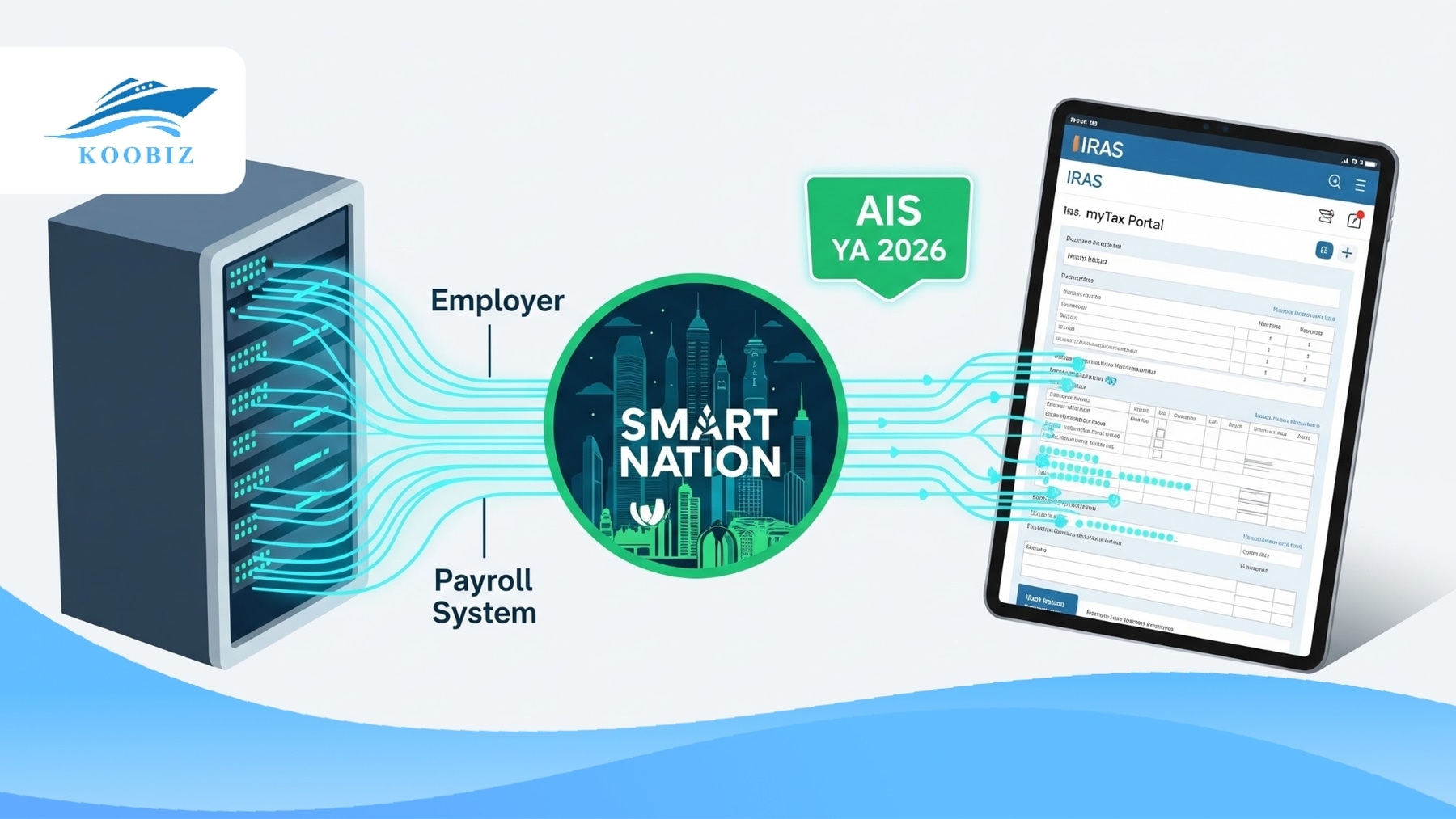
Most companies operating in Singapore will be required to use the Auto-Inclusion Scheme (AIS) in 2026. This mandate covers the vast majority of businesses under IRAS rules. The AIS is a key part of Singapore’s move towards a fully digital government, known as the “Smart Nation” initiative. Under this scheme, employers electronically submit their employees’ income data. This information then flows directly and automatically into each employee’s pre-filled tax return, ensuring accuracy and consistency..
According to official IRAS guidelines for the 2026 Year of Assessment, any employer with 5 or more employees (including those who have left during the year) is legally required to join the AIS. Koobiz provides specialized advisory to help firms transition from manual spreadsheets to AIS-integrated payroll systems.
The “5-Employee Rule”: Is Your Company Included?
To determine if your company is legally required to use the AIS, you need to count everyone who was paid by your company at any time in 2025. Be sure to include:
- All active full-time and part-time staff.
- Company directors, even if they are the only person receiving payment.
- Any employees who left the company during the year, whether they resigned or were let go.
If you had 5 or more individuals in this combined group at any point in 2025, you must register for the AIS. Companies with fewer than 5 individuals are exempt from the mandate but are highly encouraged to join voluntarily, as it significantly simplifies the year-end tax filing process.
Benefits of AIS: Time-Savings and Data Accuracy
The biggest benefit of the AIS is that it eliminates the time-consuming task of printing and distributing paper IR8A forms to each employee. Instead, employees can securely log into the IRAS myTax Portal, where their income details are already pre-filled for them. This direct digital transfer from your company’s payroll system to IRAS also drastically reduces manual data entry errors. As an employer, this translates to significant time savings and far fewer questions from employees about lost forms or confusing numbers on their tax statements.
Common Mistakes in IR8A Filing (And How to Avoid Them)
Even with automated systems, errors can occur. Understanding the nuances of the ir8a meaning includes knowing where most employers trip up during the submission process.
1. Misreporting Director’s Fees
A common filing mistake relates to when director’s fees are reported. The key rule is that these fees must be declared for the tax year in which they are approved by the company (typically at the Annual General Meeting), not the year they are actually paid out. For example, if fees for work done in 2024 are formally approved at a 2025 AGM, they belong in your 2026 tax filing (which covers 2025 income).
2. Overlooking Non-Cash Benefits
Many SMEs forget to include benefits-in-kind such as gym memberships, dental reimbursements above a certain threshold, or the value of corporate gifts. While small “token” gifts for festive occasions (under $200) are generally exempt, larger benefits must be captured in Appendix 8A.
3. Incorrect CPF Figures (The $7,400 vs $8,000 Trap)
For the 2025 income year (reported in 2026), the maximum monthly salary subject to CPF contributions is $7,400. A frequent error is accidentally using last year’s lower limit of $6,800 or next year’s higher limit of $8,000. It’s essential to verify that your 2025 payroll calculations correctly applied this $7,400 ceiling to ensure you report the right taxable income for each employee.
CPF Ceiling Roadmap
| Year of Income | YA Reporting | OW Ceiling (Jan-Dec) |
|---|---|---|
| 2024 | YA 2025 | $6,800 |
| 2025 | YA 2026 | $7,400 |
| 2026 | YA 2027 | $8,000 |
Deadlines and Penalties for Non-Compliance
The deadline to submit IR8A information is 1 March 2026, with no exceptions. IRAS maintains a strict tax calendar and almost never grants extensions for this filing, as delays would disrupt the personal tax filing process for all employees nationwide.
The Hard Deadline: 1 March 2026
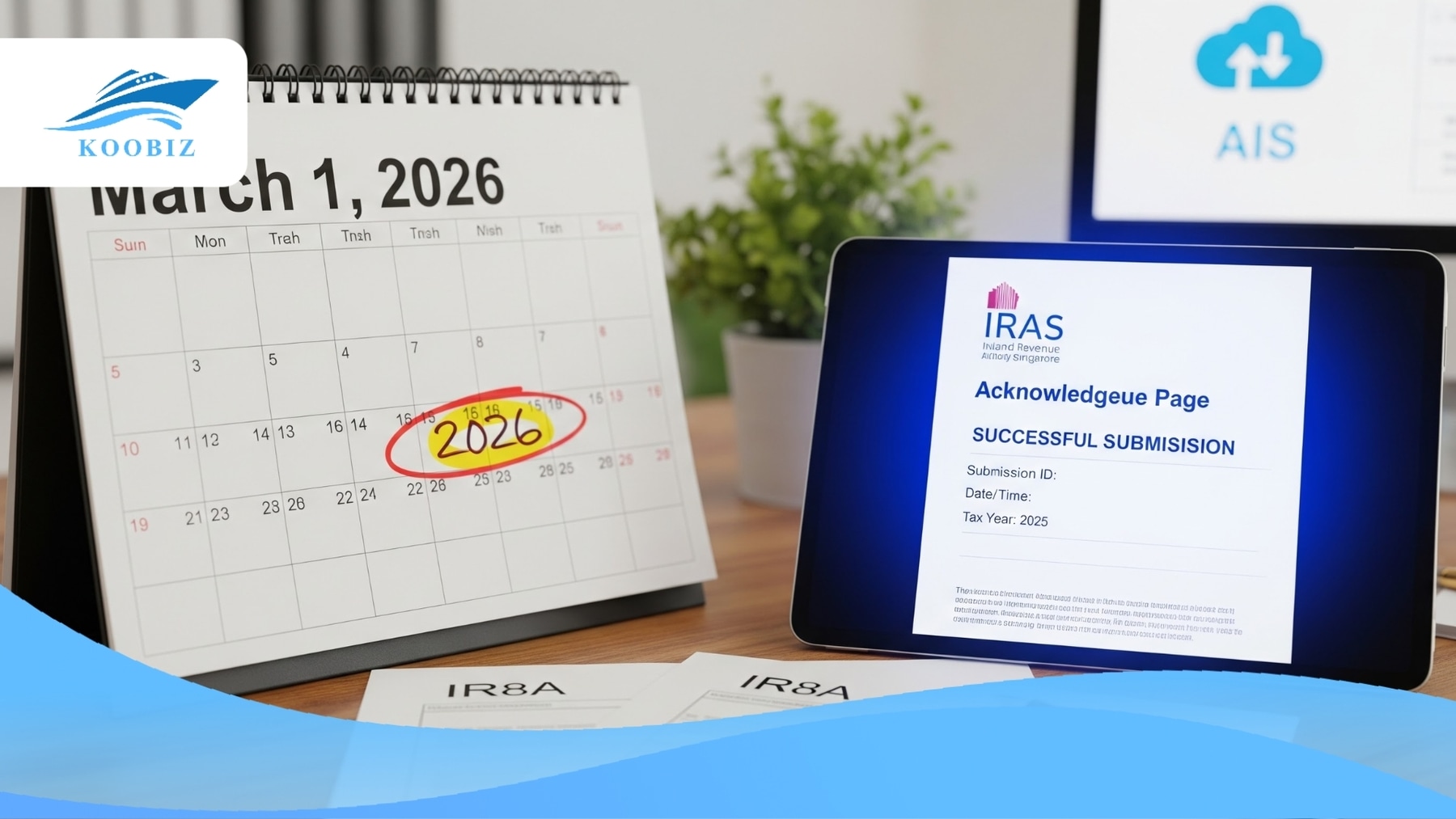
1 March is the absolute final date. You must have either:
Successfully submitted your data electronically through the AIS system, or
Provided physical IR8A forms to all employees (if you are not on AIS).
A submission is only complete when IRAS’s system has received and confirmed your data. You must save the digital “Acknowledgement Page” or receipt you receive as proof that you filed on time.
Section 94 Penalties: Fines and Court Summons
Failure to comply with the IR8A reporting requirements is an offense under Section 94 of the Income Tax Act. Per IRAS guidelines, consequences can include:
- Composition Fines: Typically ranging from $250 to $1,000 per offense depending on the delay, up to a maximum of $5,000.
- Court Summons: For persistent non-compliance or failure to pay fines, directors may be summoned to court.
- Severe Offenses: In cases of tax evasion or fraud, penalties can escalate to fines of up to $10,000 and/or imprisonment for up to 3 years.
The IR8A Family: Understanding Appendices 8A, 8B, and IR8S
The IR8A is supported by several related forms for specific situations. These include:
Appendix 8A: Declaring Benefits-in-Kind (BIK)
Appendix 8A is your declaration for all benefits-in-kind. If you provide an employee with a benefit they could otherwise purchase (like a car allowance or gym membership), you must report its fair market value here.
Appendix 8B: Reporting Stock Option (ESOP) Gains
Appendix 8B captures the financial gain an employee realizes from company equity plans. This gain becomes part of their taxable employment income once they exercise their options or their shares vest.
Form IR8S: When You Overpay CPF
Form IR8S is a corrective tool. If your payroll system calculated CPF on salary exceeding the annual wage ceiling ($7,400 per month for 2025), you file this form to rectify the error with both CPF Board and IRAS, ensuring the employee’s reported income is accurate.
Technical Specifications: The IR8A .txt File Format
For companies using the Auto-Inclusion Scheme, the submission is typically done via a validated .txt file or via API from IRAS-integrated software.
| Feature | Specification |
|---|---|
| File Extension | .txt (Commonly named “IR8A.txt”) |
| Encoding | UTF-8 or ASCII |
| Validation Tool | PAT (Payroll Asia Tool) or IRAS Validation Application |
| Submission Portal | myTax Portal (Employer Login) |
Case Study: Navigating 2026 Compliance
Scenario: The Growing Fintech Firm
“FintechSG” expanded from 4 to 12 employees during 2025. Here is how they managed their compliance:
- Mandatory AIS: With a headcount exceeding 5, they registered for AIS.
- CPF Reconciliation: A Senior Developer was hired at $10,000/month. The HR team ensured CPF was capped at $7,400 for the entire 2025 year.
- Future Proofing: In December 2025, they updated their payroll software parameters to the new $8,000 ceiling, effective 1 Jan 2026, to ensure the next cycle (YA 2027) would be accurate.
- Appendix 8B: Stock options vested for early employees, requiring an Appendix 8B submission.
Result: By using AIS-integrated software, FintechSG saved an estimated 20 hours of administrative work compared to manual filing and successfully submitted digital records on February 15, 2026.
How to Correct Errors: Revised vs. Additional Submissions
Correcting an IR8A error is done through either a “Revised” submission (complete replacement) or an “Additional” submission (reporting the delta).
- “Revision” Method: The new file completely supersedes the previous one. If you reported $50,000 but meant $55,000, the Revised file states $55,000.
- “Additional” Method: Used to report only the “extra” amount missed. If you forgot a $500 bonus, you submit an Additional IR8A for $500.
About Koobiz Services
Navigating the complexities of ir8a meaning, AIS mandates, and the 2026 tax landscape can be daunting. Koobiz is a leading corporate service provider in Singapore, dedicated to simplifying compliance. We specialize in:
- Singapore Company Formation: Expert guidance on setting up your business entity. Learn more at koobiz.com.
- Corporate Secretarial Services: Ensuring your statutory filings are always on time.
- Tax and Accounting Advisory: From IR8A preparation to GST filing.
- Payroll Outsourcing: Handling calculations, CPF contributions, and year-end reporting.
Trust Koobiz to turn your tax obligations into a seamless process.