

Choosing between an Exempt Private Company (EPC) and a standard Private Limited Company (Pte Ltd) is a strategic decision centered on shareholder structure, compliance obligations, and financial privacy. An Exempt Private Company is essentially a specialized subset of a Private Limited Company that restricts ownership to a maximum of 20 individual shareholders and prohibits corporate entities from holding shares.
While the standard Pte Ltd structure offers scalability for businesses planning to raise capital from venture capitalists or corporate investors, the EPC model is specifically designed to reduce the administrative burden for small, closely-held startups. By qualifying as an EPC, Singaporean entrepreneurs-often advised by specialists at Koobiz-can unlock significant advantages, including audit exemptions, simplified financial reporting, and greater flexibility in managing director loans.
Beyond the immediate setup benefits, maintaining EPC status requires strict adherence to the Companies Act, particularly regarding the “natural person” requirement for shareholders. Understanding these nuances is critical for startups to maximize tax incentives like the Start-Up Tax Exemption (SUTE) while avoiding unintentional non-compliance. Partnering with a knowledgeable corporate secretary like Koobiz can ensure these pitfalls are avoided and your exempt status is protected.
To navigate this choice effectively, let us first examine the precise definition and structural requirements that differentiate an EPC from other business entities in Singapore.
What is an Exempt Private Company (EPC) in Singapore?
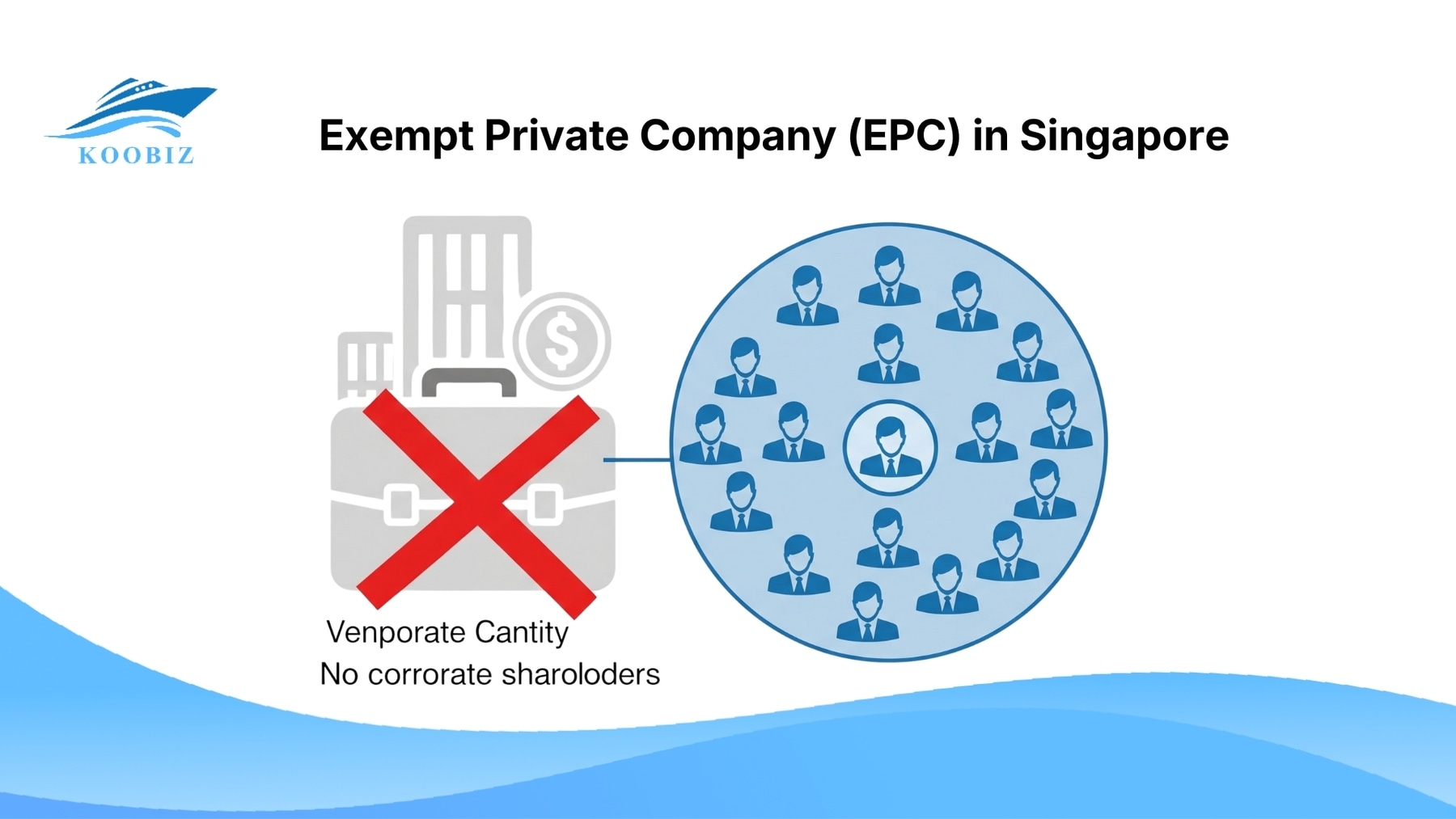
An Exempt Private Company (EPC) is a private limited company with no more than 20 shareholders, none of whom can be a corporation, or it is a company wholly owned by the Government gazetted as an EPC.
To better understand this definition, we must recognize that the “Exempt” status is not a separate legal entity from a Private Limited Company but rather a privilege granted to specific Pte Ltd companies that meet stricter ownership criteria. This distinction allows the Accounting and Corporate Regulatory Authority (ACRA) to offer reduced regulatory requirements to smaller businesses where the public interest is less involved compared to larger corporations.
Does a Company Qualify as an EPC with Corporate Shareholders?
No, a company does not qualify as an Exempt Private Company if even a single share is held by another corporation or legal entity; it mandates 100% individual ownership.
Specifically, the exclusion of corporate shareholders is the most rigid criterion defining this structure. The logic behind this restriction is to ensure that the benefits of the EPC status-such as financial privacy and loan flexibility-are reserved for small businesses run by individuals rather than subsidiaries of larger corporate groups. If a startup accepts investment from a Venture Capital firm (which is a corporate entity), it automatically loses its EPC status and becomes a standard Private Limited Company.
According to ACRA regulations, once a corporate entity appears on the register of members, the company immediately ceases to be an EPC, regardless of whether the total number of shareholders remains under 20.
Exempt Private Company vs. Private Limited Company: What Are the Differences?
The Exempt Private Company wins on compliance ease and privacy, while the standard Private Limited Company is better suited for scalability and corporate investment structures.
| Feature | Exempt Private Company (EPC) | Private Limited Company (Pte Ltd) |
|---|---|---|
| Shareholder Limit | Maximum 20 individuals | Maximum 50 shareholders |
| Corporate Shareholders | Not Allowed (Must be natural persons) | Allowed (Can be individuals or corporations) |
| Filing of Financials | Exempt if solvent (File declaration only) | Mandatory (Must file financial statements) |
| Director Loans | Allowed (More flexibility) | Restricted (Generally prohibited) |
| Financial Privacy | High (Financials not filed if solvent) | Low (Financials publicly accessible) |
While both structures provide limited liability protection to their members, the operational differences are significant. The standard Private Limited Company (Non-Exempt) faces stricter scrutiny regarding financial transparency and loans because it may involve broader public or corporate interests. In contrast, the EPC enjoys a “light-touch” regulatory approach, assuming that a small group of individual owners can manage their internal financial affairs with less external oversight.
Which Business Structure Offers Better Audit Exemptions?
The Exempt Private Company structure offers superior audit exemptions, as it allows solvent EPCs to simply file a solvency declaration instead of audited accounts.
Detailed analysis shows that for a standard Pte Ltd to be audit-exempt, it must meet at least two of three criteria: revenue < $10M, assets < $10M, or employees < 50. However, an EPC has a more direct path: if it is solvent (able to pay debts when due), it does not need to submit financial statements to ACRA at all. This exemption, which Koobiz helps many startups utilize effectively, saves businesses thousands of dollars in annual professional fees.
What Are the Key Benefits of an EPC for Singapore Startups?
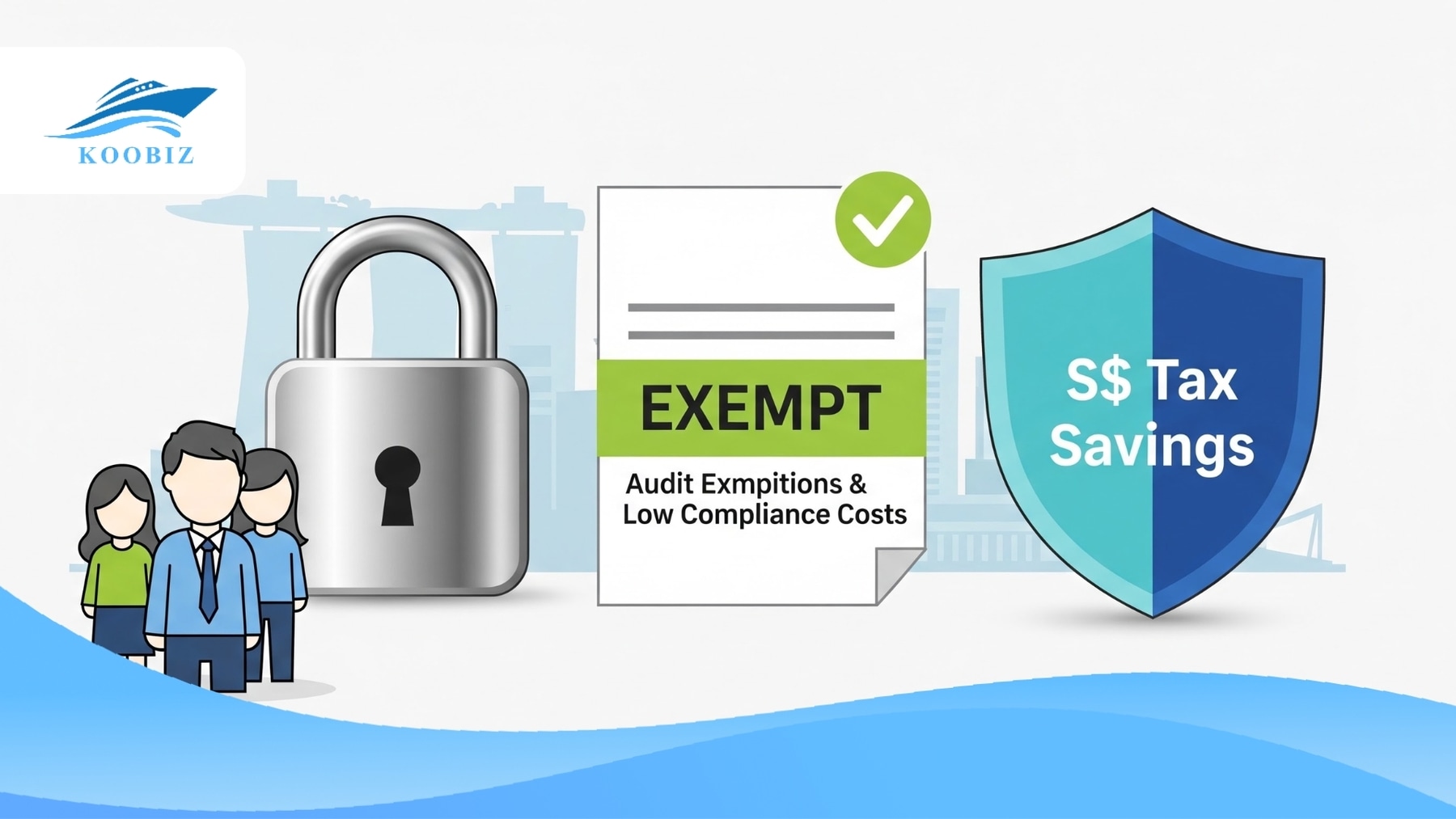
There are three primary benefits of an Exempt Private Company: strong financial privacy, low compliant cost with audit exemptions, and flexible director loans.These benefits make it a top choice for small to medium-sized businesses and family-owned companies in Singapore, helping new entrepreneurs focus on growth instead of heavy administrative work.
How Does the Start-Up Tax Exemption (SUTE) Scheme Apply?
The Start-Up Tax Exemption (SUTE) applies to eligible EPCs by exempting 75% of the first S$100,000 of normal chargeable income and 50% of the next S$100,000 for the first three consecutive YAs.
To qualify, the EPC must be a tax resident in Singapore and have no more than 20 shareholders. This reduces the corporate tax rate significantly below the standard 17% improving cash flow for reinvestment.According to the Inland Revenue Authority of Singapore (IRAS), the maximum exemption for the first S$200,000 of income under SUTE is **S$125,000**
Why Is Financial Privacy Higher in an Exempt Private Company?
Solvent EPCs are not required to file their financial statements with ACRA, this means competitors and the public cannot see their profit and loss figures.
This layer of confidentiality is crucial for many business owners who prefer to keep their margins and financial health private. In a standard Pte Ltd, financial statements filed with ACRA can be purchased by anyone for a small fee. As long as an EPC stays solvent and submits a simple declaration—a process Koobiz handles for clients—its financial data stays between the company secretary and directors These benefits are valuable, but they also come with specific rules, so it’s important to understand the compliance requirements and the risks of changing EPC status..
How flexible the director loans in an Exempt Private Company?
EPCs enjoy greater flexibility when it comes to director loans. Unlike standard Pte Ltd companies, an Exempt Private Company can provide loans to its directors without needing special approvals or meeting strict conditions. This gives business owners more room to manage cash flow, fund urgent expenses, or support short-term business needs.
Navigating Compliance and Restrictions for EPCs
There are specific compliance nuances for EPCs, particularly regarding loans to directors, loss of exempt status, and the conversion process, which differ from standard companies.
How Does the Companies Act Regulate Loans to Directors for EPCs?
The Companies Act permits Exempt Private Companies to lend money to their directors, a practice that is generally prohibited for non-exempt private companies to prevent conflict of interest.
This unique attribute gives EPC owners immense flexibility in managing capital. An EPC typically consists of a small, tight-knit group of individuals (often family or close partners), the law assumes the shareholders can police themselves regarding these transactions. This allows directors to borrow from the company for personal use or other investments without complex regulatory hurdles.
What Happens If an EPC Exceeds 20 Shareholders?
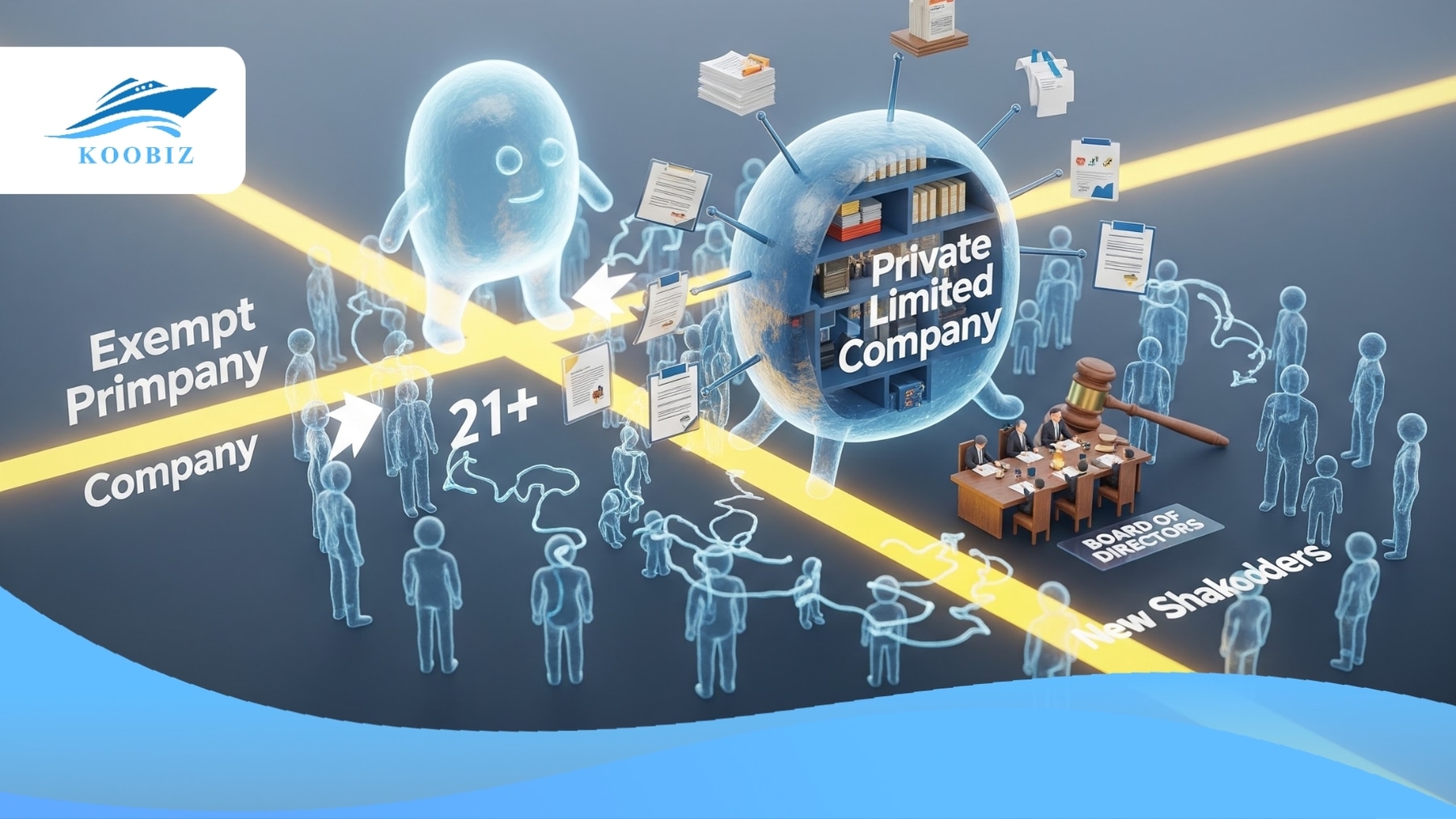
If an EPC exceeds 20 shareholders, it automatically loses its “Exempt” status and converts into a standard Private Limited Company, immediately triggering stricter compliance obligations.
This transition is often a “silent” compliance trap for growing startups. Once the 21st shareholder is registered, the company loses its privileges regarding director loans and financial privacy. The directors must then ensure the company complies with the standard financial reporting standards required of non-exempt companies, potentially requiring a retrospective audit if revenue thresholds are met.
How to Convert a Private Limited Company to an EPC?
The conversion requires reducing the shareholder count to 20 or fewer natural persons and removing all corporate shareholders, followed by updating the company’s profile via ACRA’s BizFile+ portal.
The process is administrative but requires legal precision. Startups often undergo this conversion when buying back shares from a corporate investor or consolidating ownership. Koobiz helps companies manage this transition smoothly so that once the share transfer is filed and the requirements are met, the company is correctly recognized as an EPC again and can enjoy its benefits in the next financial year.
Simplify Your EPC Incorporation with Koobiz
Navigating the nuances between an Exempt Private Company and a standard Private Limited Company can be complex, but setting up your business shouldn’t be.
At Koobiz, we specialize in seamless Singapore company incorporation and compliance services tailored for startups and SMEs. Whether you need help assessing your eligibility for EPC status, managing your annual filings, or ensuring you qualify for the Start-Up Tax Exemption, our team is here to guide you every step of the way.
Ready to maximize your benefits and ensure full compliance? Start your Singapore Incorporation with Koobiz today