

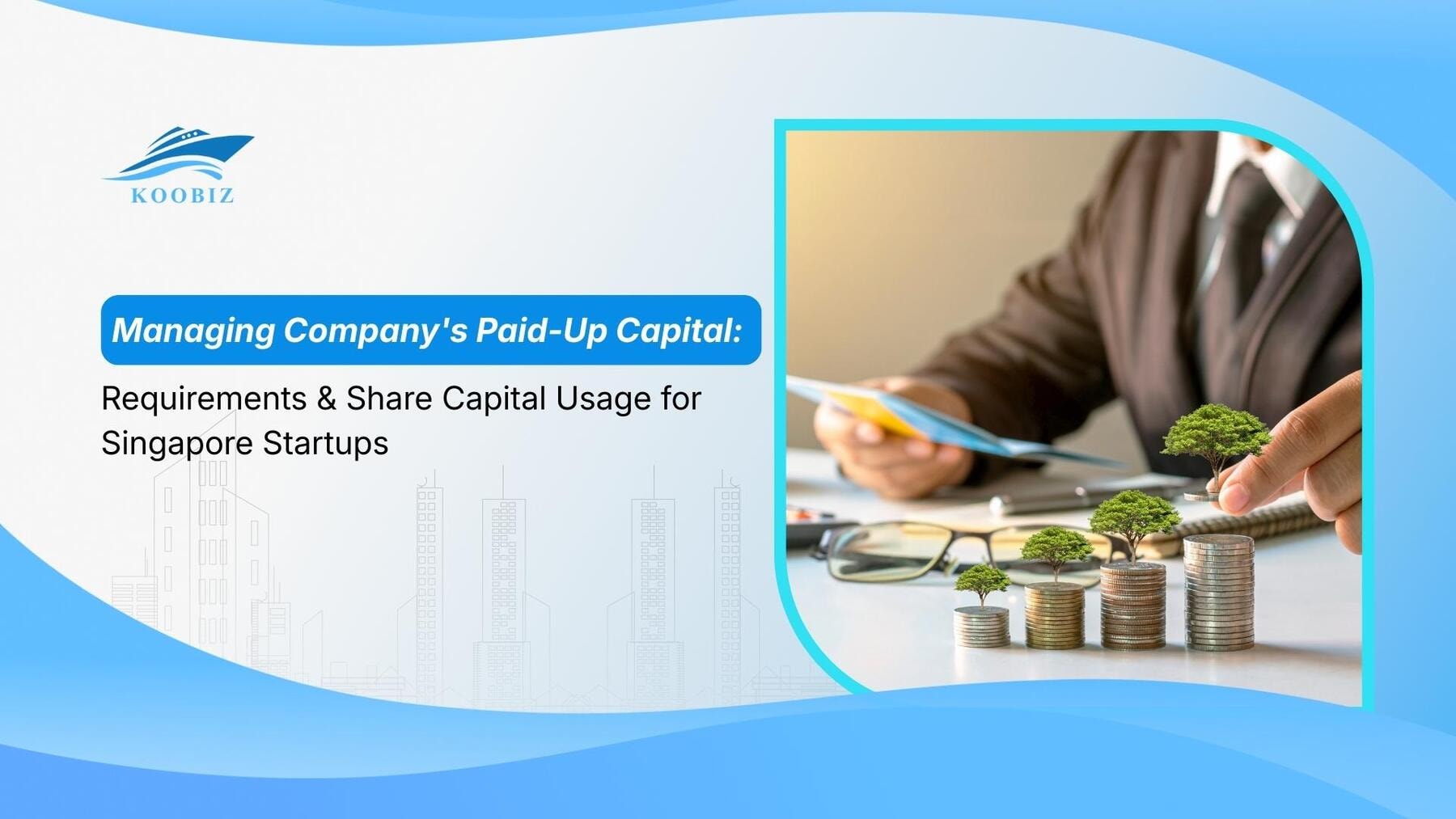
Paid-up capital is the actual amount of money that shareholders have injected into the company in exchange for shares, serving as the fundamental financial fuel for Singapore startups. Unlike a dormant security deposit, this capital is fully operational and plays a critical role in determining a company’s financial health and credibility.. Although ACRA permits a minimum incorporation capital of SGD 1, strategic management of this capital is essential for long-term viability.
A common misconception is that paid-up capital must remain untouched in a bank account. In reality, once deposited, this capital becomes a vital resource for covering operational costs such as office rental, employee salaries, and inventory procurement. Clarifying usage rights helps entrepreneurs manage cash flow effectively without fear of legal repercussions..
To master corporate finance in Singapore, one must distinguish modern concepts from obsolete terms like “authorized capital” and understand how capital strategies influence broader goals, such as Employment Pass applications. The guide below moves from legal definitions to practical usage and strategic expansion.
What is Paid-Up Capital in Singapore?
Paid-up capital is the total amount of money that shareholders have successfully paid to the company for the shares they purchased. This financial metric is distinct from “issued share capital” (shares allocated but not yet paid for), though in most standard Singapore incorporations, shares are issued and paid simultaneously.
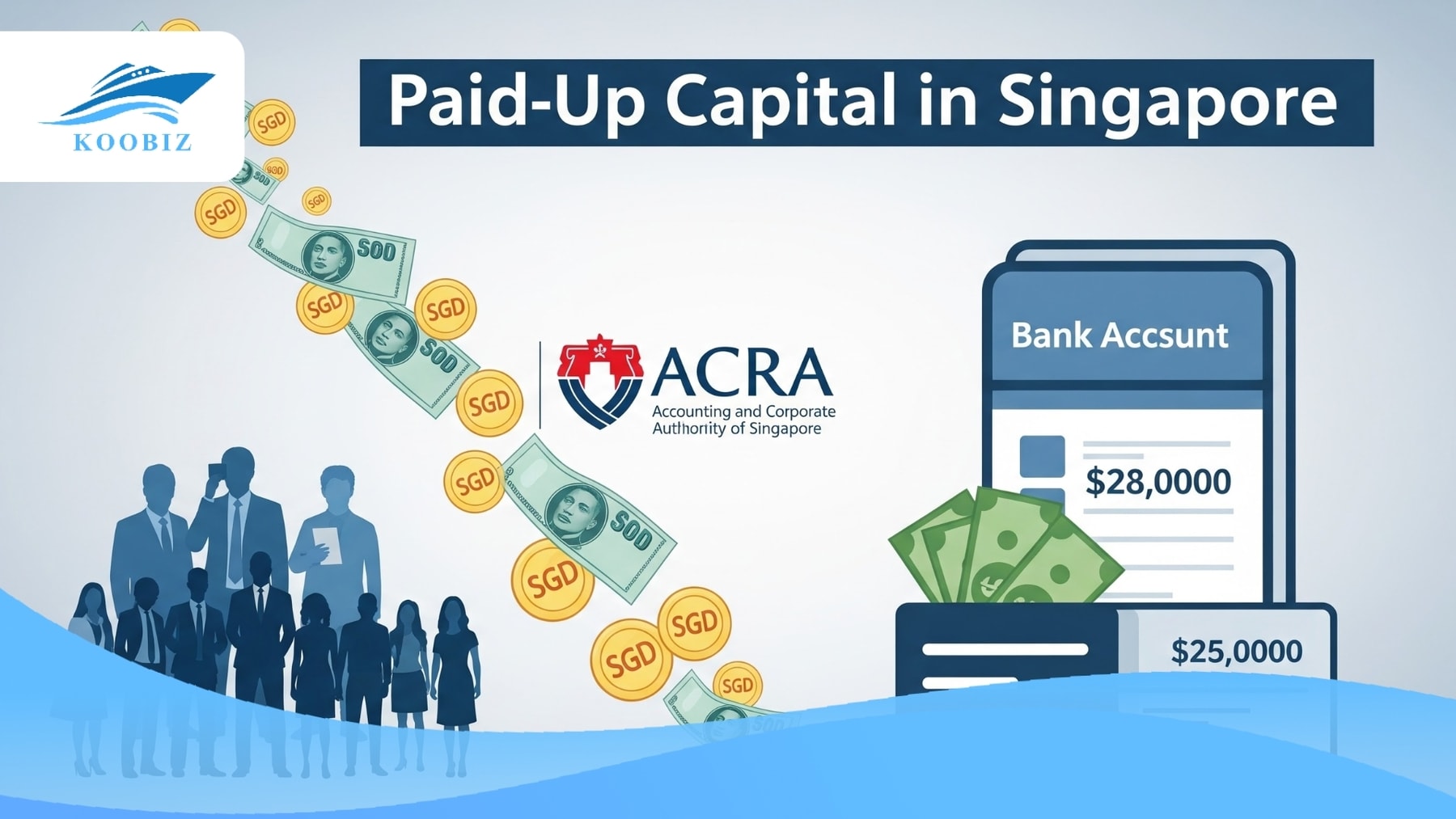
To understand this concept within the Singaporean legal framework, we examine its role under the Companies Act. Specifically, paid-up capital serves as a creditor safety net and as a gauge of shareholders’ commitment to the venture. When you register a company with ACRA, the amount becomes a matter of public record, signaling to suppliers and partners that the company has real funds available to meet its obligations.
Note that paid-up capital is not a government fee. Once funds are transferred from the shareholder’s personal account to the company’s corporate bank account, they legally belong to the company and constitute the initial equity of the business.
What are the Minimum Requirements for Paid-Up Capital?
There are two primary requirements for paid-up capital in Singapore: a minimum monetary value of SGD 1 and the flexibility to denominate this capital in major currencies. These low entry barriers are intended to foster entrepreneurship..
- Minimum Amount: You can incorporate a Singapore company with as little as SGD 1. This means if you are the sole shareholder, you only need to pay $1 for 1 share to legally start the business.
- Currency: Although SGD is the standard currency, paid-up capital may be denominated in USD, EUR, GBP, or other major currencies.
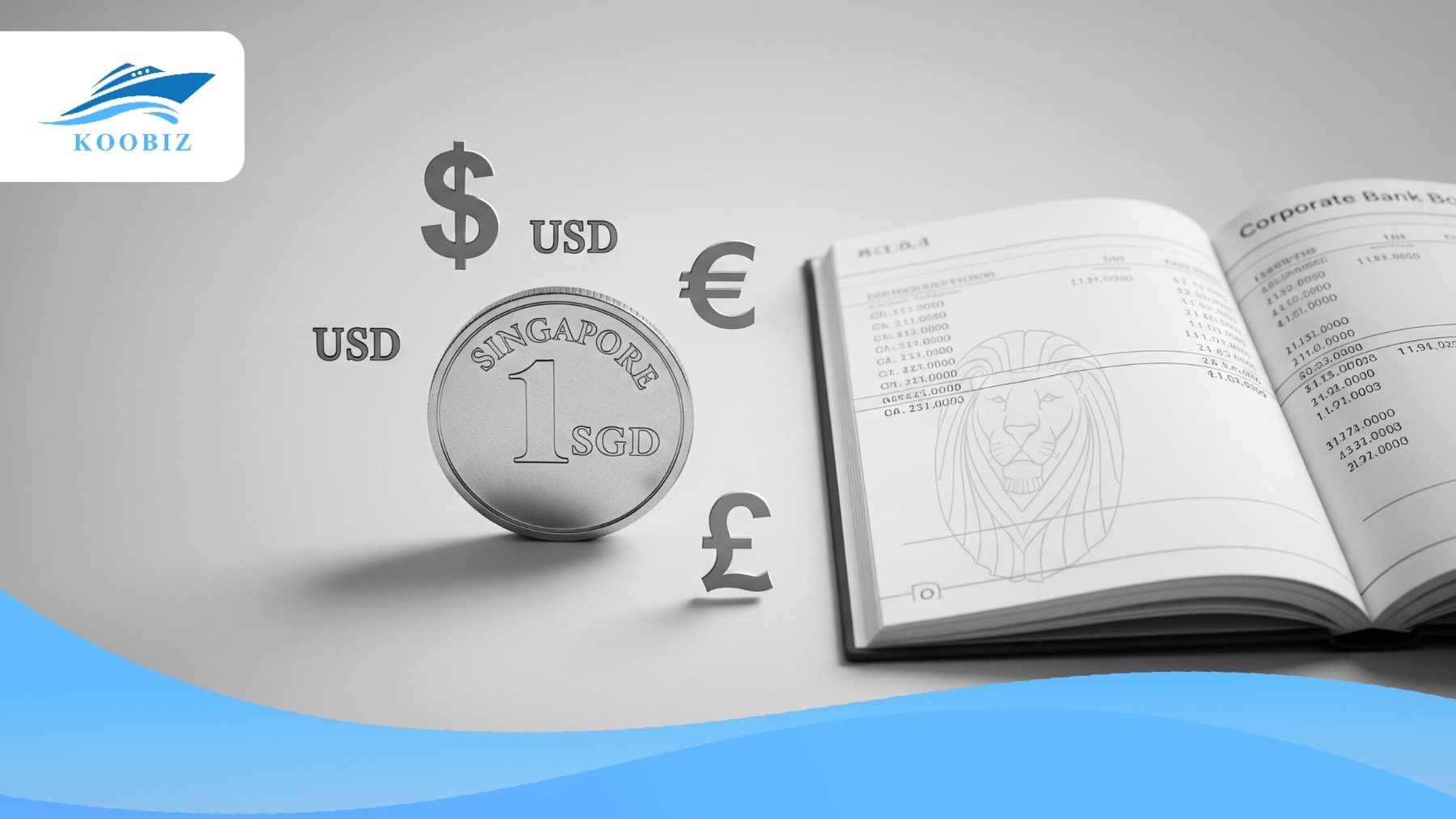
Crucial Timing: The capital must be deposited into the company’s bank account immediately after the account is opened. Preserve the bank transaction advice, as the company secretary or auditors will require proof that the shares are indeed paid up. Reputable incorporation services, such as Koobiz, frequently assist clients with these initial steps to minimize the risk of future compliance audits.
Can a Company Use its Paid-Up Capital for Business Expenses?
Yes, a company can use its paid-up capital for legitimate business expenses because these funds are intended to be working capital, not a frozen security deposit.
Once the capital is deposited, it becomes the company’s asset. There is no requirement in the Singapore Companies Act that mandates the paid-up capital must sit idle. Its primary purpose is to be utilized to generate revenue.
What Expenses are Permissible Using Share Capital?
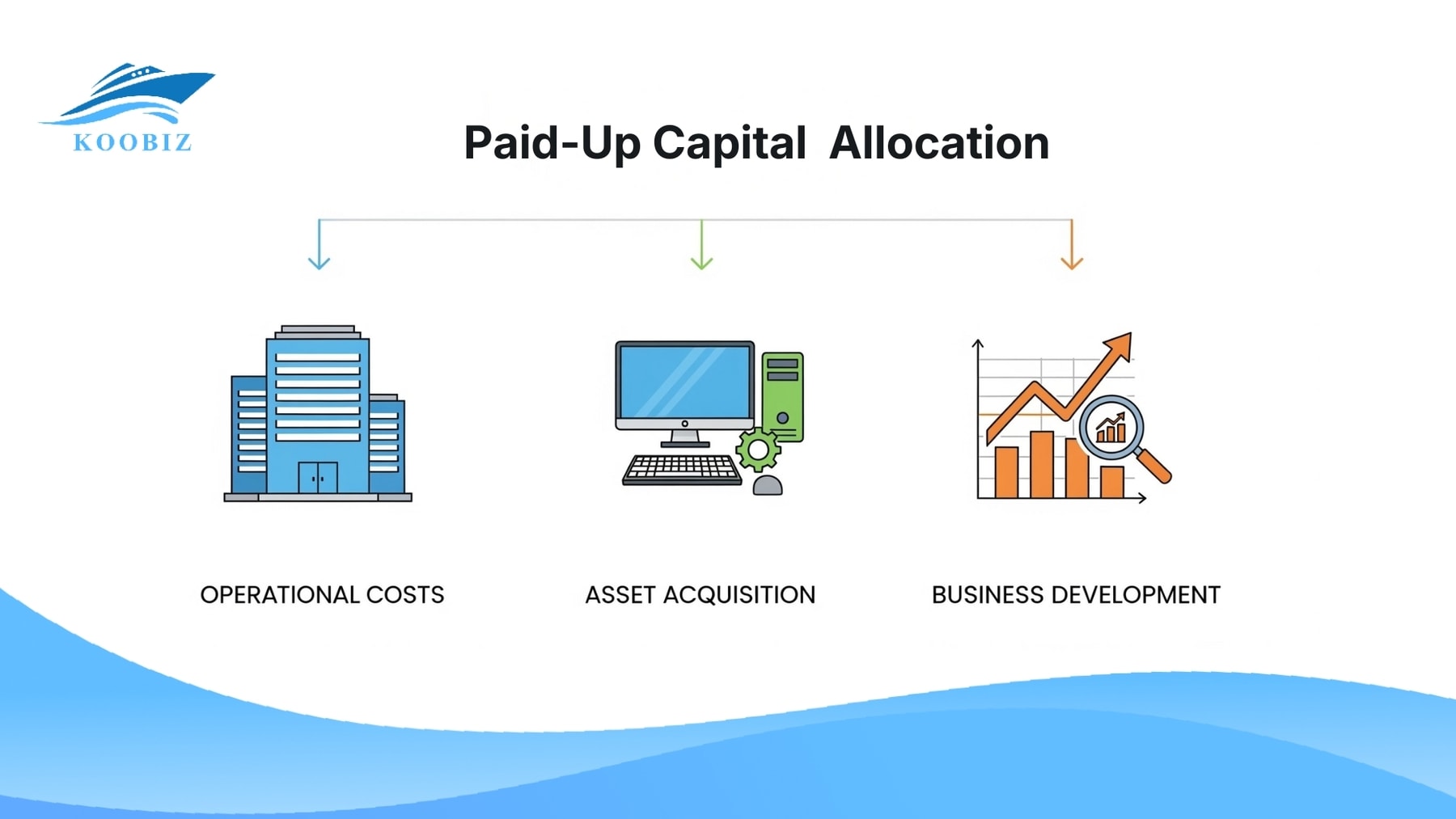
There are three main categories of permissible expenses:
- Operational Costs: Office rental, utility bills, and employee salaries (including the director’s salary).
- Asset Acquisition: Computers, software licenses, machinery, or office furniture.
- Business Development: Marketing campaigns, website development, and inventory procurement.
What is NOT Permissible: The capital cannot be withdrawn for personal use (e.g., buying a personal car). Such an action would be considered a misappropriation of funds or a “Director’s Loan,” which can lead to legal penalties.
Practical Scenario: How Paid-Up Capital Flows
To illustrate how paid-up capital works in the real world, consider the example of a fictional startup, “TechStart Pte. Ltd.”
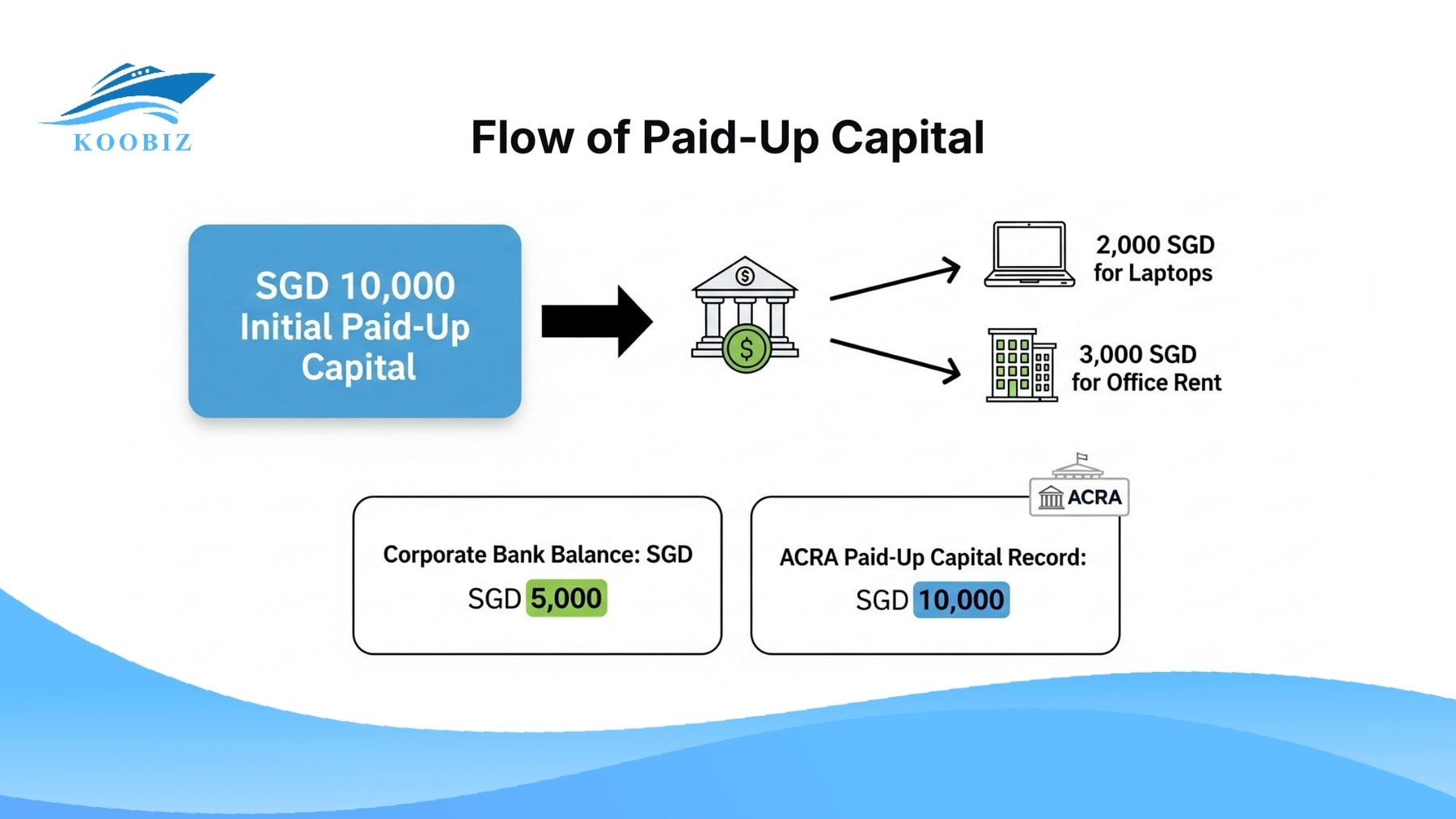
- Incorporation: The founder registers TechStart with ACRA, declaring a paid-up capital of SGD 10,000.
- Deposit: Upon opening the corporate bank account, the founder transfers SGD 10,000 from their personal account to the company account.
- Usage: In the first month, TechStart spends SGD 2,000 on laptops and SGD 3,000 on office rent.
- Result:
- Bank Balance: The company’s bank balance is now SGD 5,000.
- ACRA Record: The company’s paid-up capital on its Business Profile (BizFile) remains SGD 10,000.
Key Takeaway: The “Paid-Up Capital” figure on ACRA represents the historical amount injected by shareholders, not the current cash balance in the bank. You are free to spend the money, and your ACRA record will not decrease unless you undergo a formal “Capital Reduction” process.
What is the Difference Between Paid-Up Capital and Authorized Capital?
Paid-up capital wins on relevance as it represents actual funds, whereas authorized capital is an obsolete concept that was abolished in Singapore in 2006.
To simplify the comparison, refer to the table below:
| Feature | Authorized Capital | Paid-Up Capital |
|---|---|---|
| Definition | The maximum amount of share capital a company was allowed to issue. | The actual amount of money shareholders have paid to the company. |
| Legal Status | Abolished (Since 2006). | Active and Statutory Requirement. |
| Primary Function | To set a ceiling or limit on share issuance. | To serve as operational funds and liability protection. |
| Flexibility | Required complex procedures to increase the limit. | Highly flexible; can be increased anytime. |
Consequently, Singapore companies no longer have a “ceiling” on the number of shares they can issue, offering significant flexibility for startups that plan to scale rapidly.
How Can Startups Manage and Modify Share Capital?
Startups can manage and modify share capital through two distinct processes: Capital Injection (increasing capital) to fuel growth, or Capital Reduction (decreasing capital) to return excess funds.
How to Increase Paid-Up Capital for Business Expansion?
Increasing paid-up capital is a routine corporate action typically undertaken to enhance creditworthiness or facilitate the entry of new investors. The process involves:
- Extraordinary General Meeting (EGM): Shareholders must approve the issuance of new shares.
- Capital Transfer: The funds for the new shares must be transferred to the corporate bank account.
- ACRA Filing: The company secretary submits a “Return of Allotment of Shares” to officially register the capital increase.
Administrative errors in the “Return of Allotment” are common. Koobiz specializes in managing these complex ACRA filings. We ensure that your capital increase is legally recorded and finalized accurately, preventing bureaucratic delays that could hinder your business expansion..
When Should a Company Consider Capital Reduction?
Capital reduction is a less common and significantly more intricate corporate action, typically considered when a company possesses excess capital that is no longer required for its operational needs.. Unlike increasing capital, reducing it puts creditors at risk (since the “safety net” shrinks). Therefore, strict requirements apply, such as a Solvency Statement (directors declaring the company can still pay debts) and a Special Resolution.
Does Paid-Up Capital Affect Employment Pass (EP) Applications?
Yes, paid-up capital significantly affects Employment Pass (EP) applications. While there is no statutory minimum defined by the Ministry of Manpower (MOM), a low capital amount (e.g., $1) often leads to rejection because it suggests the company may not be financially viable enough to support a foreign professional’s salary.
Why is High Paid-Up Capital Recommended for Relocating Entrepreneurs?
For foreign entrepreneurs sponsoring their own EP:
- Recommended Amount: Incorporation experts at Koobiz typically recommend a paid-up capital of roughly SGD 50,000 to SGD 100,000.
- Rationale: This amount covers the first year of the director’s salary and operational costs. It demonstrates to MOM that the business is well-funded and not a “fly-by-night” operation.
Simplify Your Incorporation and Capital Management with Koobiz
Navigating the complexities of ACRA regulations, which range from the mandatory initial $1 deposit to strategically structuring the paid-up capital specifically for Employment Pass (EP) applications, can be challenging for entrepreneurs. Koobiz specializes in streamlining this entire process, ensuring compliant and efficient execution of all necessary corporate filings and capital arrangements.
- Seamless Incorporation: We handle the paperwork so you can focus on your business.
- Strategic Capital Advice: Expert guidance on the optimal paid-up capital for your specific industry.
- Ongoing Compliance: Corporate secretarial services to keep you compliant year-round.
Ready to start your Singapore business journey? Incorporate your company with Koobiz today and ensure your paid-up capital is structured for success.
Conclusion & Next Steps
To summarize, managing paid-up capital involves ensuring minimum compliance, utilizing funds for legitimate operations, and strategically adjusting capital for growth or immigration purposes.
From the mandatory SGD 1 initial deposit to the strategic injection of capital (e.g., SGD 50,000 for an Employment Pass), every financial decision critically influences a company’s trajectory. Business owners should therefore view paid-up capital as a powerful financial tool—not merely a regulatory hurdle—that serves to reassure suppliers and facilitate visa approvals.
If you are planning to incorporate or need to restructure your current capital, Koobiz is here to assist. Consult with our corporate specialists to ensure all ACRA filings are accurate, compliant, and optimized for your business goals.
While ACRA data underscores Singapore’s reputation for ease of business, this standing is fundamentally dependent upon strict adherence to financial compliance.