

Securing the right funding is critical for business growth in Singapore in 2026. With options ranging from traditional banks like DBS to digital challengers such as ANEXT, SMEs must balance interest costs with approval speed. At Koobiz, we support Singapore company incorporation and banking setup, helping businesses navigate small business loan options efficiently. This guide compares top 2026 loan options, interest rate trends, and expected Budget 2026 grants to help you make the right choice.
Top SME Business Loans in Singapore (2026): Traditional Banks vs. Digital Banks |
|---|
| There are three main categories of SME lenders in Singapore: traditional banks, digital banks, and private fintech lenders. Choosing the right option requires balancing interest cost, approval speed, and accessibility. |
|---|
Here is the quick snapshot of the 2026 lending landscape:
| Key Feature | Traditional Banks (DBS, UOB) | Digital Banks (ANEXT, GXS) | Fintech Lenders (Funding Societies) |
|---|---|---|---|
| Interest Rate (EIR) | Lowest (7% – 11%) | Moderate (9% – 15%) | High (12% – 24%) |
| Max Loan Amount | High (Up to S$500k) | Low (S$30k-S$100k) | Variable |
| Speed to Cash | Slow (1-2 Weeks) | Instant (24 Hours) | Fast (24-48 Hours) |
Koobiz Editor’s Choice: Best SME Loan Options in Singapore (2026)
Best for Lowest Rates & High Loan Amounts: Traditional Banks (DBS/UOB).
- Why: Competitive rates for established SMEs (2+ years) requiring larger working capital through government-backed schemes.
Best for Startups & Speed: Digital Banks (ANEXT/GXS).
- Why: Minimal documentation for micro-loans, making them suitable for new companies (under 2 years) with immediate cash flow needs.
Best for Bad Credit / Flexibility: Fintech Lenders.
- Why: Higher approval rates for businesses that do not meet traditional bank credit requirements.
Detailed Review: DBS & UOB (Traditional Options)
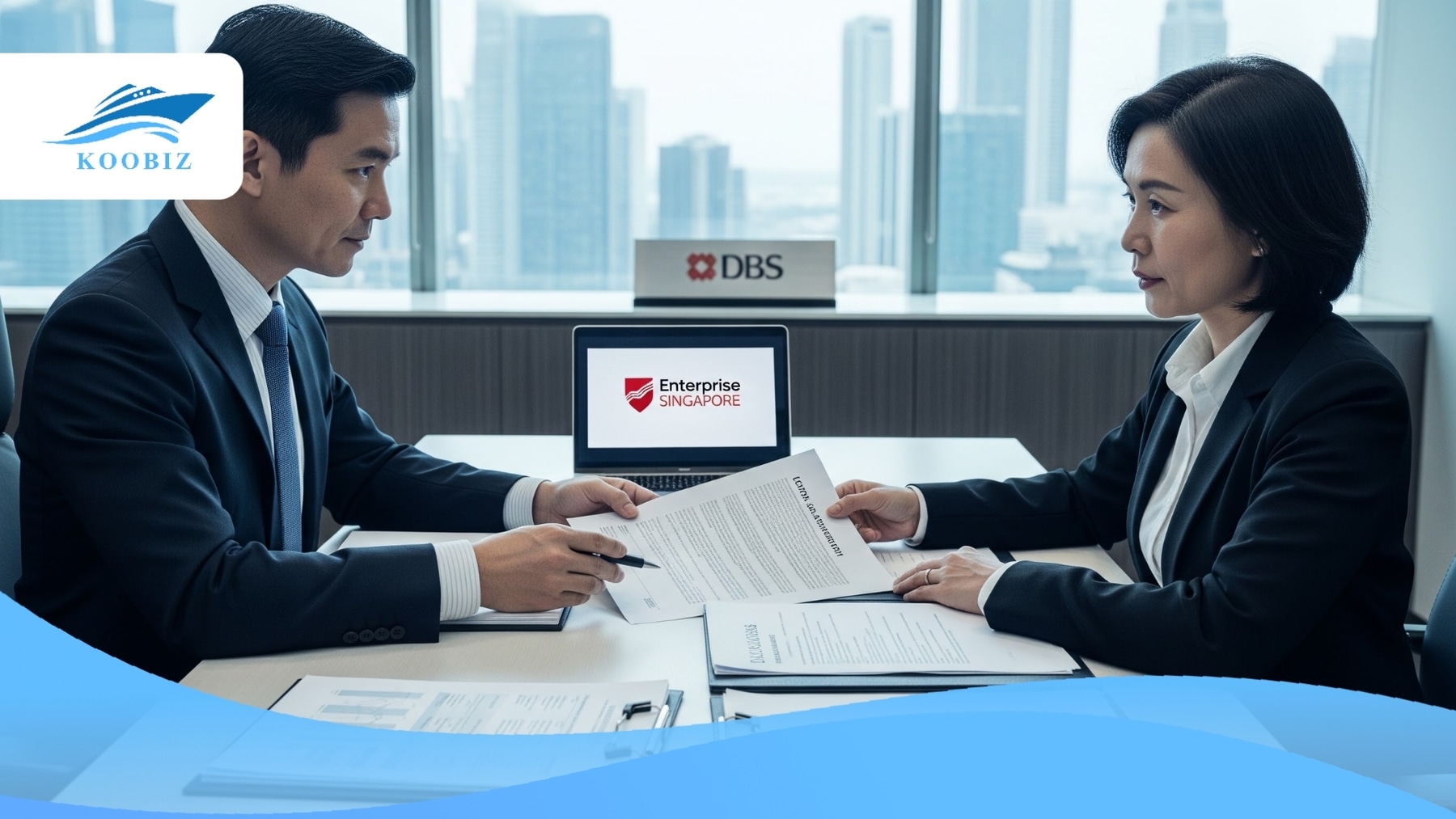
DBS Working Capital Loan and UOB BizMoney continue to be preferred options for mature businesses seeking larger funding amounts at competitive rates.
Specifically, these banks are the main participating financial institutions under the Enterprise Financing Scheme – Working Capital Loan (EFS-WCL). If your company has been incorporated for at least two years and records annual turnover above S$300,000, these banks typically offer the lowest cost of funding. The key advantage is the government risk-sharing mechanism, which co-shares default risk and allows banks to extend loans of up to S$500,000. However, be prepared for a rigorous credit assessment involving detailed financial statements and scrutiny of the directors’ Credit Bureau Singapore (CBS) ratings.
Detailed Review: ANEXT & GXS (Digital Options)
ANEXT Bank (by Ant Group) and GXS Bank (Grab-Singtel) have significantly expanded access to financing for asset-light companies or businesses that are too young for traditional banks.
These digital banks assess creditworthiness using alternative data, such as e-commerce transaction history or real-time Grab platform data, instead of relying solely on audited financial statements. For newly incorporated companies that have opened a digital bank account, these lenders are often the first financing option considered. For instance, the ANEXT Business Loan offers financing up to S$100,000 with no financial documents required for smaller amounts, making it ideal for immediate liquidity needs.
Current SME Loan Interest Rates (2026 Forecast)
SME loan interest rates in Singapore generally consist of a base rate (often SORA) plus a spread, with 2026 Effective Interest Rates (EIR) ranging between 7% and 11% for bank loans.
To understand the true cost of borrowing, business owners must look past the “advertised” rates. The table below illustrates the difference between advertised flat rates and the actual effective interest rate (EIR).
| Lender Type | Advertised “Flat” Rate | Real Cost (EIR)* | Notes |
|---|---|---|---|
| Traditional Banks (DBS, UOB) | From ~5.0% p.a. | 7% – 11% p.a. | Lowest cost, strict criteria. |
| Digital Banks (ANEXT, GXS) | From ~6.8% p.a. | 9% – 15% p.a. | Higher rate for speed & convenience. |
| Private Lenders (Fintechs) | From ~1% per month | 12% – 24% p.a. | Short-term bridge capital. |
*Disclaimer: Rates are estimated as of February 2026 and are subject to change based on market conditions and individual credit assessment. Please verify latest rates directly with the respective financial institutions.
Key Warning:
- Flat Rate: This is the rate often advertised. It is calculated on the original principal amount and does not account for repayment reducing the principal.
- Effective Interest Rate (EIR): This reflects the true economic cost of the loan, including processing fees (typically 1-2%) and the compounding effect of monthly repayments. Always compare loans based on EIR.
In the current 2026 economic climate, while global central banks have moderated their hiking cycles, rates have not returned to the near-zero levels of the past decade. For unsecured business term loans from major banks, SMEs should expect an EIR of approximately 7% to 10%.
Eligibility Checklist: Government Risk-Sharing Scheme Requirements (EFS)
Yes, your business may qualify for government risk-sharing schemes such as the EFS if it is registered in Singapore and has at least 30% local shareholding.
However, meeting the government’s baseline criteria does not guarantee bank approval. Applicants must satisfy two separate layers of assessment: official government requirements and individual bank credit criteria.
1. The Non-Negotiables (Government Rules)
These are the strict requirements set by Enterprise Singapore. If you miss one, you are automatically disqualified from the EFS scheme.
- Business Entity: Must be a Private Limited company registered with ACRA.
- Local Equity: Minimum 30% local shareholding (Singapore citizen or PR). Fully foreign-owned companies are generally not eligible and must rely on standard commercial loans.
- Group Size: Annual group turnover below S$500 million or group employment size below 200 employees.
2. Bank-Specific Credit Requirements (Preferred)
Even if you meet the government rules above, individual banks may still reject your application based on their own risk assessment.
- Operational History: Most banks require at least 6 months of active commercial banking operations. Startups less than six months old are generally better suited to digital banks.
- Positive CBS Score: Directors must have a clean personal credit record with the Credit Bureau Singapore (No recent bankruptcy or litigation).
- Revenue Trend: Banks prefer to see stable or growing revenue. A sharp decline in recent months can trigger a rejection even if the yearly revenue is high.
Types of Financing: From Working Capital to Green Loans
There are three primary types of business financing available in Singapore: unsecured term loans, invoice financing, and green financing.
Choosing the appropriate financing structure depends on whether the business requires a lump sum for expansion or flexible funding for daily operations.
Unsecured Business Term Loans

Best for: General business expansion, renovation, or marketing campaigns.
Unsecured term loans are lump-sum cash injections that do not require you to pledge physical assets (like property) as collateral.
This is the most common form of financing for SMEs in Singapore. The “security” is usually in the form of a Personal Guarantee (PG) from the directors. These loans are suitable for investments where returns are realized over time. Repayment is typically structured over 1 to 5 years with fixed monthly installments.
Invoice Financing
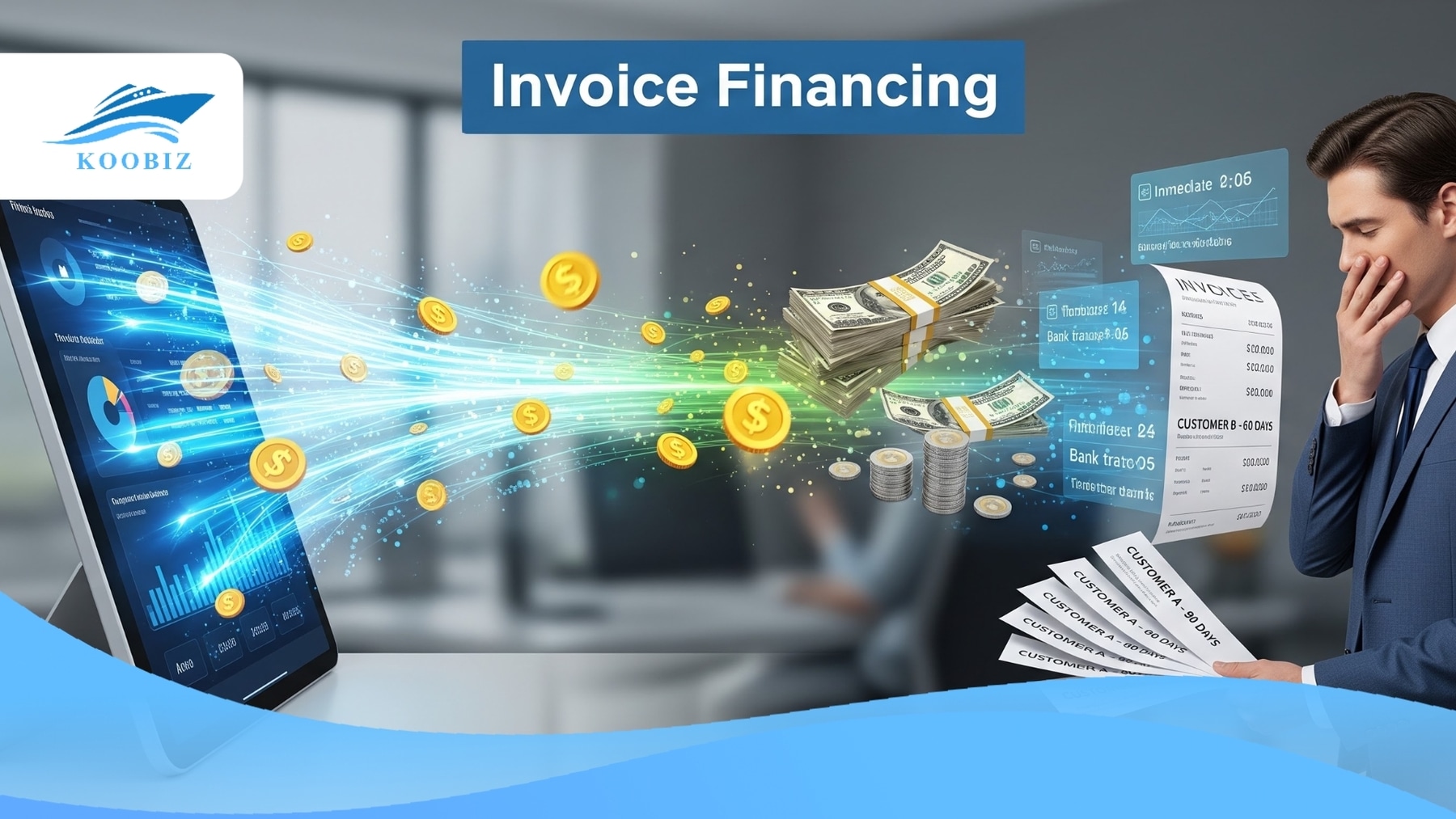
Best for: B2B companies with slow-paying clients (60-90 day terms) needing immediate cash flow.
Invoice financing (or factoring) allows businesses to borrow money against amounts due from customers, unlocking cash tied up in unpaid invoices.
This is particularly useful for B2B companies with long payment cycles. Instead of waiting for the client to pay, a lender (often a fintech such as Validus or Funding Societies) advances up to 80% of the invoice value immediately. Once the client pays, the remaining balance is released to you minus a fee. This solves cash flow gaps without adding long-term debt to the balance sheet.
Green Financing
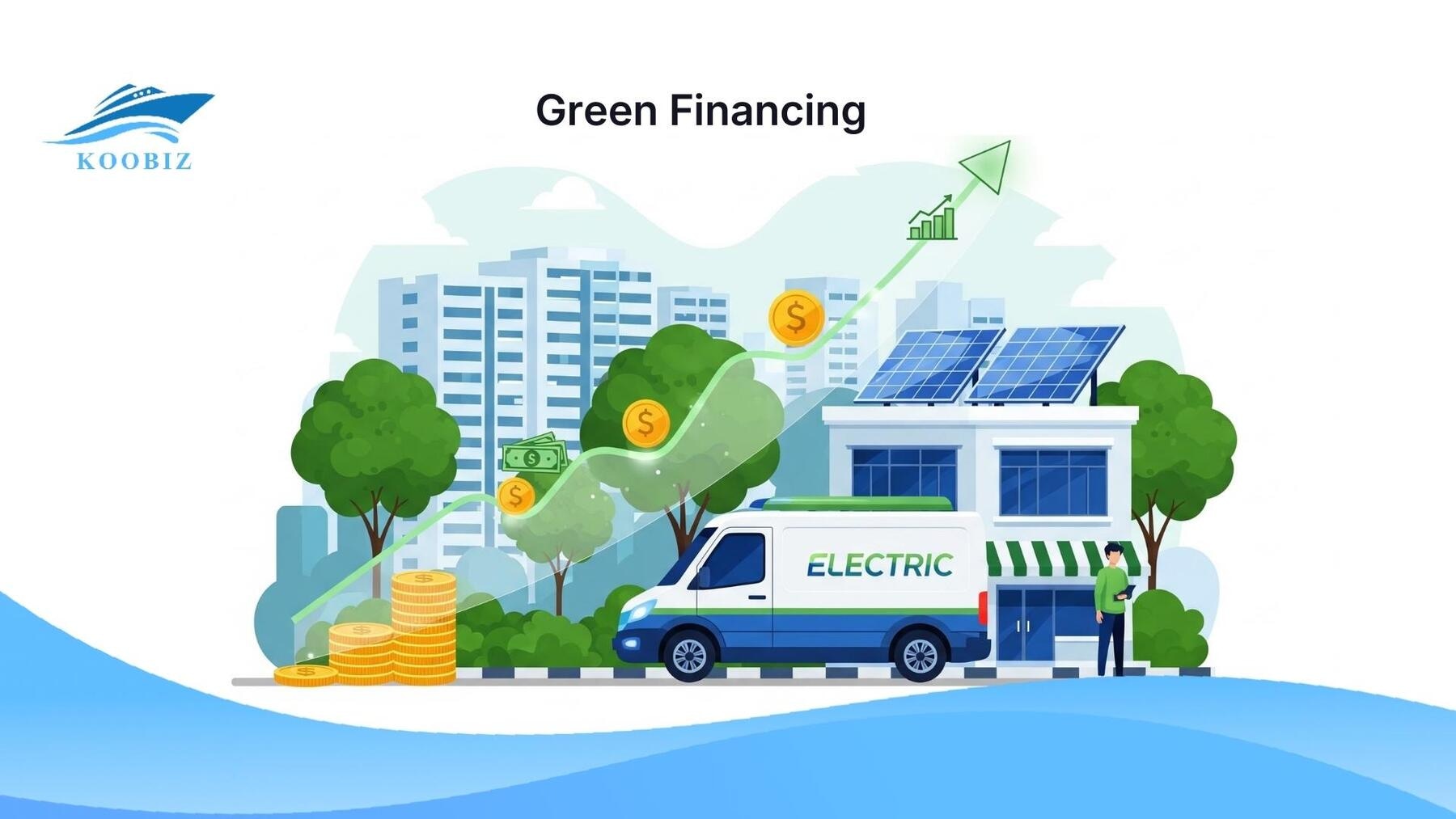
Best for: Sustainability projects (Solar, EV fleets) seeking interest rate discounts.
Green Financing refers to loans specifically designed to fund sustainability projects, offering lower interest rates to companies that meet specific environmental criteria.
By 2026, green financing has become a mainstream funding option for SMEs. Banks like OCBC and UOB offer “SME Sustainable Financing” frameworks. If your business is investing in energy-efficient equipment, solar installation, or electric vehicle fleets, you can access “Green Loans” which often come with rate discounts of 0.5% to 1% lower than standard packages.
What’s New in Budget 2026 for SME Financing?
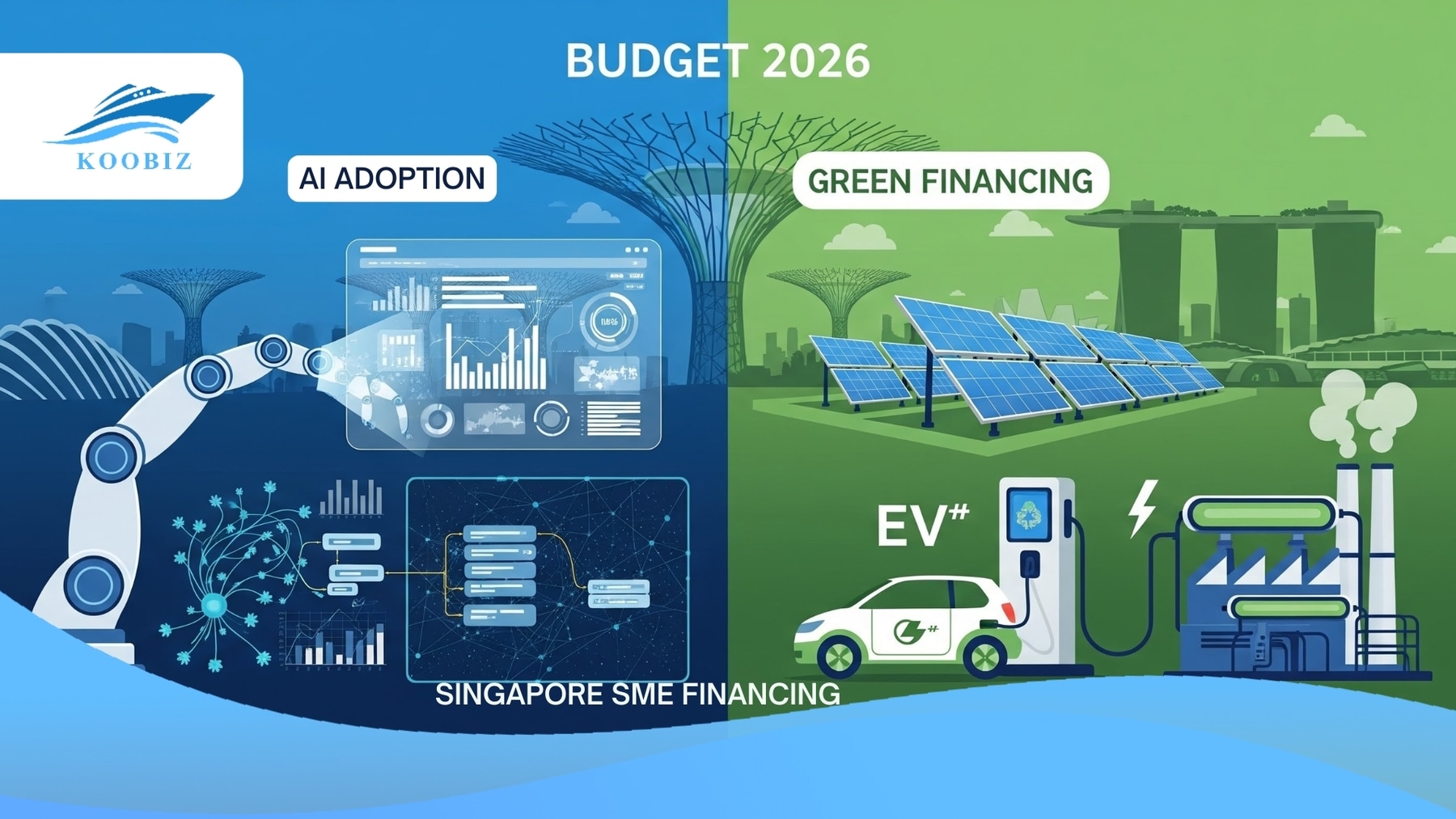
Singapore Budget 2026 is expected to prioritize AI adoption and sustainability, with targeted enhancements to existing SME grant frameworks.
Based on pre-budget recommendations and market trends, here are the two major areas where we anticipate enhanced support:
1. The AI Boost (Anticipated PSG Enhancements)
Industry analysts expect the Productivity Solutions Grant (PSG) to be expanded to cover more advanced AI applications.
- Expected Focus: Funding for AI-driven customer service bots, predictive analytics software, and automated marketing tools.
- The Goal: To help SMEs move beyond basic digitalisation and adopt generative AI to reduce manpower costs.
2. The Green Transition (Expanded EEG)
The Energy Efficiency Grant (EEG) is projected to roll out to more sectors beyond manufacturing and food services.
- Expected Focus: Upgrading to energy-efficient equipment (LED lighting, air-conditioning, refrigerators) for a wider range of industries.
- The Goal: To provide significant subsidies that lower utility bills, often pairing well with Green Loans for the remaining balance.
Businesses should monitor the official Budget announcements in mid-February and assess grant eligibility before applying for SME loans.
Understanding the Enterprise Financing Scheme (EFS) in 2026
The Enterprise Financing Scheme (EFS) is a comprehensive government program that consolidates various financing needs.
It is the backbone of SME lending in Singapore, where Enterprise Singapore shares the default risk with banks to encourage lending. Navigating the specific “EFS Variants” is crucial to getting the right limit for your business.
| Scheme Variant | Max Loan Quantum | Best Use Case |
|---|---|---|
| Working Capital (EFS-WCL) | S$500,000 | Daily cash flow, payroll, and rent. |
| Trade Loan (EFS-TL) | S$10 Million | Import/export needs and inventory stocking. |
| Project Loan (EFS-X) | Variable (High) | Overseas expansion and infrastructure projects. |
Critical Reality Check: Understanding EFS Risk-Sharing
MYTH: “If I default, the government pays the 70% risk-share portion.”
REALITY: You are 100% liable for the full amount. The “Risk-Share” is an insurance policy for the bank, not you. It encourages banks to lend, but in the event of default, the borrower and guarantors remain fully liable for the outstanding debt, including potential legal action.
Alternatives for Bad Credit or Rejected Applications
Rejection by a major bank does not end the financing process; it indicates the need to explore alternative lenders aligned with the business’s risk profile.
If an application has been declined by DBS, OCBC, or UOB, identifying the underlying reason helps determine the most suitable alternative financing option.
Scenario A: Weak or Limited Credit History
The Solution: Licensed Money Lenders (LMLs)
- Why it works: Licensed Moneylenders assess current repayment capacity rather than historical credit records (CBS score).
- The Trade-off: Cost. Interest rates are significantly higher (1% – 4% per month). This option is suitable only as a short-term bridge facility (typically 3–6 months) to address immediate cash flow needs, rather than long-term business growth.
- Safety Warning: Only borrow from lenders listed in the Ministry of Law’s Registry of Moneylenders.
Scenario B: High-Growth Startup Without Current Profitability
The Solution: Venture Debt
- Why it works: Traditional banks require profitability and assets. Venture debt providers, such as Genesis Alternative Ventures or bank innovation units, assess lending risk based on growth metrics and venture capital backing.
- The Trade-off: Equity Dilution. These deals often include “warrants,” which grant the lender the right to acquire a small equity stake in the company at a future date.
Scenario C: Outstanding Invoices with Cash Flow Constraints
The Solution: Invoice Factoring (Fintechs)
- Why it works: Platforms like Funding Societies or Validus lend against the value of outstanding invoices rather than the company’s balance sheet. If the end client is a reputable counterparty (such as a government agency or multinational corporation), funding may still be available even when the SME’s own credit profile is weak.
- The Trade-off: You receive only ~80% of the invoice value upfront, and the fees are deducted from the final payment.
The Role of InvoiceNow in Faster Loan Approvals
InvoiceNow is Singapore’s nationwide E-invoicing network based on Peppol, which allows lenders to verify transaction data instantly, leading to “Green Lane” loan approvals.
In the 2026 lending environment, approval speed has become a critical factor.
| Adopting InvoiceNow is not only about paperless invoicing; it significantly reduces manual verification delays at banks. |
|---|
The Old Way (Manual)
- Step 1: Download and print/scan PDF invoices.
- Step 2: Email documents to your Relationship Manager.
- Step 3: bank teams manually contact customers to verify invoices, increasing processing time and fraud risk.
- Step 4: Wait 1-2 Weeks for approval.
The InvoiceNow Way (Digital)
- Step 1: Send e-invoice via the Peppol network (using Xero/QuickBooks).
- Step 2: Bank system auto-verifies the authentic transaction data.
- Step 3: Approved in 24 Hours (Green Lane Processing).
By simply linking your accounting software to the InvoiceNow network, you create a verified digital footprint that banks can readily validate, allowing applications to be prioritised for faster review.
Conclusion
The landscape for Small Business Loans in Singapore in 2026 is diverse, ranging from government-backed schemes offering stability to AI-driven digital banks offering speed. Whether you are an established SME targeting the EFS Working Capital Loan or a startup leveraging GXS or ANEXT for quick liquidity, the key is to align the financing type with your business stage and needs.
However, the foundation of any successful loan application is a properly structured business. This means having your incorporation documents, tax filings, and management accounts in perfect order.
Need help getting your Singapore business loan-ready?
At Koobiz, we specialize in the foundational services that banks require. From seamless Company Incorporation to professional Accounting & Tax filing, we ensure your business credibility is high from day one. We also assist foreign entrepreneurs in navigating the corporate bank account opening process, connecting you with the right bankers at DBS, OCBC, UOB, and digital banks.
Visit Koobiz.com today to build a bankable business in Singapore.