

The recent acceptance by the Singapore Government of recommendations from the Tripartite Cluster for the Food Services Industry (TCF) introduces a structured approach to wage progression in one of the city-state’s key employment sectors.
For SMEs and foreign entrepreneurs exploring business setup in Singapore—particularly in the fast-paced food and beverage (F&B) space—these updates provide greater predictability around labour costs and workforce development.
Staying informed on such employment policies is crucial for operational planning and ensuring local compliance during your Singapore company formation process.
What is the 2026-2028 Food Services PWM Schedule?
On 16 March 2026, the Government officially accepted the TCF’s recommendations for the Food Services Progressive Wage Model (PWM). First introduced in March 2023, the model protects and uplifts more than 53,000 full-time and part-time workers across the sector.
The newly approved three-year schedule runs from 1 July 2026 to 30 June 2029. It sets out clear baseline gross wage requirements that will increase annually.
To maintain alignment with the majority of other PWM sectors, all food services wage adjustments will take effect from 1 July each year. This strategic timing gives employers operating across multiple PWM-covered industries additional lead time to adjust payroll systems and administrative processes efficiently.
Approved Wage Requirements by Category
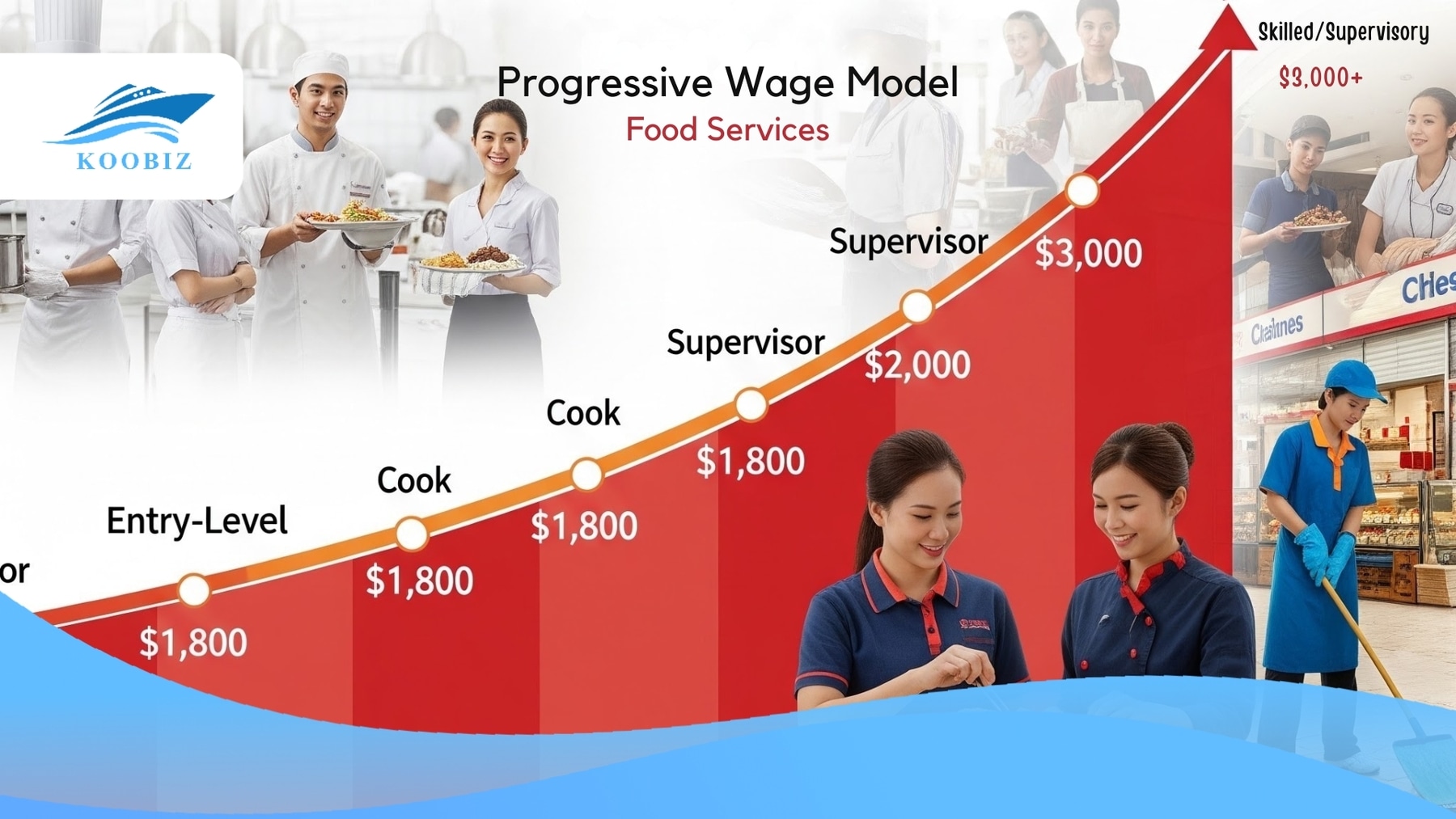
From 1 July 2026, the entry-level PWM wage requirement rises to S$2,220 per month (up from the previous S$2,080). The baseline monthly gross wage will then progress to S$2,500 by 2028, delivering consistent year-on-year increases of up to S$145.
To make forecasting easier for your F&B business, here is the breakdown of the mandatory wage increments:
Category A: Quick Services (QS)
(Applies to Quick Services Food Establishments & Supermarkets with ready-to-eat food stations)
| Job Role | 1 July 2026 | 2027 | 2028 |
|---|---|---|---|
| Food/Drink Stall Assistant | S$2,220 | S$2,360 | S$2,500 |
| Kitchen Assistant (QS) / Counter Attendant | S$2,295 | S$2,435 | S$2,575 |
| Cook (QS) | S$2,470 | S$2,610 | S$2,750 |
Note: Hourly rates for part-time workers (under 35 hours per week) must be adjusted accordingly based on these baseline figures.
Category B: Full-Service (FS)
(Applies to Full-Service Food Establishments, Caterers, and Central Kitchens)
| Job Role | 1 July 2026 | 2027 | 2028 |
|---|---|---|---|
| Kitchen Assistant (FS) / Waiter | S$2,320 | S$2,460 | S$2,600 |
| Cook (FS) | S$2,520 | S$2,660 | S$2,800 |
| Waiter Supervisor | S$2,875 | S$3,020 | S$3,165 |
Enhanced Training Grants and Workforce Support
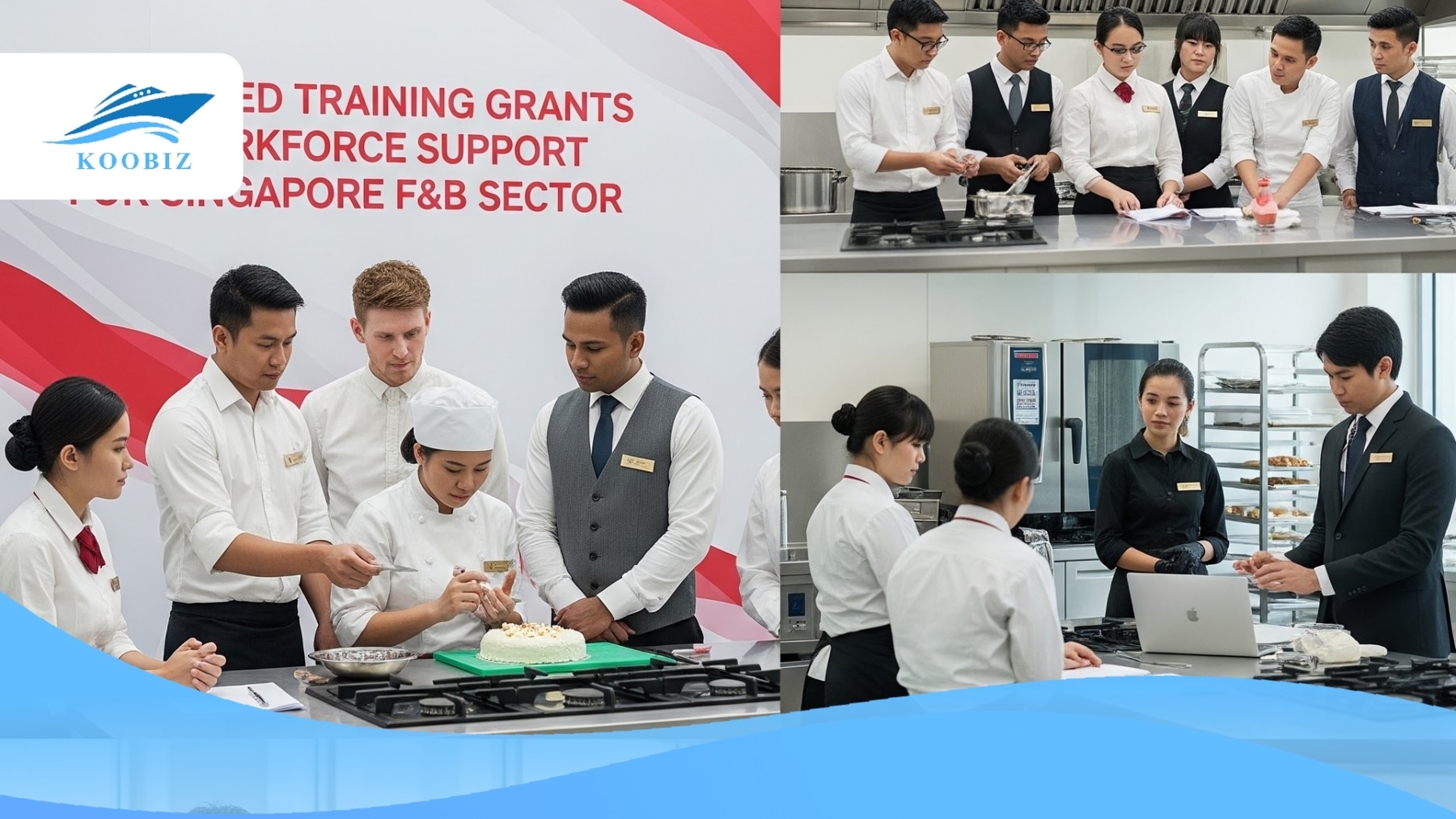
To support workforce development alongside wage increases, the TCF has expanded the list of acceptable Workforce Skills Qualification (WSQ) training modules. These fulfil the minimum PWM training requirement of two modules per worker. Relevant qualifications from Institutes of Higher Learning and Private Education Institutions are now officially recognised.
In addition, the Workfare Skills Support (WSS) scheme has been enhanced to assist employers and employees:
- WSS (Level-Up): Self-sponsored trainees pursuing longer programmes can receive training allowances of up to S$18,000 per year (full-time) or S$3,600 per year (part-time).
- Absentee Payroll: Employers sponsoring staff upskilling may qualify for Absentee Payroll support.
- WSS (Basic): Shorter courses under this enhanced tier offer S$10.50 per hour in training allowances starting 1 July 2026.
Impact on F&B Business Setup in Singapore
For foreign entrepreneurs and SMEs establishing operations in Singapore, these structured increases allow for highly accurate payroll budgeting.
Integrating these requirements into your financial forecasting is essential. Engaging professional accounting and bookkeeping services can help ensure accurate payroll processing and ongoing regulatory compliance as part of your broader corporate services in Singapore.
Understanding how labour regulations interact with overall business compliance forms an important part of successful long-term operational planning. As Singapore continues to refine its labour policies to support both workers and businesses, proactive compliance remains your best strategy for sustainable operations.
Need Help Navigating F&B Compliance in Singapore?
Entrepreneurs considering business setup in Singapore or those already managing local entities can benefit from expert guidance on integrating these requirements into their HR and payroll frameworks. Contact the Koobiz team for professional support with Singapore company formation, corporate secretary services, accounting solutions, and other corporate needs to help navigate regulatory updates with confidence.