

Paying overseas vendors is common for businesses operating in Singapore, but it often triggers Withholding Tax (WHT) obligations that companies only realise when penalties arise. WHT is the mechanism used to tax non-residents on income sourced from Singapore. At Koobiz, we regularly support businesses in managing these cross-border payments, whether for loan interest, software royalties, or management fees to a foreign parent company, ensuring compliance while keeping costs under control. A clear understanding of the applicable WHT rates, filing requirements, and available tax treaty relief for 2026 is essential. This guide outlines the key rules, rates, filing process, and practical considerations for businesses making overseas payments.
What Is Withholding Tax in Singapore?
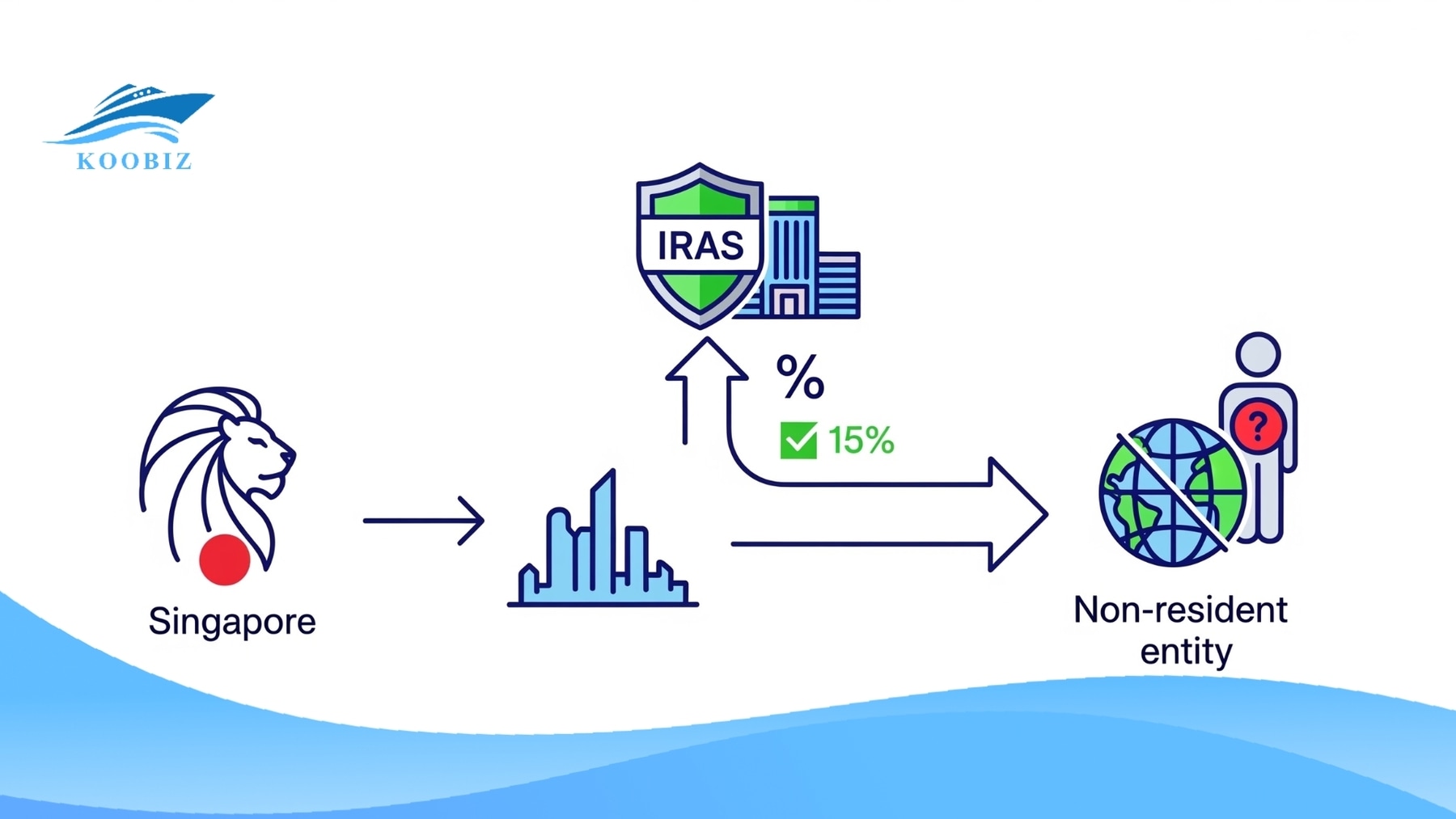
Singapore Withholding Tax (WHT) requires a payer to deduct a prescribed percentage from certain payments made to non-resident individuals or companies and remit that amount to the Inland Revenue Authority of Singapore (IRAS).
The purpose is to ensure tax is collected on income sourced in Singapore, even if the recipient has no physical presence here. As IRAS has limited enforcement over foreign entities, the legal obligation falls on the payer.
- The Payer (Liable Party): The Singapore tax resident (company or individual) utilizing the service or rights.
- The Payee (Recipient): The non-resident entity or individual receiving the income.
- The Trigger: Payments for specific categories such as interest, royalties, rent, or technical assistance fees.
In practice, when a Singapore tax resident makes specified payments to a non-resident, part of the payment must be withheld and paid to IRAS. This applies whether or not the recipient has a permanent establishment in Singapore, although the applicable tax rate may vary.
According to IRAS data, Withholding Tax collections contribute significantly to national revenue, underscoring the authority’s strict enforcement of Section 45 compliance.
Withholding Tax Rates by Payment Type 2026
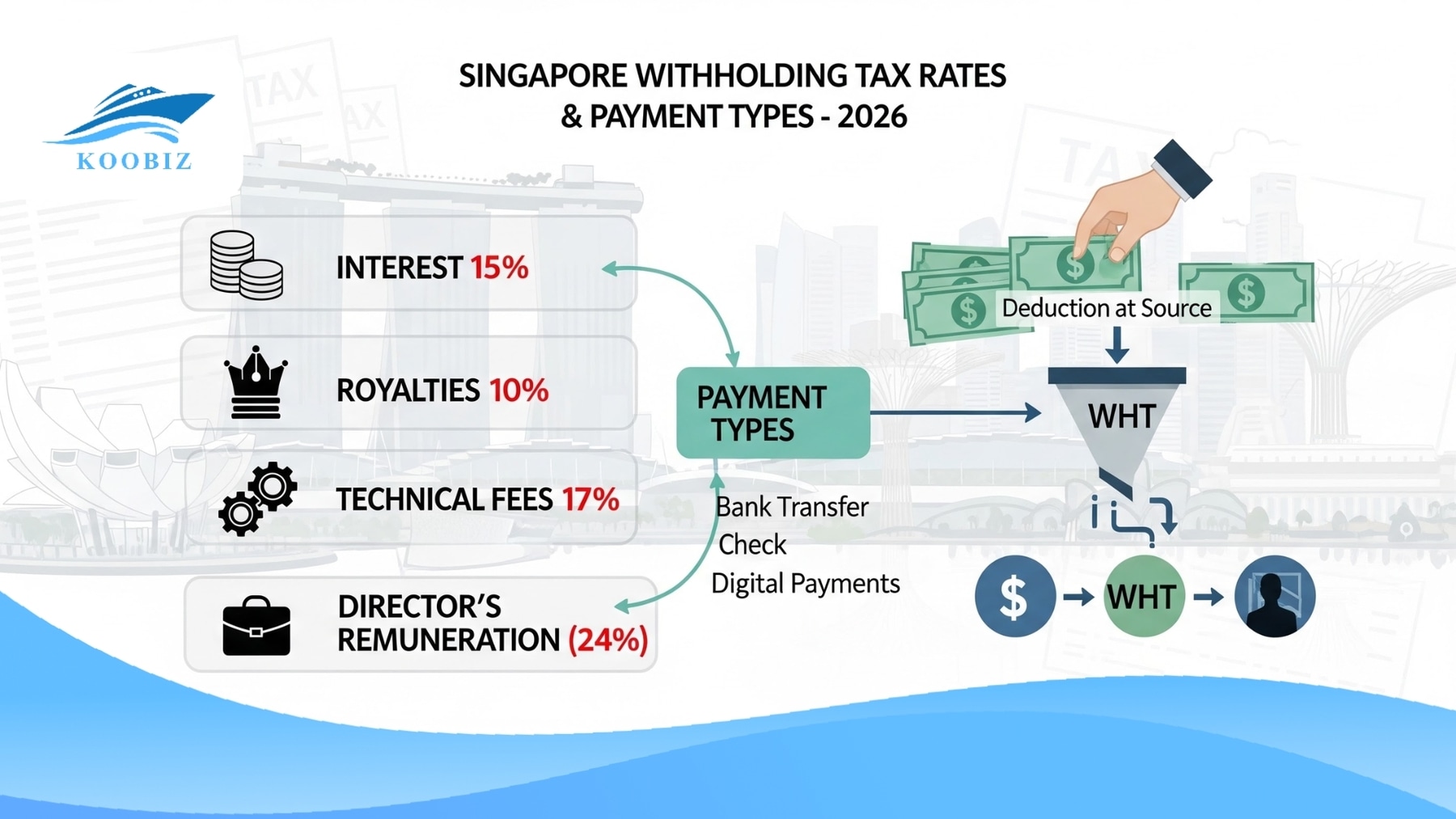
Singapore applies different WHT rates depending on the nature of the payment, ranging from 10% to 24%.
To ensure accuracy in your filings, you must first classify the payment correctly. The table below summarizes the key rates applicable for the Year of Assessment 2026.
| Nature of Payment | WHT Rate (2026) | Key Notes |
|---|---|---|
| Interest, Commissions, Loan Fees | 15% | Applies to interest related to any loan or indebtedness. |
| Royalties & Rights of Use | 10% | Reduced rate for intellectual property and movable property usage. |
| Technical Assistance & Management Fees | 17% | (Prevailing Corp Rate). Only applies to services performed in Singapore. |
| Non-Resident Director’s Remuneration | 24% | Applies to salary, bonus, and directors’ fees. |
| Rent (Movable Property) | 15% | Rent for use of equipment, machinery, etc. |
Below is a detailed breakdown of the nuances within these categories, as applying the wrong classification is a common compliance error.
Interest, Commissions, and Loan Fees
Although the 15% withholding rate on interest appears straightforward, the key issue is whether the income falls under “deemed source” rules or is attributable to a permanent establishment (PE) in Singapore. The 15% rate is a final tax on gross interest paid to non-residents with no PE in Singapore. However, if the interest is effectively connected to the non-resident’s Singapore branch or office, it is treated as business income and taxed at the prevailing corporate rate of 17% on a net basis. In such cases, the non-resident must file a full tax return instead of relying on a simple Section 45 withholding.
Royalties and Rights of Use
A 10% concessionary rate generally applies to payments for the use of intellectual property. However, under IRAS’ “Rights-Based Approach,” certain software payments may be exempt.
If the payment is for a copyrighted article—such as off-the-shelf software, downloadable applications for internal use, or site licences—and no rights to modify, reproduce, or sublicense are granted, IRAS treats it as a purchase of goods rather than a royalty. In these cases, no Withholding Tax applies, provided the non-resident does not have a permanent establishment in Singapore.
Technical Assistance and Management Fees
For service fees subject to 17% tax, the key consideration is where the services are performed. Withholding Tax applies only if the services are physically carried out in Singapore. If a non-resident consultant provides advice, management input, or technical support entirely from overseas—without entering Singapore—the payment is generally not subject to WHT. To support this position, businesses should keep clear documentation showing the services were performed outside Singapore (e.g. travel records confirming no entry).
Director’s Remuneration
The 24% rate for non-resident directors applies broadly to all remuneration received in their capacity as directors—not just board fees, but also salaries, bonuses, and stock option gains. The rate aligns with Singapore’s top marginal personal income tax rate of 24%.
Unlike other payments where the place of performance may be relevant, directors’ fees are taxable in Singapore if the company is tax resident here, regardless of where board meetings take place.
Does Your Payment Require Withholding Tax?
Yes, your payment requires Withholding Tax if the income is deemed to be sourced in Singapore and is paid to a non-resident for specific services or assets.
Determining liability relies heavily on the concept of “Source of Income” as defined under the Income Tax Act. Simply having a contract isn’t enough; the key is where the work is performed or where the asset is used.
The table below contrasts common business scenarios to help you determine if you must answer “Yes” to WHT liability.
| Scenario | WHT Applicable? | Reasoning (The “Source” Rule) |
|---|---|---|
| Paying a German firm for software development done entirely in Berlin | NO | The service is performed physically outside Singapore. The income is not sourced here. |
| Paying the same German firm to send engineers to your SG office | YES | The service is performed physically in Singapore. WHT applies to the portion of work done locally. |
| Paying a US consultant for market research via email/Zoom | NO | No physical presence in Singapore. The advice is given from abroad, so it is not subject to WHT. |
| Paying for rental of industrial machinery used in your Tuas factory | YES | The income is derived from the use of movable property located in Singapore. |
| Reimbursing a vendor for hotel costs incurred in Singapore | YES | IRAS generally treats reimbursements as part of the gross service fee, which is taxable. |
If your situation matches the “YES” column, you are legally obligated to withhold the tax before releasing the net amount to your vendor.
IRAS states that the burden of proof regarding where services are performed lies with the Singapore payer. You must maintain flight tickets, passport pages, or detailed work logs to prove work was done overseas.
Filing Deadlines and Payment Methods
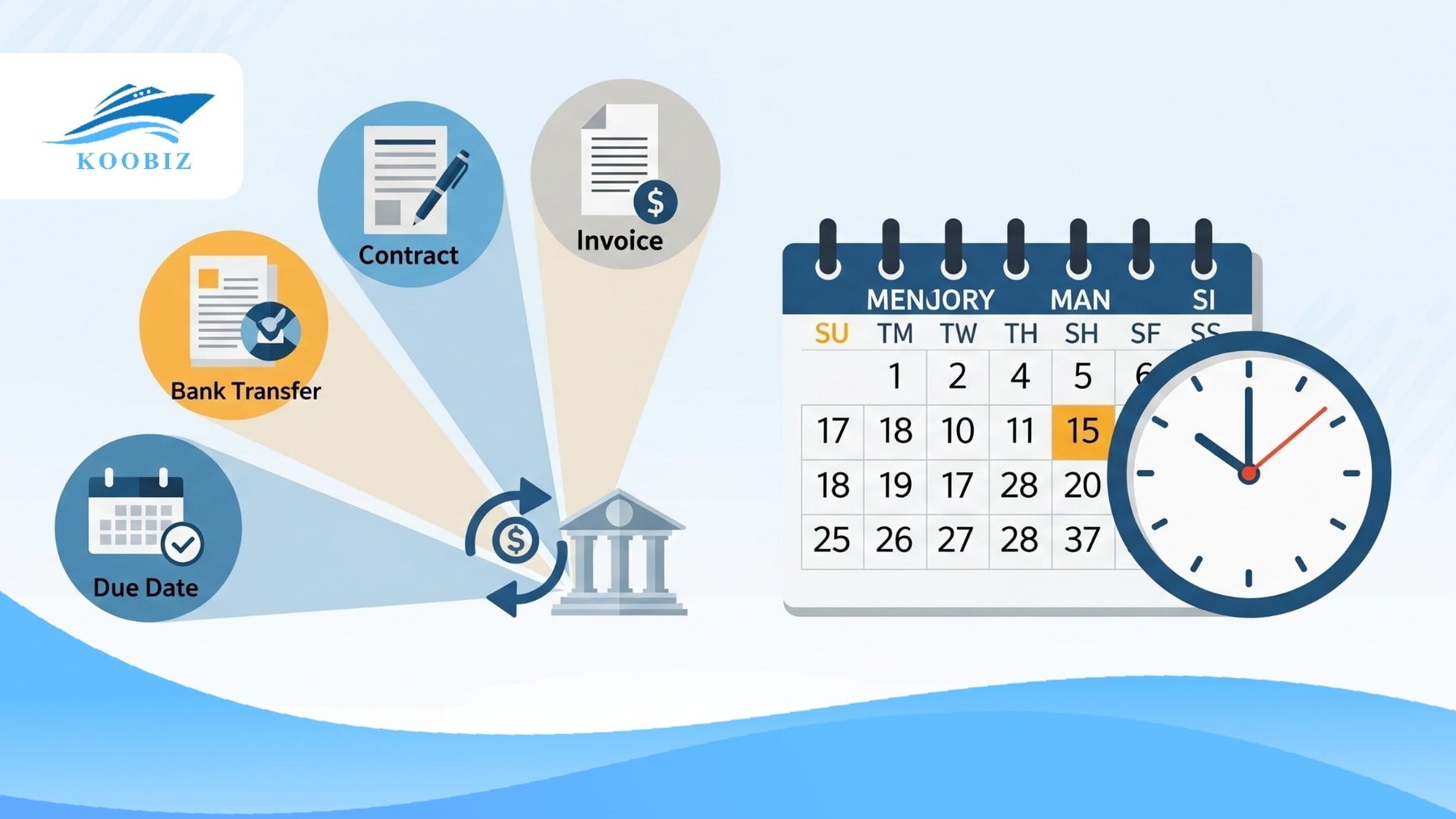
Strict adherence to the WHT filing timeline is critical as IRAS imposes immediate penalties for late submissions.
Unlike GST which is quarterly, Withholding Tax is transactional. The golden rule for compliance is that you must file and pay by the 15th of the second month from the date of payment.
The Deadline Calculator (15th of the Second Month Rule)
Use this table to determine your exact filing deadline based on when the payment liability arose.
| If the “Date of Payment” falls in… | Your Filing & Payment Deadline is… |
|---|---|
| January (1st – 31st) | 15th March |
| February (1st – 28th/29th) | 15th April |
| March (1st – 31st) | 15th May |
| … | … |
| December (1st – 31st) | 15th February (of the following year) |
Note on GIRO: If you are on a GIRO payment plan, the deduction date is typically the 25th of the month the tax is due (e.g., 25th March for a January payment), giving you an additional 10 days of cash flow.
How to Determine the “Date of Payment”
A common mistake is assuming the “Date of Payment” is simply the day you transfer cash. Under IRAS rules, the “Date of Payment” is the earliest of the following four dates. Whichever happens first triggers the deadline clock:
- Contractual Due Date: The date the payment is legally due according to your written agreement (even if you haven’t paid it yet).
- Invoice Date: In the absence of a written contract, the date printed on the invoice is deemed the payment date. (Note: Credit terms like “30 days” are ignored; the invoice date stands).
- Crediting Date: The date the income is credited to the non-resident’s account or reinvested/offset on their behalf (common in intercompany netting).
- Actual Payment Date: The date the cash or cheque is physically transferred.
Example: If you receive an invoice dated 25th January but only pay the vendor on 10th March, your “Date of Payment” is 25th January. Consequently, your tax filing deadline is 15th March. If you wait until the actual payment in March to file, you will already be late and subject to penalties.
How to File Withholding Tax (Section 45)
Filing via the IRAS myTax Portal is mandatory, but session timeouts are a common frustration. To ensure a smooth process, follow this “Prep & Execute” protocol.
Since 2020, paper filings are no longer accepted. The digital process is fast, provided you have the right data on hand before you log in.
Phase 1: Preparation Checklist (Do this BEFORE logging in)
The portal may time out if you spend too long searching for data. Ensure you have these four items ready:
- Payee’s Tax Reference ID: If available (or their full registered name and address).
- Exact Date of Payment: Determined using the rules above (Earliest of Invoice/Contract/Payment).
- Nature of Payment: Know exactly which tax rate applies (e.g., “Royalties” vs “Technical Fees”).
- COR File (Optional): If claiming DTA relief, have the scanned Certificate of Residence ready to upload if requested.
Phase 2: Execution (The 3-Step Filing)
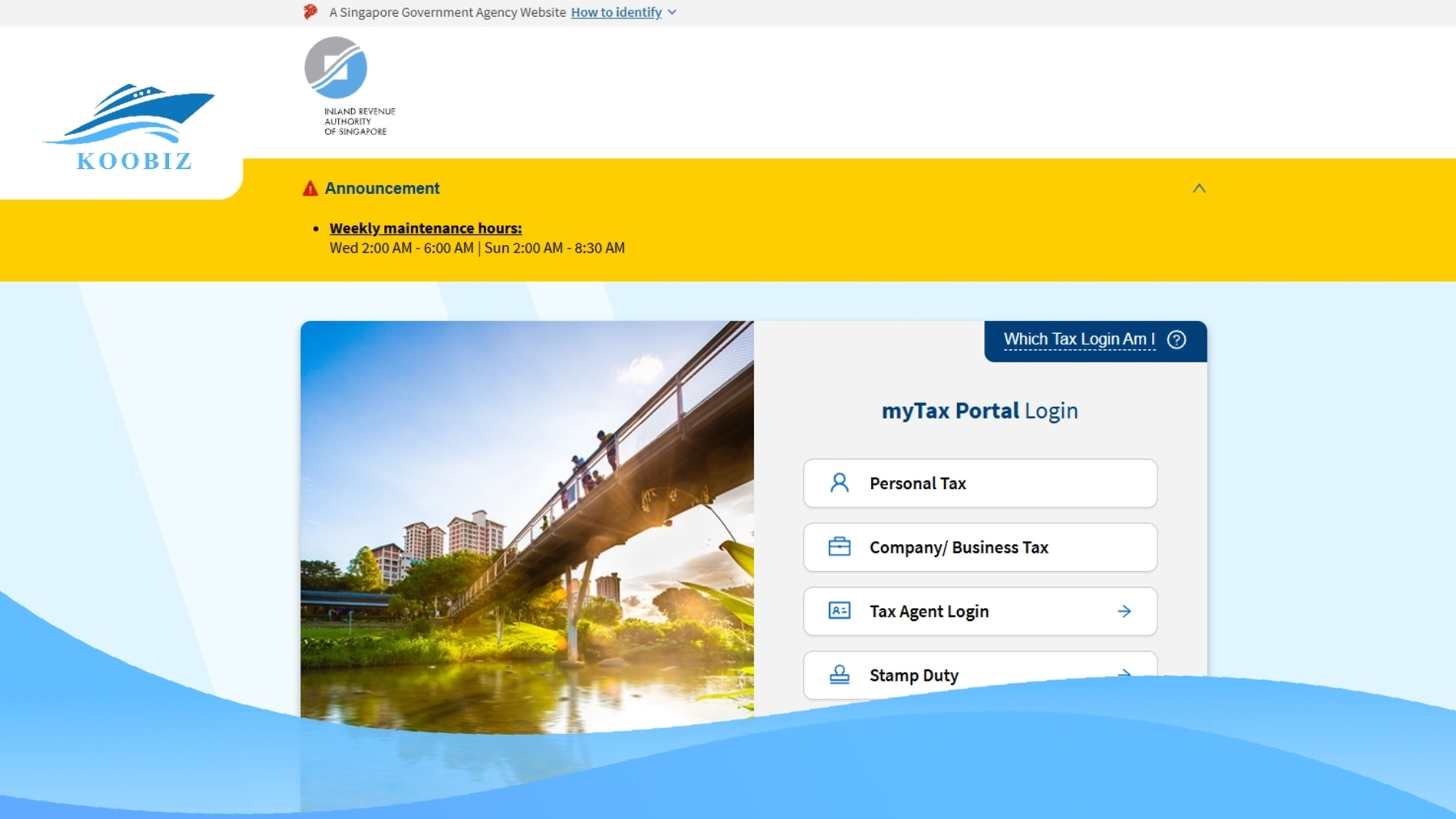
Step 1: Authorization and Login
Ensure your staff (or Corporate Secretary) has the appropriate Corppass authorization for “Withholding Tax (Filing/Applications)”. Log in to the myTax Portal using your Singpass.
Step 2: Submission of S45 Form
- Navigate to “Business Tax” > “Withholding Tax” > “File S45”.
- Enter the Payee’s details. If you have paid them before, the system might auto-populate.
- Select the Nature of Payment. Enter the Gross Amount and the Date of Payment.
- Crucial Check: The system often auto-calculates the tax at the standard rate (e.g., 17%). If you are applying a lower DTA rate (e.g., 10%), you must manually override the tax amount and indicate the treaty country.
Step 3: Payment & Acknowledgement
Once submitted, you will receive an Acknowledgement Page.
- GIRO: If you have GIRO set up, the deduction will happen automatically on the 25th.
- PayNow/Bank Transfer: If not on GIRO, use the Payment Reference Number generated on the screen to pay immediately via PayNow Corporate to avoid late penalties.
How to Reduce WHT with Double Taxation Agreements (DTA)
Double Taxation Agreements (DTAs) can substantially reduce withholding tax exposure, but proper documentation is essential.
Singapore has an extensive DTA network covering more than 90 jurisdictions. At Koobiz, we assist clients in applying treaty benefits correctly to improve cash flow and avoid overpayment.
The Savings Matrix (Standard vs. Treaty Rates)
Many businesses default to domestic rates and end up paying more than necessary. The table below highlights the potential savings when treaty rates are properly applied (illustrative only and subject to treaty conditions):
| Treaty Country | Payment Type | Standard Rate | DTA Rate (Typical) | Potential Savings |
|---|---|---|---|---|
| Japan | Royalties | 10% | 5% (or lower) | 50% Reduction |
| Malaysia | Technical Fees | 17% | 5% (often) | ~12% Reduction |
| United Kingdom | Royalties | 10% | 8% | 2% Reduction |
| Australia | Interest | 15% | 10% | 5% Reduction |
| Vietnam | Technical Fees | 17% | 5% – 10% | Significant Savings |
Note: Treaty rates vary by specific clauses. Always consult a tax professional at Koobiz to verify the exact rate for your contract.
Mandatory Requirement: The Certificate of Residence (COR)
To legally claim these lower rates, you cannot simply select the option in the portal. You must meet a critical condition.
CRITICAL WARNING: No COR = No Discount
If you apply a reduced DTA tax rate, you MUST hold a valid Certificate of Residence (COR) from the payee for the relevant financial year.
- The Risk: If IRAS conducts an audit and you cannot produce the COR, they will revoke the treaty benefit. You will be liable for the back taxes (the difference between the reduced rate and standard rate) plus penalties.
- The Best Practice: Make it a company policy to request the COR from your overseas vendor before processing their first payment of the year.
Real-World Case Studies: WHT in Action
To bridge the gap between complex tax rules and daily operations, let’s explore three practical scenarios that Singapore companies often face.
Case Study 1: Buying Software (Royalties vs. Goods)
The Scenario:
TechFlow Pte Ltd, a Singapore software company, purchases 50 licenses of design software from CreativeCorp, a US-based vendor. The total invoice is $20,000.
The Question: Is this a royalty payment subject to 10% WHT?
The Analysis:
Since TechFlow is buying standard “off-the-shelf” licenses (copyrighted articles) for internal use and does not acquire rights to reproduce, modify, or sub-license the source code, IRAS views this as a purchase of goods.
The Verdict: 0% Withholding Tax. TechFlow pays the full $20,000 to CreativeCorp without deduction.
Case Study 2: The Remote Consultant (Place of Performance)
The Scenario:
BizSolutions Pte Ltd hires a UK-based marketing expert to develop a strategy for their Singapore launch. The fee is $10,000. The expert does all the work from London via Zoom and email.
The Question: Is this a technical service fee subject to 17% WHT?
The Analysis:
Technical service fees are only taxable if the work is performed physically in Singapore. Since the consultant never entered Singapore, the income is not sourced here.
The Verdict: 0% Withholding Tax. However, BizSolutions must keep flight records or a declaration proving the consultant did not travel to Singapore.
Case Study 3: The “Net of Tax” Contract (Re-grossing)
The Scenario:
GlobalTrade SG borrows funds from an Indonesian lender. The contract states: “Interest of $1,000 is payable net of all taxes.” (i.e., the lender wants $1,000 in their pocket).
The Question: How much WHT does GlobalTrade pay?
The Analysis:
Since the lender refuses to suffer the tax deduction, GlobalTrade must bear it. The tax base isn’t $1,000; it must be “re-grossed.”
Formula: $1,000 / (1 – 15%) = $1,176.47 (Gross Interest).
The Verdict:
- Pay to Lender: $1,000
- Pay to IRAS: $176.47 (15% of $1,176.47)
- Total Cost: $1,176.47.
Common Mistakes and Penalties
Even experienced finance teams can stumble on the technical nuances of Withholding Tax, leading to unnecessary fines.
To keep your record clean with IRAS, review this “Pitfall & Prevention” guide before filing.
The “Pitfall & Prevention” Table
| The Common Mistake | Why it’s Wrong | The Correct Action |
|---|---|---|
| Reimbursing Hotel/Airfare without WHT | IRAS generally views reimbursements as part of the total service fee, not a separate non-taxable item. | Withhold on the Gross: Calculate tax on the total invoice value (Service Fee + Reimbursements). |
| Not “Regrossing” the Tax | If your contract states the payment is “Net of Tax” (you pay the tax for them), the tax itself is a benefit. | Calculate on Regrossed Amount: Use the formula: (Net Payment / (1 – Tax Rate)) x Tax Rate. |
| Using the Invoice Date only | The liability arises on the earliest of four dates (Contract, Invoice, Credit, Payment). | Check All Dates: Verify if the contract specified an earlier due date than the invoice. |
The Penalty Ladder (Consequences of Non-Compliance)
IRAS enforcement is automated and strict. Penalties escalate rapidly if the 15th-of-the-month deadline is missed.
- Level 1 (Immediate): 5% Late Payment Penalty
- Applied the moment the deadline passes. Even being one day late triggers this on the unpaid tax amount.
- Level 2 (Escalating): 1% Additional Penalty
- If the tax remains unpaid, an additional 1% is added for every completed month, up to a maximum of 15% of the unpaid tax.
- Level 3 (Severe): Appointment of Agents
- For persistent non-payment, IRAS can appoint your bank, tenant, or lawyer as an agent to recover the money directly from your funds.
Frequently Asked Questions about Singapore WHT
Is software payment always subject to withholding tax?
It depends on the rights transferred.
In general, payments for the right to use software are treated as royalties and subject to 10% WHT. However, under the Rights-Based Approach, if you are merely purchasing a copyrighted article—such as off-the-shelf or shrink-wrap software—without any rights to reproduce or modify it, the payment is not subject to WHT, provided the vendor has no permanent establishment in Singapore.
Can I claim a refund if I overpaid WHT?
Yes, but it requires documentation.
If WHT was applied incorrectly, or if a Certificate of Residence (COR) is obtained after filing, a refund may be claimed. The refund application must be submitted to IRAS within four years from the date of payment, together with the COR and proof of the original tax remittance.
What exchange rate should I use if I pay in USD?
Use the spot rate on the date of remittance.
If you pay your vendor in a foreign currency (e.g., USD or EUR), the withholding tax must still be filed in Singapore Dollars (SGD). You should use the exchange rate prevailing on the date of payment to the non-resident. If the exact rate is unavailable, IRAS generally accepts the MAS exchange rate or the internal bank rate used for the transaction.
Who is responsible for paying the tax: Me or the Vendor?
Legally, the Vendor (Payee); Practically, often You (Payer).
Under the law, WHT is a tax on the non-resident’s income, so you should deduct it from their fee (e.g., pay them $85 instead of $100). However, many commercial contracts are signed “Net of Tax,” meaning the vendor expects the full $100. In this case, you must bear the tax cost yourself by re-grossing the amount (paying tax on top of the fee), effectively increasing your cost of business.
Navigating Singapore’s tax landscape requires precision and foresight. Whether you are dealing with complex Section 45 filings, interpreting “Deemed Date of Payment,” or seeking to optimize your cross-border payments through Double Taxation Agreements, Koobiz is here to support you. We specialize in corporate services for the Singapore market, ranging from company incorporation and banking to specialized tax and accounting solutions. Don’t let Withholding Tax become a liability for your business.
Visit Koobiz.com today to consult with our experts and ensure your Singapore operations are fully compliant and tax-efficient.