

Launching your business in Singapore is full of potential, but it also involves risks—from workplace accidents to customer disputes. For small and medium enterprises (SMEs), choosing the right Business Insurance Singapore package is a crucial first step to secure your progress and keep your operations running smoothly. While you concentrate on strategy and growth, a solid insurance plan acts as your safety net, ensuring a single unexpected event doesn’t undo all your hard work.
At Koobiz, we know that whether you’re forming a company, opening a bank account, or handling taxes, compliance and protection are equally important. This guide will walk you through the essentials of SME insurance, from mandatory WICA rules to choosing the best bundled plans for your industry.
What is an SME Business Insurance Package?
Think of an SME Business Insurance Package as a convenient, all-in-one policy made for small to medium businesses. It combines important protections—like coverage for public accidents, property damage, and employee injuries—into a single, often more affordable contract.
To see why these bundles are more efficient than buying separate policies, let’s compare the two approaches. Companies like AIG, Chubb, and NTUC Income offer these ready-made solutions to cover the most common risks businesses face.
| Feature | SME Package (Bundled) | Standalone Policies (Individual) |
|---|---|---|
| Cost Efficiency | High (Often 20-30% cheaper) | Low (Full premium for each risk) |
| Administration | Simple (Single policy & renewal date) | Complex (Multiple policies & dates) |
| Coverage Scope | Covers core operational risks comprehensively | Highly customizable but fragmented |
| Best For | Startups & SMEs | Large Corporations & MNCs |
Instead of managing several different policies for fire, theft, and liability, you manage just one. For new businesses using Koobiz‘s incorporation services, choosing a package means getting essential protection from day one without a complicated process.
Is Business Insurance Mandatory for SMEs in Singapore?
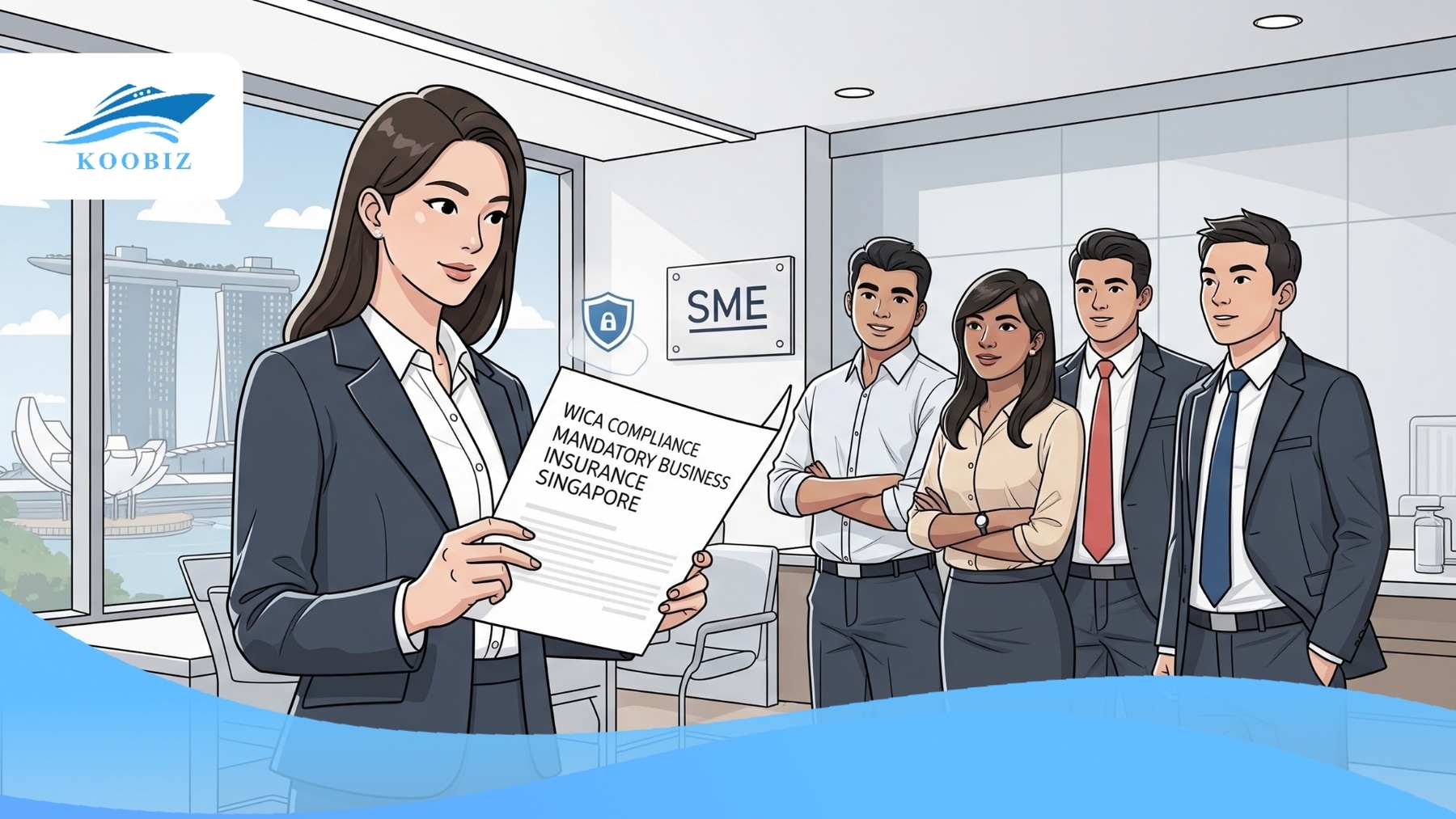
Yes, business insurance is mandatory for SMEs in Singapore, specifically regarding the Work Injury Compensation Act (WICA).
To check if your business must buy this cover by law, use this simple checklist based on official regulations:
You are legally required to buy WICA if:
- You employ manual workers, regardless of their salary level.
- You employ non-manual workers earning a monthly salary of SGD 2,600 or less (excluding overtime, bonuses, etc.).
Penalty Alert: Non-compliance is a serious offense. Failure to maintain adequate insurance for these employees is punishable by a fine of up to SGD 10,000 or imprisonment for up to 12 months, or both.
While other types like Public Liability insurance aren’t required by the government, they are often required by your landlord or in client contracts. So for most operating businesses, having insurance is practically essential.
Key Coverage Types in a Standard SME Package
A good SME package usually includes three core protections: Work Injury Compensation (WICA), Public Liability, and Property All Risks Insurance. Here’s how each one protects your business:
| Coverage Type | What it Protects | Real-Life Scenario |
|---|---|---|
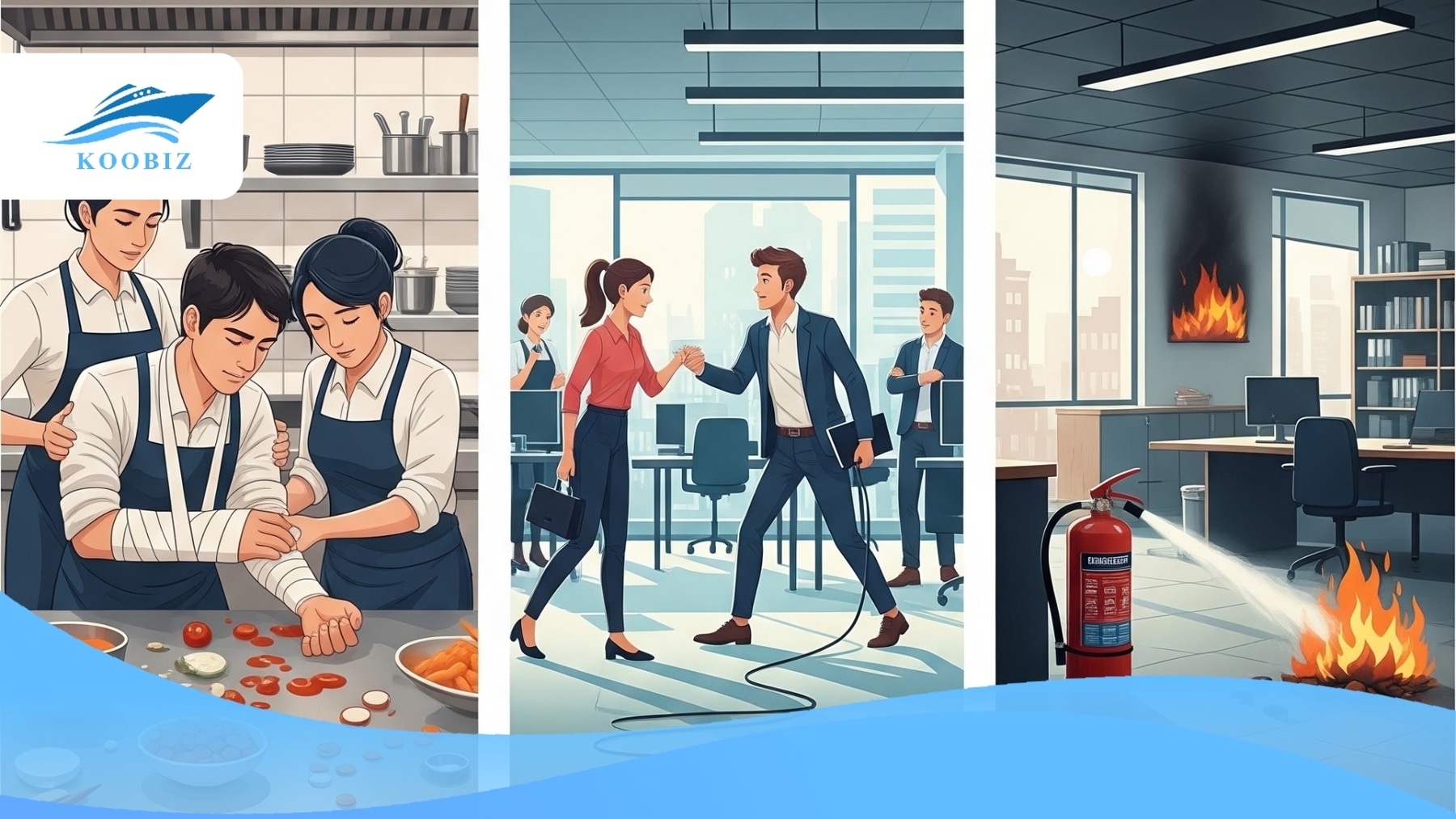
| Work Injury Compensation (WICA) | Employees: Covers medical bills & lost wages for work-related injuries or illnesses. | A chef slips in your kitchen and fractures a wrist, requiring surgery and 2 weeks of medical leave. |
| Public Liability Insurance | Third Parties: Covers legal costs & damages for injury or property damage to others. | A customer trips over a loose cable in your office and sues your company for medical expenses. |
| Property All Risks | Assets: Covers loss or damage to inventory, equipment, furniture, and renovations. | A fire caused by a faulty socket destroys $20,000 worth of laptops and office furniture overnight. |
Let’s look at why each of these is vital for your business security.
Work Injury Compensation (WICA)
This coverage handles the costs if an employee gets injured or sick because of their work. In Singapore, employers must pay compensation even if the accident wasn’t their fault. Note: Updated limits apply from November 1, 2025.
- Medical Expenses: Covers hospital bills and treatment costs up to SGD 53,000 (or expenses incurred within one year of the accident, whichever is reached first).
- Lost Wages: Reimburses medical leave wages for days the employee is unfit for work due to the injury.
- Death & Permanent Incapacity: Provides statutory lump-sum payouts calculated based on age and average monthly earnings.
- Death: Minimum SGD 91,000 to Maximum SGD 269,000.
- Permanent Incapacity: Minimum SGD 116,000 to Maximum SGD 346,000.
For Koobiz clients hiring their first team, we stress that WICA is a legal necessity that also protects your company’s finances from large, unexpected claims.
Public Liability Insurance
This protects your business if a client, supplier, or member of the public sues you for injury or property damage caused by your operations.
- Legal Defense Costs: Covers lawyer fees to defend your company in court.
- Third-Party Injury: Pays damages if, for example, a customer falls in your premises.
- Property Damage: Covers repairs if your business accidentally damages someone else’s property.
In today’s world, this coverage is key to protecting your finances from potentially devastating lawsuits.
Property All Risks & Fire Insurance
This safeguards your physical business assets from unexpected events. “All Risks” is broader than basic “Fire” insurance.
- Physical Assets: Protects office equipment, inventory, furniture, and renovations.
- Broad Perils: Covers fire, theft, water damage, vandalism, and accidental damage (like dropping a laptop).
- Business Continuity: Ensures that a physical disaster doesn’t lead to bankruptcy by covering the replacement cost of essential items.
If you have a lot of money tied up in stock or equipment, this coverage is crucial for a quick recovery.
Real-World Case Studies: Why You Can’t Afford to Go Without
Understanding the value of an insurance premium (which can start from around $300/year) is easier with real scenarios. Insurance moves the financial risk from your business to the insurer.
Case 1: The “Minor” Kitchen Accident (F&B Sector)
Scenario: A kitchen assistant in a busy cafe slips on a wet floor, fracturing an ankle. They require surgery and are given 2 months of medical leave.
- Cost Without Insurance:
- Medical Surgery & Hospital Stay: $12,000
- 2 Months Wages (Medical Leave): $4,000
- Total Loss: $16,000 (A direct hit to your monthly cash flow)
- Cost With WICA Policy:
- Insurer Pays: $16,000
- Your Cost: $0 (Fully Protected)
Case 2: The Client Laptop Mishap (Professional Services)
Scenario: During a presentation at a client’s office, your marketing executive accidentally knocks a pitcher of water over the client’s high-end laptop, destroying it.
- Cost Without Insurance:
- Laptop Replacement: $3,500
- Total Loss: $3,500
- Cost With Public Liability:
- Insurer Pays: $3,500
- Less Policy Excess (Deductible): $250
- Your Cost: $250
Insight: A single moderate incident can cost 10x to 50x the price of your annual premium. For a small business operating on tight margins, this protection is not a luxury—it is survival.
Top Business Insurance Plans in Singapore: A Comparison
When comparing top providers, AIG, Chubb, and NTUC Income lead the market, each catering to different business needs. Use the comparison table below to identify which provider aligns with your operational scale.
| Insurer | Best For | Key Strength | Ideal Business Type |
|---|---|---|---|
| AIG | Customization | Modular “Top-up” options for specific risks | Retail & Professional Services |
| Chubb | Premium Coverage | High sub-limits for stock & financial strength | F&B & Manufacturing |
| NTUC Income | Cost-Efficiency | Affordable baseline protection | Startups & Micro-SMEs |
| MSIG | Niche Protection | Includes Fidelity Guarantee (Employee Theft) | Retail with cash handling |
The “best” plan isn’t the cheapest;it’s the one that reliably supports you when you need to make a claim. At Koobiz, we help clients review these options during company setup to budget correctly from the start.
How to Choose the Right Plan for Your Specific Industry

Selecting the right insurance means matching coverage to your main business activities. A generic package might not cover your specific risks.
Find your business profile below for tailored advice:
Profile A: The “Brick & Mortar” (F&B / Retail)
Who you are: Cafes, Restaurants, Boutiques, Salons.
Your Primary Risk: Physical Assets & Foot Traffic.
If you hold inventory or welcome customers into a shop, standard office insurance isn’t enough. You need specific add-ons:
- Deterioration of Stock: Vital for F&B. If a freezer fails and $5,000 of wagyu beef spoils, a standard fire policy won’t pay. This clause does.
- Money in Premises/Transit: Protects cash revenue from theft while it’s in the register or being carried to the bank.
- Plate Glass: Covers the replacement of expensive shopfront windows if shattered.
Profile B: The “Digital & Professional” (Tech / Consultancy)
Who you are: Software Startups, Accountants, Marketing Agencies, Consultants.
Your Primary Risk: Intangible Errors & Data Liability.
Your assets are your code and your advice, not furniture. Standard property insurance is less critical than liability protection:
- Professional Indemnity (PI): The most critical cover. It protects you if a client sues for financial loss caused by your advice, code bugs, or service failure.
- Cyber Liability Insurance: Essential if you collect user data. It covers costs related to data breaches, ransomware investigations, and PDPA regulatory fines.
- Defamation: Covers legal costs if you are sued for libel or slander arising from your media content.
Profile C: The “Hands-On” (Construction / Renovation)
Who you are: Contractors, Interior Designers, Handyman Services.
Your Primary Risk: Third-Party Damage & Machinery.
Working on client sites increases the risk of damaging their property or your own tools:
- Contractors’ All Risks (CAR): Covers damage to the renovation works in progress (e.g., new flooring ruined by a pipe burst before handover).
- Machinery Breakdown: Covers the cost of repairing expensive drills, saws, or specialized equipment if they fail internally.
Profile D: The “Online Seller” (E-commerce)
Who you are: Lazada/Shopee Sellers, Dropshippers.
Your Primary Risk: Supply Chain & Product Safety.
Even without a physical shop, you face liability for the goods you sell:
- Product Liability: Critical if you import goods. If a battery pack you sold catches fire in a customer’s home, you can be held liable as the importer.
- Marine Cargo: Protects your stock while it is being shipped from overseas suppliers to your warehouse.
Understanding Premiums and Exclusions
Your premium is the price you pay for insurance, based on your risk level. Exclusions are things the policy definitely does not cover.
What Drives Your Premium Up?
Your insurance cost isn’t random; it’s calculated based on probability and severity.
- Nature of Business (Risk Level): A construction company typically pays more than an office-based firm due to higher injury risks.
- Annual Revenue & Payroll:Premiums often relate to your annual revenue and total employee wages.
- Claims History: A history of many claims can lead to higher costs.
- Location: Premises in areas with higher risks (e.g., flood-prone) may have higher premiums.
What Voids Your Coverage? (Exclusions)
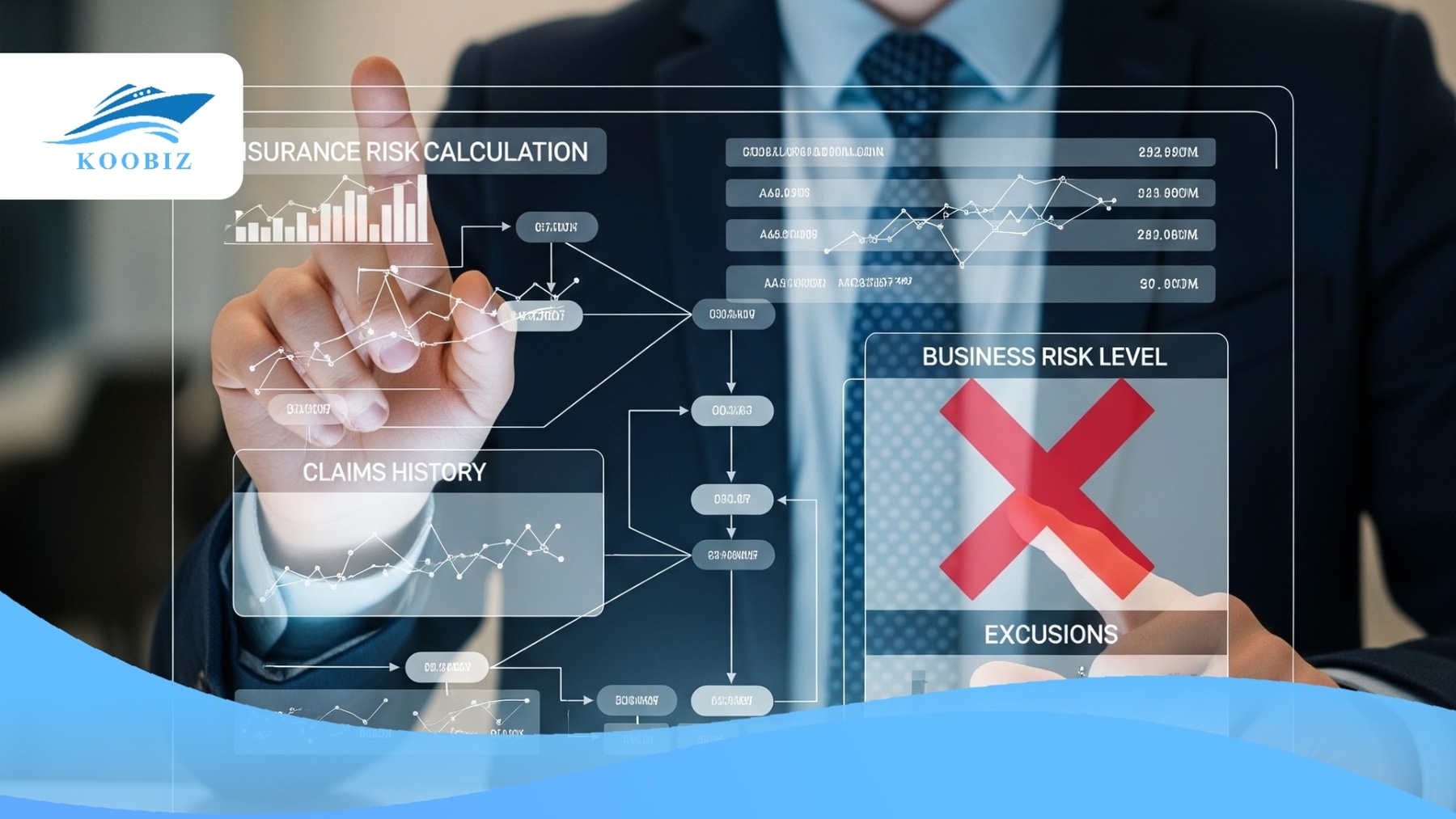
Exclusions are the “red lines” in your contract. If a claim falls under these categories, it will be rejected immediately.
- Wear and Tear: Gradual deterioration of machinery or property is considered “maintenance,” not an accident. Old rusty pipes bursting are rarely covered.
- Willful Acts: Damage caused intentionally by the business owner or senior management to claim money (fraud) voids the entire policy.
- War and Terrorism: Standard policies exclude acts of war, terrorism, and pandemics, though these can sometimes be bought back as specific extensions.
- Known Circumstances: Claims arising from situations you were aware of before the policy started (e.g., a pending lawsuit you didn’t disclose).
Step-by-Step Guide to Filing a Business Insurance Claim
Knowing this process beforehand ensures you don’t panic when an actual incident occurs, allowing Koobiz clients to focus on business recovery while the insurance handles the financial hit. Avoid common pitfalls by following the protocol below.
| Stage | DO THIS | NEVER DO THIS |
|---|---|---|
| 1. Immediate Response | Notify your agent instantly. Speed is key to a valid claim. | Never admit liability. Do not say “It was my fault” or apologize to third parties, as this voids legal defense. |
| 2. Damage Control | Mitigate further loss. e.g., turn off the water main or board up a broken window. | Do not dispose of damaged items. Keep burnt or broken assets for the loss adjuster to inspect. |
| 3. Evidence Gathering | Document everything. Take wide and close-up photos, save CCTV footage, and keep police/medical reports. | Do not clean up too early. Do not alter the scene significantly before documenting the initial state. |
| 4. Submission | Be factual. Submit the claim form with all invoices within the deadline (usually 30 days). | Do not speculate. If you don’t know the cause of fire, say “Unknown.” Do not guess. |
About Koobiz
Navigating the business landscape in Singapore requires more than just insurance; it requires a solid corporate foundation. Koobiz is your trusted partner for seamless market entry and operation. We specialize in Company Incorporation services, helping you set up your Singapore entity strictly adhering to ACRA regulations.
Beyond setup, we assist with Opening Corporate Bank Accounts with top Singaporean banks, ensuring your financial infrastructure is ready for business. Our comprehensive suite of services also includes Tax, Accounting, and Auditing, ensuring that as you grow, your compliance remains impeccable. Secure your business structure with Koobiz today, so you can focus on what you do best—growing your empire.
Visit us at koobiz.com to learn more.